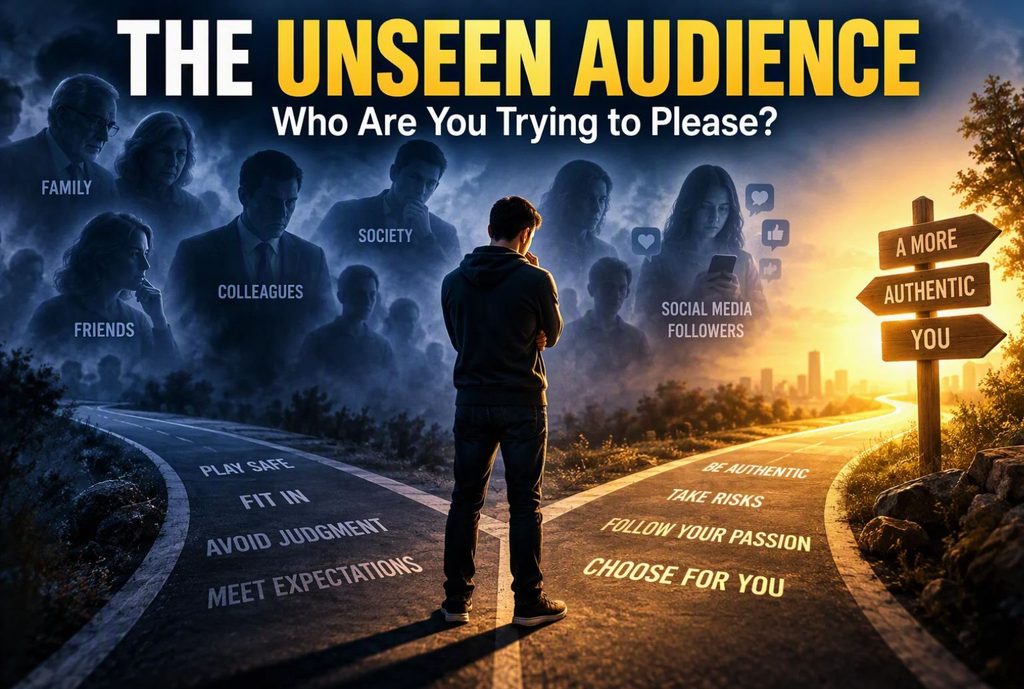
The Unseen Audience in Our Decisions: Breaking Free from Imagined Judgment
Have you ever chosen not to speak up in a meeting, delayed starting a project, or hesitated to pursue a dream, not because of any real obstacle, but because of what others might think?
Most of us believe our decisions are guided by logic, values, and personal goals. Yet beneath the surface, another invisible force often shapes our behavior: an audience that exists largely in our imagination.
Even when we are physically alone, we may unconsciously carry the opinions of relatives, colleagues, friends, neighbors, and social media followers into our decision-making process. Their voices echo in our minds, influencing what we attempt, what we avoid, and who we allow ourselves to become.
The Invisible Crowd We Carry
Human beings are social creatures. For thousands of years, acceptance by the group meant survival. Being rejected by the tribe could have severe consequences. As a result, our brains evolved to pay close attention to social approval and disapproval.
Today, however, the audience has expanded dramatically.
A young professional may wonder how coworkers will judge a career change.
An aspiring artist may fear relatives questioning their practical choices.
A student may avoid asking a question because classmates might perceive them as uninformed.
A social media user may choose experiences based on how they will appear online rather than how they will actually feel.
In each case, the decision is influenced not only by reality but by an imagined reaction from others.
The remarkable fact is that many of these judgments never happen at all.
The Psychology of the Imagined Audience
Psychologists have identified a phenomenon often called the “spotlight effect.” We tend to overestimate how much other people notice and evaluate our actions.
Most people are far less focused on us than we imagine.
While we worry about making a mistake during a presentation, our audience may be preoccupied with their own concerns.
While we obsess over a social media post, others scroll past in seconds.
While we fear criticism for trying something new, most people are busy managing their own insecurities.
The mind creates a courtroom where everyone is watching, evaluating, and keeping score. In reality, the courtroom is often nearly empty.
How the Unseen Audience Limits Growth
The influence of imaginary judgment becomes dangerous when it prevents experimentation.
People avoid launching businesses because relatives may disapprove.
They remain in unfulfilling jobs because colleagues expect consistency.
They suppress creativity because followers expect a particular image.
They stay silent because they fear appearing imperfect.
Gradually, a person begins living according to anticipated reactions rather than genuine aspirations.
A life guided by imagined observers becomes a performance rather than an authentic experience.
The greatest opportunities for growth often lie just beyond the boundaries of social comfort.
A New Question: Whose Voice Is That?
Before making an important decision, pause and ask:
“Whose reaction am I imagining?”
The answer may reveal surprising influences.
Perhaps it is a parent whose approval still matters deeply.
Perhaps it is a former teacher, a critical colleague, or an online audience.
Once identified, ask a second question:
“How much weight should this opinion actually carry?”
Not every voice deserves equal influence.
A mentor with wisdom and experience may deserve thoughtful consideration.
An anonymous commenter on the internet may not.
A trusted loved one may provide valuable perspective.
A person who neither understands your goals nor shares your values may have little relevance.
The goal is not to ignore others completely. The goal is to assign influence intentionally rather than automatically.
From Performance to Purpose
Imagine making decisions primarily according to your principles, values, and long-term vision.
You would still listen to feedback.
You would still learn from experts.
You would still care about people you respect.
But you would no longer be imprisoned by imaginary criticism.
Instead of asking, “What will people think?”
You begin asking:
• What aligns with my values?
• What helps me grow?
• What is true for my situation?
• What would I do if nobody were watching?
These questions shift attention from external approval to internal clarity.
The Freedom of Reality
The irony is that the unseen audience often has far less power than we give it.
Many of our fears are rehearsals for judgments that never occur.
Many of our limitations are constructed from assumptions rather than actual criticism.
And many of our greatest regrets come not from taking action, but from allowing imagined observers to decide our future.
The next time you face a difficult choice, pause for a moment.
Ask yourself:
“Whose reaction am I imagining, and how much weight should it carry?”
You may discover that the loudest critic in the room was never another person at all.
It was the audience you unknowingly brought with you.
And once you recognize that audience, you gain the freedom to choose your own path.
অদৃশ্য দর্শক: আমাদের সিদ্ধান্তের নেপথ্যের নীরব প্রভাব
আমরা যখন কোনো গুরুত্বপূর্ণ সিদ্ধান্ত নিতে যাই, তখন কি সত্যিই আমরা একা থাকি?
বাহ্যিকভাবে হয়তো থাকি। কিন্তু আমাদের মনের ভেতরে উপস্থিত থাকে এক অদৃশ্য দর্শকদল। সেখানে আছে পরিবারের সদস্য, বন্ধু, সহকর্মী, প্রতিবেশী, এমনকি সামাজিক মাধ্যমের অনুসারীরাও। তারা বাস্তবে কিছু না বললেও, তাদের সম্ভাব্য প্রতিক্রিয়া আমাদের চিন্তা ও সিদ্ধান্তকে প্রভাবিত করতে থাকে।
অনেক সময় আমরা কোনো স্বপ্ন অনুসরণ করি না, নতুন কিছু শুরু করি না, কিংবা নিজের সত্যিকারের মতামত প্রকাশ করি না। কারণ আমরা ভয় পাই, “লোকেরা কী ভাববে?”
এই ভয়ই হলো অদৃশ্য দর্শকের শক্তি।
আমরা কেন অন্যের বিচারকে এত গুরুত্ব দিই?
মানুষ একটি সামাজিক প্রাণী। হাজার হাজার বছর ধরে দলবদ্ধভাবে বেঁচে থাকার ফলে আমাদের মস্তিষ্ক সামাজিক গ্রহণযোগ্যতাকে অত্যন্ত মূল্য দেয়।
একসময় সমাজের স্বীকৃতি বেঁচে থাকার জন্য প্রয়োজন ছিল। আজ সেই প্রয়োজন আগের মতো না থাকলেও, আমাদের মন এখনও অন্যের মতামত নিয়ে অতিরিক্ত উদ্বিগ্ন হয়ে পড়ে।
ফলে আমরা ভাবতে শুরু করি:
• আত্মীয়রা কী বলবে?
• সহকর্মীরা কী ভাববে?
• বন্ধুরা কি হাসবে?
• সামাজিক মাধ্যমে আমার ভাবমূর্তি নষ্ট হবে না তো?
এই প্রশ্নগুলো ধীরে ধীরে আমাদের স্বাধীন সিদ্ধান্ত গ্রহণের ক্ষমতাকে সীমাবদ্ধ করে।
অধিকাংশ বিচার আসলে কল্পিত
মনোবিজ্ঞানে একটি ধারণা রয়েছে, যাকে বলা হয় Spotlight Effect। আমরা প্রায়শই মনে করি সবাই আমাদের দিকে তাকিয়ে আছে, আমাদের প্রতিটি কাজ বিশ্লেষণ করছে।
বাস্তবতা ভিন্ন।
যখন আমরা কোনো ভুল নিয়ে লজ্জা পাই, তখন অধিকাংশ মানুষই নিজেদের জীবন ও সমস্যায় ব্যস্ত থাকে।
যখন আমরা ভাবি সবাই আমাদের নিয়ে মন্তব্য করবে, তখন হয়তো কেউই আমাদের নিয়ে তেমন ভাবছে না।
অর্থাৎ, আমাদের মানসিক আদালতের বিচারকরা অনেক ক্ষেত্রেই বাস্তবে উপস্থিত থাকে না।
অদৃশ্য দর্শক কীভাবে আমাদের জীবনকে সীমাবদ্ধ করে?
অনেক মানুষ ব্যবসা শুরু করে না, কারণ পরিবার আপত্তি করতে পারে।
অনেকেই পছন্দের পেশায় যেতে সাহস পায় না, কারণ সমাজ এটিকে নিরাপদ মনে করে না।
অনেকে সৃজনশীল প্রতিভা লুকিয়ে রাখে, কারণ তারা সমালোচনার ভয় পায়।
ফলস্বরূপ, মানুষ নিজের জীবনের পরিচালক না হয়ে অন্যের প্রত্যাশার অভিনেতা হয়ে ওঠে।
ধীরে ধীরে জীবন একটি অভিনয়ে পরিণত হয়, যেখানে নিজের সত্যিকারের ইচ্ছাগুলো পেছনের সারিতে চলে যায়।
নিজেকে একটি প্রশ্ন করুন
পরবর্তীবার কোনো সিদ্ধান্ত নেওয়ার আগে একটু থামুন।
নিজেকে জিজ্ঞেস করুন:
“আমি কার প্রতিক্রিয়া কল্পনা করছি?”
এবং তারপর আরও একটি প্রশ্ন:
“সেই প্রতিক্রিয়ার কতটুকু গুরুত্ব দেওয়া উচিত?”
সব মতামতের ওজন সমান নয়।
যে ব্যক্তি আপনার কল্যাণ চায় এবং আপনার লক্ষ্য বোঝে, তার মতামত মূল্যবান হতে পারে।
কিন্তু যাদের বিচার কেবল অনুমান, সমালোচনা বা সামাজিক চাপে ভিত্তি করে, তাদের মতামত আপনার ভবিষ্যৎ নির্ধারণ করার অধিকার রাখে না।
নিজের সত্যের দিকে এগিয়ে যান
যখন আপনি অন্যের প্রত্যাশার পরিবর্তে নিজের মূল্যবোধকে ভিত্তি করে সিদ্ধান্ত নিতে শুরু করবেন, তখন জীবনে এক নতুন স্বাধীনতা জন্ম নেবে।
তখন প্রশ্নটি আর হবে না:
“লোকেরা কী ভাববে?”
বরং হবে:
• এটি কি আমার মূল্যবোধের সঙ্গে সামঞ্জস্যপূর্ণ?
• এটি কি আমাকে বিকশিত করবে?
• এটি কি আমার সত্যিকারের ইচ্ছার সঙ্গে মেলে?
• কেউ না দেখলেও কি আমি এই সিদ্ধান্ত নিতাম?
এই প্রশ্নগুলো আমাদের বাইরের অনুমোদনের পরিবর্তে ভেতরের স্পষ্টতার দিকে নিয়ে যায়।
অনুপ্রেরণামূলক উক্তি
“যে মুহূর্তে আপনি কল্পিত দর্শকের অনুমতি চাওয়া বন্ধ করেন, সেই মুহূর্তেই আপনি নিজের জীবনের প্রকৃত পরিচালক হয়ে ওঠেন।”
উপসংহার
জীবনের অনেক সীমাবদ্ধতা বাস্তব বাধা থেকে নয়, বরং কল্পিত বিচার থেকে জন্ম নেয়।
মজার বিষয় হলো, যাদের প্রতিক্রিয়াকে আমরা সবচেয়ে বেশি ভয় পাই, তারা অনেক সময় আমাদের সম্পর্কে ততটা ভাবেই না, যতটা আমরা কল্পনা করি।
তাই পরেরবার কোনো গুরুত্বপূর্ণ সিদ্ধান্তের সামনে দাঁড়ালে মনে রাখুন:
অন্যের কণ্ঠস্বর শোনা যেতে পারে, কিন্তু আপনার জীবনের স্টিয়ারিং হুইল তাদের হাতে তুলে দেওয়া উচিত নয়।
কারণ শেষ পর্যন্ত, সবচেয়ে গুরুত্বপূর্ণ দর্শক হলো বাইরের পৃথিবী নয়, বরং আপনার নিজের বিবেক।
আর যখন সেই বিবেক শান্ত থাকে, তখনই আপনি সত্যিকারের স্বাধীন।