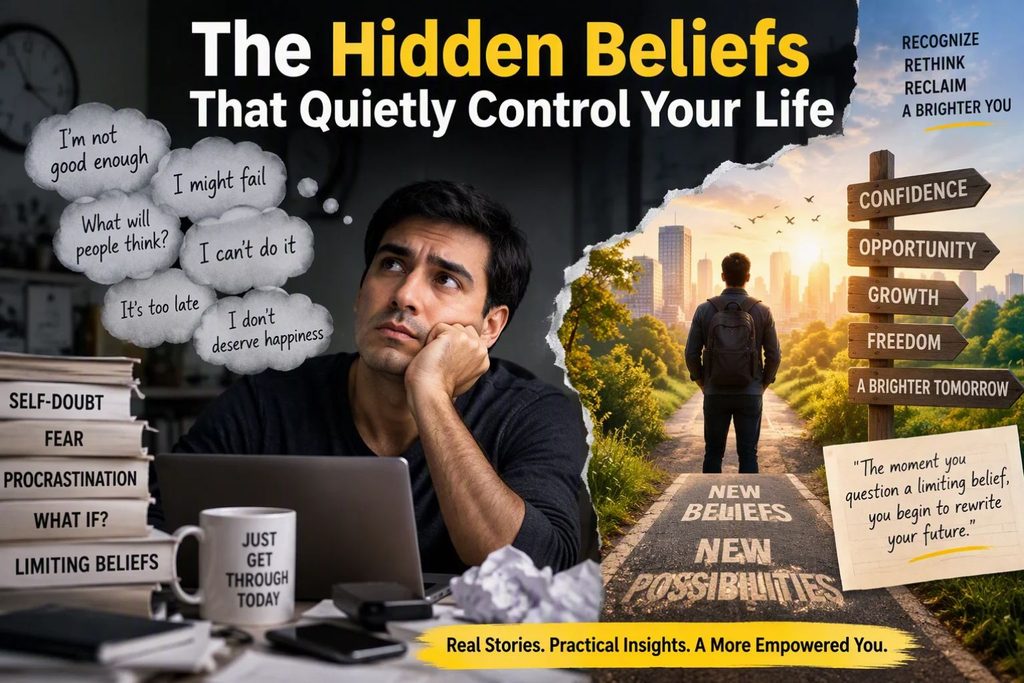
The Hidden Beliefs That Quietly Control Your Life
Most people believe they are making rational choices. They think they choose their careers, relationships, habits, and goals based on logic and free will. Yet beneath every decision lies a set of hidden beliefs that silently shape behavior.
These beliefs are often invisible. They operate in the background like software running on a computer. Unless we consciously examine them, they can direct our lives for years without our awareness.
The good news is that once a hidden belief is exposed, it loses much of its power. Personal transformation begins when we recognize the beliefs that are controlling us and consciously choose better ones.
What Are Hidden Beliefs?
Hidden beliefs are assumptions we accept as true without questioning them.
Examples include:
• I am not good enough.
• Success is for other people.
• Making mistakes is dangerous.
• I must please everyone.
• I am too old to change.
• If I fail, people will reject me.
• I don’t deserve happiness.
These beliefs may not be consciously repeated every day, but they influence our actions and decisions.
Think of beliefs as the roots of a tree.
• Thoughts are the branches.
• Emotions are the leaves.
• Actions are the fruits.
• Beliefs are the roots.
If the roots are unhealthy, the fruits will be unhealthy regardless of how hard we try.
How Hidden Beliefs Are Formed
Most hidden beliefs originate from:
Childhood Experiences
A child who is frequently criticized may develop the belief:
“I am never good enough.”
Later in life, that person may avoid challenges, not because they lack ability, but because they fear proving the belief true.
Social Conditioning
Society constantly communicates messages about success, appearance, status, and achievement.
Repeated exposure can create beliefs such as:
• My worth depends on achievement.
• I must be busy to be valuable.
• Rest is laziness.
Emotional Experiences
A single painful event can create a lifelong belief.
For example:
A student speaks in class and everyone laughs.
The hidden belief becomes:
“Speaking up is unsafe.”
Years later, the adult struggles with public speaking without understanding why.
The Invisible Prison
Hidden beliefs often become self-fulfilling prophecies.
Imagine a person who believes:
“I am not capable of leadership.”
What happens?
• They avoid opportunities.
• They don’t volunteer.
• They remain silent.
• They underestimate themselves.
As a result, they never gain leadership experience.
They then conclude:
“See? I was right.”
The belief created the outcome.
The prison was never external. It existed in the mind.
Real-Life Example 1: The Capable Employee
Rina was hardworking and knowledgeable.
For years she watched colleagues receive promotions while she remained in the same position.
When asked why she never applied for management roles, she said:
“I’m not leadership material.”
After coaching and reflection, she discovered a childhood belief:
“Leadership belongs to confident people.”
She had confused confidence with competence.
As she gradually challenged the belief, she began leading projects and eventually accepted a management role.
The problem was never ability.
The problem was belief.
Real-Life Example 2: The Fitness Journey
Arun tried numerous diet and exercise programs.
Each effort lasted only a few weeks.
His hidden belief was:
“I have no self-discipline.”
Whenever he missed a workout, he viewed it as proof of failure.
Eventually he learned to replace the belief with:
“Discipline is a skill I can develop.”
That simple shift changed his approach.
Instead of judging himself, he started practicing consistency.
Within a year, his health improved significantly.
The Three Signs of a Limiting Belief
1. Repeating Patterns
Do you face the same challenge repeatedly?
Examples:
• Similar relationship problems
• Repeated procrastination
• Chronic self-doubt
• Persistent fear of failure
Patterns often reveal hidden beliefs.
2. Strong Emotional Reactions
When a situation triggers unusually intense emotion, a belief may be involved.
Questions to ask:
• Why does this upset me so much?
• What does this situation mean to me?
3. Automatic Statements
Notice your self-talk.
Examples:
• I always mess up.
• That’s just how I am.
• I can’t do that.
• People like me don’t succeed.
Such statements often point directly to hidden beliefs.
Replacing Limiting Beliefs
Transformation does not happen by repeating positive affirmations.
It happens through evidence.
Step 1: Identify the Belief
Write it down.
Example:
“I am not creative.”
Step 2: Challenge the Evidence
Ask:
• Is this always true?
• What evidence contradicts it?
• Where did this belief come from?
Step 3: Create a Better Belief
Replace:
“I am not creative.”
With:
“Creativity improves through practice.”
The new belief should be realistic, not magical.
Step 4: Act on the New Belief
Take small actions that support the new idea.
Beliefs change when experience changes.
A Story from Nature
A young elephant in captivity is tied to a small wooden stake.
It pulls repeatedly but cannot escape.
Eventually it stops trying.
When the elephant becomes powerful enough to break the stake easily, it remains trapped.
Not because of physical limitations.
Because of a belief.
Many people live the same way.
They are capable of far more than they realize but continue acting according to old mental programming.
Reflection Exercise
Take a notebook and complete these sentences:
1. I often tell myself __________.
2. The area of life where I feel stuck is __________.
3. What do I believe about myself in this area?
4. Where might this belief have originated?
5. What evidence challenges this belief?
6. What is a healthier belief I can adopt?
7. What action can I take this week to support this new belief?
Spend at least 15 minutes reflecting.
You may discover that the obstacle is not your circumstances but your assumptions.
The 7-Day Belief Audit
For the next seven days:
Every Evening
Record:
• One limiting thought you noticed
• The hidden belief behind it
• A healthier alternative belief
• One action you will take tomorrow
Example
Limiting Thought: “I will probably fail.”
Hidden Belief: “I am incapable.”
New Belief: “I can learn and improve.”
Action: Attempt the task anyway.
By the end of the week, you will begin seeing patterns that have influenced your choices for years.
Final Thought
Personal transformation rarely begins with changing the world around you.
It begins with changing the story inside you.
Your beliefs act like invisible lenses. They determine what opportunities you notice, what risks you take, and what future you imagine for yourself.
The moment you question a limiting belief, you reclaim a measure of freedom.
The moment you replace it with a healthier one, you reclaim a measure of power.
And the moment you act on that new belief, transformation truly begins.
Ask yourself today: What belief am I carrying that no longer serves the person I want to become?
জীবনকে নীরবে নিয়ন্ত্রণ করে এমন লুকানো বিশ্বাস
আমাদের অধিকাংশ মানুষ মনে করি, আমরা নিজের সিদ্ধান্ত নিজেরাই নিই। আমরা ভাবি, যুক্তি ও বিচারবোধের ভিত্তিতেই আমরা আমাদের পেশা, সম্পর্ক, অভ্যাস এবং জীবনপথ নির্বাচন করি। কিন্তু বাস্তবে আমাদের সিদ্ধান্তের পেছনে কাজ করে কিছু অদৃশ্য বিশ্বাস, যা নীরবে আমাদের জীবনকে পরিচালনা করে।
এই বিশ্বাসগুলো এতটাই গভীরে প্রোথিত থাকে যে আমরা অনেক সময় সেগুলোর অস্তিত্বই টের পাই না। ঠিক যেন একটি কম্পিউটারের অপারেটিং সিস্টেম। বাইরে থেকে দেখা যায় না, কিন্তু ভেতরে বসে সমস্ত কার্যকলাপ নিয়ন্ত্রণ করে।
ব্যক্তিগত রূপান্তরের যাত্রা শুরু হয় তখনই, যখন আমরা এই লুকানো বিশ্বাসগুলোকে চিনতে শিখি।
লুকানো বিশ্বাস কী?
লুকানো বিশ্বাস হলো এমন কিছু ধারণা, যেগুলো আমরা সত্য বলে মেনে নিয়েছি কিন্তু কখনও যাচাই করে দেখিনি।
উদাহরণস্বরূপ:
• আমি যথেষ্ট ভালো নই।
• আমার দ্বারা কিছু হবে না।
• ভুল করা বিপজ্জনক।
• সবাইকে খুশি রাখতে হবে।
• আমার বয়স হয়ে গেছে, এখন আর পরিবর্তন সম্ভব নয়।
• আমি সুখ পাওয়ার যোগ্য নই।
এসব বিশ্বাস দিনের পর দিন আমাদের চিন্তা, অনুভূতি এবং আচরণকে প্রভাবিত করে।
একটি গাছের সঙ্গে তুলনা করলে:
• বিশ্বাস হলো শিকড়
• চিন্তা হলো শাখা
• অনুভূতি হলো পাতা
• কাজ হলো ফল
শিকড় অসুস্থ হলে ফল কখনোই সুস্থ হতে পারে না।
এই বিশ্বাসগুলো তৈরি হয় কীভাবে?
১. শৈশবের অভিজ্ঞতা
একটি শিশু যদি বারবার সমালোচিত হয়, তার মনে গেঁথে যেতে পারে:
“আমি যথেষ্ট ভালো নই।”
বড় হয়ে সেই ব্যক্তি নতুন সুযোগ এড়িয়ে চলে, কারণ তার ভেতরে ব্যর্থতার ভয় কাজ করে।
২. সামাজিক প্রভাব
সমাজ প্রতিনিয়ত আমাদের শেখায়:
• সফল না হলে তোমার মূল্য নেই।
• সবসময় ব্যস্ত থাকতে হবে।
• বিশ্রাম মানেই অলসতা।
ধীরে ধীরে এসব ধারণা বিশ্বাসে পরিণত হয়।
৩. আবেগঘন ঘটনা
একটি ঘটনাও কখনও কখনও জীবনভর একটি বিশ্বাস তৈরি করতে পারে।
ধরা যাক, একজন ছাত্র ক্লাসে দাঁড়িয়ে উত্তর দিতে গিয়ে হাস্যকর পরিস্থিতির শিকার হলো।
তার মনে জন্ম নিতে পারে:
“সবার সামনে কথা বলা নিরাপদ নয়।”
বছরের পর বছর পরেও সেই ব্যক্তি জনসমক্ষে কথা বলতে ভয় পেতে পারেন।
অদৃশ্য কারাগার
লুকানো বিশ্বাসের সবচেয়ে বিপজ্জনক দিক হলো এগুলো নিজের সত্যতা নিজেই প্রমাণ করে।
ধরুন, একজন ব্যক্তি বিশ্বাস করেন:
“আমি নেতৃত্ব দেওয়ার যোগ্য নই।”
ফলাফল:
• তিনি সুযোগ নেবেন না।
• তিনি সামনে আসবেন না।
• তিনি নিজের মত প্রকাশ করবেন না।
অবশেষে তিনি নেতৃত্বের অভিজ্ঞতা অর্জন করতে পারবেন না এবং বিশ্বাসটি আরও দৃঢ় হবে।
কারাগারটি বাইরের নয়।
কারাগারটি ছিল মনের ভেতরে।
বাস্তব জীবনের উদাহরণ
রিমার গল্প
রিমা ছিলেন অত্যন্ত দক্ষ কর্মী। তবুও বছরের পর বছর পদোন্নতি পাচ্ছিলেন না।
একদিন আলোচনার সময় তিনি বললেন:
“আমি নেতৃত্ব দেওয়ার মতো মানুষ নই।”
পরে আত্মবিশ্লেষণে তিনি আবিষ্কার করলেন, ছোটবেলায় তিনি মনে করেছিলেন:
“নেতৃত্ব শুধু আত্মবিশ্বাসী মানুষদের কাজ।”
কিন্তু বাস্তবতা হলো, আত্মবিশ্বাস নেতৃত্বের ফলও হতে পারে।
এই বিশ্বাস ভাঙার পর তিনি ছোট ছোট দায়িত্ব নিতে শুরু করেন এবং ধীরে ধীরে নেতৃত্বের ভূমিকায় সফল হন।
অরুণের গল্প
অরুণ বহুবার স্বাস্থ্যকর জীবনযাপন শুরু করতে চেয়েছিলেন। কিন্তু কয়েক সপ্তাহ পরই ছেড়ে দিতেন।
তার লুকানো বিশ্বাস ছিল:
“আমার কোনো আত্মনিয়ন্ত্রণ নেই।”
একজন বন্ধুর পরামর্শে তিনি বিশ্বাসটি পরিবর্তন করেন:
“শৃঙ্খলা একটি দক্ষতা, যা অনুশীলনের মাধ্যমে গড়ে ওঠে।”
ধীরে ধীরে তার জীবনযাত্রা বদলে যায়।
কীভাবে বুঝবেন কোনো লুকানো বিশ্বাস আপনাকে নিয়ন্ত্রণ করছে?
১. একই সমস্যা বারবার ঘটে
• একই ধরনের সম্পর্কের সমস্যা
• বারবার কাজ পিছিয়ে দেওয়া
• আত্মবিশ্বাসের অভাব
• ব্যর্থতার ভয়
যেখানে পুনরাবৃত্তি আছে, সেখানে প্রায়ই কোনো বিশ্বাস কাজ করছে।
২. অতিরিক্ত আবেগীয় প্রতিক্রিয়া
কোনো পরিস্থিতিতে আপনার প্রতিক্রিয়া যদি স্বাভাবিকের চেয়ে বেশি হয়, তাহলে হয়তো কোনো বিশ্বাস আঘাতপ্রাপ্ত হয়েছে।
৩. নিজের সঙ্গে কথোপকথন
নিজেকে কী বলেন?
• আমি পারব না।
• এটা আমার জন্য নয়।
• আমি সবসময় ভুল করি।
• আমার ভাগ্য খারাপ।
এই বাক্যগুলো প্রায়ই গভীর বিশ্বাসের দরজা খুলে দেয়।
বিশ্বাস পরিবর্তনের চার ধাপ
ধাপ ১: বিশ্বাসটি লিখে ফেলুন
উদাহরণ:
“আমি সৃজনশীল নই।”
ধাপ ২: প্রশ্ন করুন
• এটি কি সবসময় সত্য?
• এর বিপরীতে কোনো প্রমাণ আছে?
• এই বিশ্বাসের উৎস কোথায়?
ধাপ ৩: নতুন বিশ্বাস তৈরি করুন
পুরোনো:
“আমি সৃজনশীল নই।”
নতুন:
“সৃজনশীলতা অনুশীলনের মাধ্যমে বাড়ে।”
ধাপ ৪: নতুন বিশ্বাস অনুযায়ী কাজ করুন
অভিজ্ঞতা বিশ্বাসকে শক্তিশালী করে।
নতুন বিশ্বাসের পক্ষে ছোট ছোট পদক্ষেপ নিন।
অনুশীলন: নিজের বিশ্বাস খুঁজে বের করুন
একটি নোটবুকে উত্তর লিখুন:
1. আমি প্রায়ই নিজেকে বলি __________।
2. জীবনের যে ক্ষেত্রে আমি আটকে আছি __________।
3. সেই ক্ষেত্রে আমার নিজের সম্পর্কে বিশ্বাস কী?
4. এই বিশ্বাসের উৎস কোথায়?
5. কী প্রমাণ আছে যে এটি পুরোপুরি সত্য নয়?
6. আমি কোন নতুন বিশ্বাস গ্রহণ করতে চাই?
7. আগামী সাত দিনে আমি কী পদক্ষেপ নেব?
৭ দিনের “বিশ্বাস নিরীক্ষা” চ্যালেঞ্জ
প্রতিদিন রাতে লিখুন:
• আজকের সীমাবদ্ধ চিন্তা
• এর পেছনের বিশ্বাস
• একটি নতুন বিকল্প বিশ্বাস
• আগামীকালের একটি ছোট পদক্ষেপ
মাত্র এক সপ্তাহ পরই আপনি এমন কিছু বিশ্বাস আবিষ্কার করতে পারেন, যা বছরের পর বছর আপনার জীবনকে প্রভাবিত করে এসেছে।
উপসংহার
জীবন পরিবর্তনের প্রথম ধাপ হলো বাহ্যিক পরিস্থিতি পরিবর্তন করা নয়, বরং নিজের ভেতরের গল্পকে নতুন করে লেখা।
যে বিশ্বাসগুলোকে আমরা প্রশ্ন করি না, সেগুলোই আমাদের ভবিষ্যৎ নির্ধারণ করে।
কিন্তু যে মুহূর্তে আমরা কোনো সীমাবদ্ধ বিশ্বাসকে চ্যালেঞ্জ করি, সেই মুহূর্তে আমরা আমাদের স্বাধীনতার একটি নতুন দরজা খুলে দিই।
বিশেষ উক্তি (Original Bengali Quote)
“মানুষকে তার বাস্তবতা যতটা বেঁধে রাখে না, তার চেয়ে অনেক বেশি বেঁধে রাখে নিজের সম্পর্কে বিশ্বাস করা গল্পগুলো। সেই গল্প বদলালে, জীবনও বদলাতে শুরু করে।”
Pingback: September 2026 Newsletter – Holistic Living