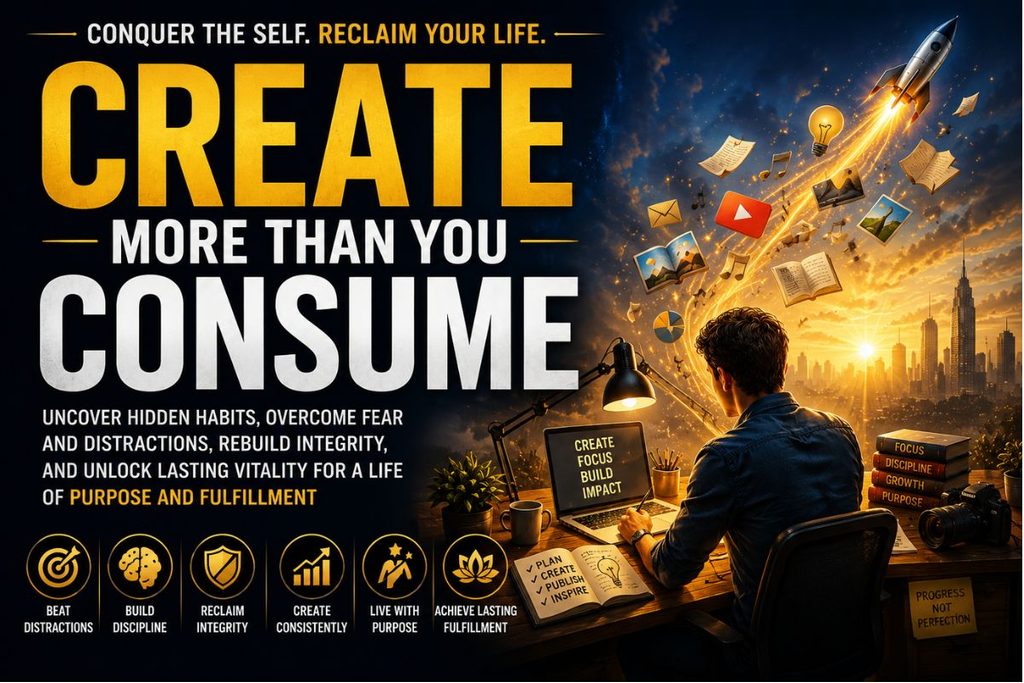
Create More Than You Consume: A Better Way to Live, Learn, and Contribute
We are living in perhaps the greatest age of consumption in human history.
Within minutes, we can read the news, watch videos from around the world, browse social media, listen to experts, buy books, take courses, follow successful people, and ask artificial intelligence almost any question. Knowledge that once required days of searching can now arrive within seconds.
This is an extraordinary privilege.
But it creates an equally important question:
What are we doing with everything we consume?
At the end of a busy day, we may have read dozens of posts, watched several videos, responded to messages, checked the news repeatedly, and learned many interesting things. Yet if we ask ourselves, “What did I create, improve, solve, or contribute today?” the answer may be surprisingly small.
That is the central challenge behind Create More Than You Consume.
It is not a call to stop reading, watching, learning, or enjoying life. It is an invitation to develop a healthier relationship between what enters our lives and what emerges from them.
The Invisible Consumption Loop
Modern consumption rarely announces itself as a problem. In fact, much of it feels productive.
We read another article because we want to understand more. We watch another educational video because we want to improve. We research another method before starting our project. We save another useful post for later.
Each individual action appears harmless—even beneficial.
The difficulty begins when input continually replaces output.
Learning can become a substitute for doing. Research can become a substitute for deciding. Preparation can become a substitute for starting. Inspiration can become a substitute for creating.
And entertainment designed to occupy five minutes can quietly consume an hour.
The problem, therefore, is not simply how much information we consume. The more useful question is:
Is what I consume helping me live, act, and create better—or merely giving me more to consume?
1. Awareness Comes Before Change
We cannot change a pattern we do not recognize.
Notice what happens during an ordinary day. How frequently do you reach for your phone without a specific purpose? How often does one video become five? How many articles, books, courses, or ideas have you accumulated without applying them?
There is no need for guilt.
The objective is awareness.
Try dividing some of your activities into two broad categories:
Consumption: reading, watching, browsing, listening, scrolling, researching.
Creation: writing, applying, practicing, solving, designing, teaching, building, improving, experimenting, helping.
Both are necessary.
The question is whether they are in a healthy relationship.
2. The Biggest Barrier May Simply Be Starting
Once we recognize excessive consumption, we may decide to create more.
Then another problem appears.
Where do I begin?
We may have too many ideas. We want to select the best one. We think about the final result and become overwhelmed by its size.
A person who wants to write a book imagines 50,000 words.
Someone wanting to become fit imagines months of exercise.
An aspiring entrepreneur imagines an entire business.
A student sees the whole syllabus.
Looking at the destination can make the first step unnecessarily intimidating.
The better question is:
What is the smallest meaningful output I can produce now?
One paragraph.
One exercise.
One phone call.
One page.
One idea.
One experiment.
One improvement.
That leads to an important principle explored in the book—the 1% Start Rule.
3. Start With 1%
We often assume that important goals require impressive beginnings.
They don’t.
A small beginning has one enormous advantage over a perfect plan:
It exists.
Give your idea fifteen minutes. Write the first paragraph. Make the first sketch. Walk for ten minutes. Learn one concept and apply it. Contact one person.
The purpose of the 1% Start Rule is not to make your ambitions smaller. It is to make the barrier to beginning smaller.
Once you start, something interesting happens.
You learn.
And what you learn from doing often gives you more clarity than what you learned while waiting.
“A small beginning has greater power than a magnificent intention that never becomes action.”
— Dr. Gurudas Bandyopadhyay
4. Don’t Wait Until You Feel Ready
One of the most respectable forms of procrastination is preparation.
I need to learn a little more.
I need a better plan.
I need more confidence.
I will begin when I have more time.
Preparation is essential for many activities. But there is a point at which additional preparation produces diminishing returns.
We may be waiting for a feeling called readiness that never completely arrives.
Consider an alternative sequence:
Learn → Act → Observe → Improve → Act Again
Action exposes what you genuinely don’t know. It produces feedback. Feedback tells you what to learn next.
Confidence also works this way.
We often think:
Confidence → Action
But much of real life works in the opposite direction:
Action → Experience → Capability → Confidence
You don’t always need confidence to begin.
Sometimes you need to begin to acquire confidence.
5. Starting Is Not Enough—You Must Return
A strong beginning feels exciting. Sustainable progress is usually much quieter.
Motivation rises and falls. Life interrupts. Results arrive more slowly than expected.
This is where consistency becomes more important than intensity.
Instead of asking, “What can I accomplish on my most motivated day?”, ask:
“What is the smallest useful action I can continue even on an ordinary day?”
For a writer, perhaps it is 200 words.
For a student, 20 minutes of focused study.
For someone developing a skill, 15 minutes of practice.
For a creator, one useful idea.
These small outputs can look insignificant individually. Their power appears through accumulation.
Start small. Return often. Let time multiply the results.
6. Turn Input Into Output
Perhaps the most important shift is not to stop consuming but to consume differently.
Suppose you read a useful book.
Don’t immediately begin another.
Ask:
What are the three ideas I want to remember?
What can I apply?
What do I disagree with?
How does this connect with my experience?
What can I create from it?
A useful cycle might look like this:
Consume → Capture → Reflect → Apply → Create → Share → Improve
One book may generate an article.
One article may generate a presentation.
One experience may become a lesson.
One problem may become an innovation.
One conversation may trigger a project.
One idea may eventually become a book.
Information becomes far more powerful when it moves through us rather than merely into us.
7. Protect Your Attention
Creation requires another increasingly scarce resource: focus.
Having two free hours does not necessarily mean having two productive hours. If those hours are repeatedly interrupted by notifications, messages, emails, open tabs, social media, and task switching, very little deep thinking may occur.
Protecting attention does not require abandoning technology.
Try something simpler.
Silence unnecessary notifications.
Keep your phone away for 20 minutes.
Close irrelevant browser tabs.
Choose one task.
Decide what you want to produce before beginning.
Then work uninterrupted for a short period.
Twenty minutes of focused creation may sometimes be worth more than two hours of fragmented activity.
Your attention is valuable because your life gradually moves toward whatever repeatedly receives it.
8. Create Despite Self-Doubt
Even after finding time and focus, another obstacle may remain inside us.
What if this isn’t good enough?
What will people think?
Someone else has already done it better.
Who am I to share this?
These questions have probably prevented countless useful ideas from reaching the world.
Creating does not require the disappearance of doubt.
It requires changing our relationship with doubt.
Make the first version imperfect.
Improve it.
Seek useful feedback.
Learn.
Create again.
Comparison can also be reframed. Someone else’s excellence can become evidence of what is possible rather than evidence that we should stop.
“Let doubt speak—but let action have the final word.”
— Dr. Gurudas Bandyopadhyay
9. Small Outputs Create Momentum
Creation has a compounding quality.
Your first article teaches you how to write the second.
Your first video teaches you how to improve the next.
Your first project reveals skills you need to develop.
Your first attempt produces feedback.
Each output becomes an input for future creation.
Eventually, you are no longer starting from zero.
You are starting from experience.
This is momentum.
It is why small outputs should not be dismissed simply because they initially reach few people or produce modest results. Something that helps five people is not meaningless because it did not reach five thousand.
Create value first.
Allow reach to develop over time.
10. From Consumer to Creator—and Ultimately Contributor
The deepest transformation occurs when creation becomes part of your identity.
You stop thinking:
“I hope someday I will write.”
and begin thinking:
“I write.”
You stop saying:
“Someday I will share what I know.”
and begin asking:
“Who could benefit from what I know today?”
And creation is much broader than writing books, making videos, painting, or starting businesses.
A teacher creates understanding.
A manager creates better systems.
A parent creates an environment in which children can grow.
A doctor creates better possibilities for health.
A student creates understanding by applying knowledge.
A retiree can transform decades of experience into guidance for younger generations.
Anyone can create something of value.
This leads beyond the identity of creator toward something even more meaningful:
Contributor.
A Simple Daily Practice
At the end of each day, try asking yourself four questions:
1. What did I consume today?
2. What did I learn from it?
3. What did I create, improve, or solve?
4. What did I contribute to someone else?
You do not need impressive answers every day.
The questions themselves gradually change what you notice and prioritize.
The Final Idea: Create More Than You Consume
This philosophy is not about turning every minute into work. Rest matters. Entertainment matters. Curiosity matters. Reading matters. Relationships matter.
Nor does “create more” necessarily mean producing a greater quantity than you consume.
It means allowing creation to occupy a more intentional and meaningful place in your life.
Consume what enriches you.
Learn what develops you.
Question what influences you.
Apply what helps you.
Create what expresses you.
Share what may serve others.
And contribute what only your particular combination of knowledge, experience, abilities, and perspective can contribute.
You don’t have to change everything tomorrow.
Take one idea you have been carrying.
Give it fifteen minutes.
Produce the first small output.
Then return tomorrow.
“Don’t measure your life only by what you consumed. Measure it by what you created, improved, solved, and contributed. Start with 1%.”
— Dr. Gurudas Bandyopadhyay
Stop scrolling. Start creating.
And perhaps, one small creation at a time, begin building a life in which you create more than you consume.
If you are interested to learn more, read our book – Create More Than You Consume: Stop Scrolling, Start Creating, Stay Consistent—and Build a Life of Meaningful Output https://www.amazon.com/dp/B0HGGP3L97
আপনি যা গ্রহণ করেন, তার চেয়ে বেশি সৃষ্টি করুন
Create More Than You Consume
আমরা এমন এক সময়ে বাস করছি যখন তথ্য, বিনোদন ও জ্ঞান আমাদের হাতের মুঠোয়। প্রতিদিন আমরা খবর পড়ি, ভিডিও দেখি, সোশ্যাল মিডিয়া স্ক্রল করি, বই পড়ি, পডকাস্ট শুনি এবং অসংখ্য নতুন ধারণা গ্রহণ করি। কিন্তু দিনের শেষে একটি প্রশ্ন খুব কমই করি—আজ আমি কী সৃষ্টি করেছি, কী উন্নত করেছি, কোন সমস্যার সমাধান করেছি, অথবা কারও জন্য কী মূল্য তৈরি করেছি?
সমস্যা তথ্য গ্রহণে নয়। শেখা, পড়া, দেখা ও শোনা আমাদের বিকাশের জন্য জরুরি। সমস্যা শুরু হয় তখন, যখন গ্রহণ (Consumption) ক্রমশ সৃষ্টি (Creation)-কে সরিয়ে দেয়। আমরা আরও জানার জন্য পড়তে থাকি, কিন্তু জানা বিষয় প্রয়োগ করি না; পরিকল্পনা করি, কিন্তু শুরু করি না; প্রস্তুতি নিই, কিন্তু কাজটি পিছিয়ে দিই। ফলে ব্যস্ততা বাড়ে, কিন্তু অর্থপূর্ণ অগ্রগতি কমে যায়।
১. প্রথমে নিজের Consumption Pattern চিনুন
পরিবর্তনের প্রথম ধাপ হলো সচেতনতা। লক্ষ্য করুন—আপনার কতটা সময় উদ্দেশ্যপূর্ণ শেখায় যাচ্ছে এবং কতটা অভ্যাসবশত স্ক্রলিং, ভিডিও বা অপ্রয়োজনীয় তথ্যে চলে যাচ্ছে।
নিজেকে জিজ্ঞাসা করুন:
“আমি যা গ্রহণ করছি, তা কি আমাকে আরও ভালোভাবে চিন্তা, কাজ বা সৃষ্টি করতে সাহায্য করছে?”
এই একটি প্রশ্নই ডিজিটাল জীবনের সঙ্গে আমাদের সম্পর্ক বদলাতে পারে।
২. বড় করে নয়—১% দিয়ে শুরু করুন
আমরা অনেক সময় কাজ শুরু করি না, কারণ পুরো কাজটির বিশালতা দেখি। বই লিখতে চাইলে পুরো বইয়ের কথা ভাবি। নতুন দক্ষতা শিখতে চাইলে দীর্ঘ পথটির কথা ভাবি।
তার বদলে জিজ্ঞাসা করুন:
“এখনই সবচেয়ে ছোট অর্থপূর্ণ পদক্ষেপটি কী হতে পারে?”
একটি পৃষ্ঠা লিখুন।
১৫ মিনিট কাজ করুন।
একটি ফোন করুন।
একটি ধারণা লিখে রাখুন।
এটাই 1% Start Rule—লক্ষ্য ছোট করা নয়, শুরু করার বাধাটি ছোট করা।
“একটি বিশাল পরিকল্পনা যা কখনও শুরু হয় না, তার চেয়ে একটি ছোট শুরু অনেক বেশি শক্তিশালী।”
— ড. গুরুদাস বন্দ্যোপাধ্যায়
৩. প্রস্তুত হওয়ার জন্য অপেক্ষা করবেন না
আমরা ভাবি—আরও একটু শিখে নিই, আরও আত্মবিশ্বাসী হই, পরিস্থিতি আরেকটু ভালো হোক, তারপর শুরু করব।
কিন্তু সম্পূর্ণ প্রস্তুতির সেই মুহূর্ত অনেক সময় আসেই না।
বরং চেষ্টা করুন:
শিখুন → কাজ করুন → পর্যবেক্ষণ করুন → উন্নতি করুন → আবার কাজ করুন।
অনেক ক্ষেত্রে আত্মবিশ্বাস কাজের আগে আসে না; কাজ করার ফলেই আত্মবিশ্বাস তৈরি হয়।
৪. শুধু শুরু নয়—ধারাবাহিক থাকুন
একদিনের প্রবল উৎসাহের চেয়ে ছোট কাজের ধারাবাহিকতা বেশি শক্তিশালী।
প্রতিদিন ২০০ শব্দ লেখা, ১৫ মিনিট শেখা, একটি ধারণা তৈরি করা বা একটি ছোট উন্নতি—এসব আলাদাভাবে সামান্য মনে হতে পারে। কিন্তু সময়ের সঙ্গে এগুলোই বড় ফল তৈরি করে।
ছোট করে শুরু করুন। নিয়মিত ফিরে আসুন। সময়কে আপনার প্রচেষ্টাকে বড় করতে দিন।
৫. Input-কে Output-এ রূপান্তর করুন
একটি বই পড়লেন—তারপর কী?
সঙ্গে সঙ্গে আরেকটি বই শুরু করার আগে ভাবুন:
আমি কী শিখলাম?
কী প্রয়োগ করতে পারি?
এ থেকে কী সৃষ্টি করতে পারি?
একটি সহজ চক্র অনুসরণ করা যায়:
Consume → Capture → Reflect → Apply → Create → Share → Improve
একটি ধারণা থেকে নোট, নোট থেকে নিবন্ধ, নিবন্ধ থেকে ভিডিও, শিক্ষা থেকে সমাধান, অভিজ্ঞতা থেকে অন্যের জন্য দিকনির্দেশনা তৈরি হতে পারে।
জ্ঞান তখনই বেশি মূল্যবান হয়, যখন তা কাজে ও অবদানে রূপান্তরিত হয়।
৬. নিজের মনোযোগকে রক্ষা করুন
আজ সময়ের পাশাপাশি Attention বা মনোযোগও একটি মূল্যবান সম্পদ।
Notification, WhatsApp, email, social media এবং একসঙ্গে অনেক কাজ আমাদের মনকে টুকরো টুকরো করে দেয়।
প্রতিদিন অন্তত কিছু সময় রাখুন যখন আপনি—
ফোন দূরে রাখবেন, অপ্রয়োজনীয় notification বন্ধ করবেন, একটি কাজ বেছে নেবেন এবং ১৫–৩০ মিনিট শুধু সেটিতেই মন দেবেন।
সব সময় বেশি সময়ের প্রয়োজন হয় না। অনেক সময় প্রয়োজন কম-বিক্ষিপ্ত সময়ের।
৭. সন্দেহ থাকলেও সৃষ্টি করুন
“আমার কাজ কি যথেষ্ট ভালো?”
“মানুষ কী বলবে?”
“অন্যরা তো আমার চেয়ে অনেক ভালো করছে।”
এই প্রশ্নগুলো স্বাভাবিক। কিন্তু এগুলোকে সিদ্ধান্ত নেওয়ার অধিকার দেবেন না।
প্রথম সংস্করণ অসম্পূর্ণ হতে পারে। তৈরি করুন। Feedback নিন। উন্নতি করুন। আবার তৈরি করুন।
সাহস মানে সন্দেহ না থাকা নয়; সন্দেহ থাকা সত্ত্বেও এগিয়ে যাওয়া।
Consumer থেকে Creator, Creator থেকে Contributor
Creator হওয়া মানেই লেখক, শিল্পী বা উদ্যোক্তা হওয়া নয়।
একজন শিক্ষক জ্ঞান সৃষ্টি করেন।
একজন পেশাজীবী সমাধান সৃষ্টি করেন।
একজন অভিভাবক বিকাশের পরিবেশ সৃষ্টি করেন।
একজন প্রবীণ তাঁর অভিজ্ঞতাকে পরবর্তী প্রজন্মের জন্য দিকনির্দেশনায় রূপান্তর করতে পারেন।
তাই প্রতিদিন রাতে চারটি প্রশ্ন করুন:
আজ আমি কী গ্রহণ করেছি?
কী শিখেছি?
কী সৃষ্টি বা উন্নত করেছি?
কীভাবে অন্যের উপকারে অবদান রেখেছি?
Create More Than You Consume আমাদের সারাক্ষণ কাজ করতে বলছে না। বিশ্রাম, বিনোদন, পড়াশোনা এবং শেখা—সবই জীবনের অংশ। মূল কথা হলো, যা গ্রহণ করছি তার কিছু অংশ যেন চিন্তা, কাজ, সৃষ্টি এবং অবদানে রূপান্তরিত হয়।
“জীবনকে শুধু আপনি কতটা গ্রহণ করেছেন তা দিয়ে মাপবেন না; আপনি কী সৃষ্টি করেছেন, কী উন্নত করেছেন, কোন সমস্যার সমাধান করেছেন এবং কী অবদান রেখেছেন—তা দিয়েও মাপুন। শুরু করুন মাত্র ১% দিয়ে।”
— ড. গুরুদাস বন্দ্যোপাধ্যায়
কম স্ক্রল করুন। বেশি সৃষ্টি করুন।
আজই ১% দিয়ে শুরু করুন।
Pingback: August 2026 Newsletter – Holistic Living