
Master Your Blood Sugar Naturally: The Power of Right Foods and Daily Habits
Maintaining balanced blood sugar is one of the most effective ways to preserve consistent energy, mental clarity, and long-term metabolic vitality. When glucose levels fluctuate wildly between sharp spikes and rapid crashes, the body experiences energy slumps, brain fog, intense sugar cravings, and systemic inflammation. Over time, persistent instability increases the risk of metabolic disorders.
Managing blood sugar does not require rigid starvation diets or extreme deprivation. By understanding basic food mechanics and adopting deliberate daily rhythms, you can achieve natural glucose balance.
Understanding the Foundation: Glycemic Load and Fiber
The human body converts carbohydrates into glucose, its primary cellular fuel. However, the speed of this conversion determines whether energy is released steadily or dumped into the bloodstream all at once.
• The Glycemic Index (GI): A scale ranking carbohydrates based on how rapidly they raise blood glucose. High-GI foods cause sudden spikes, triggering large surges of insulin. Low-GI foods break down slowly, releasing a sustained stream of energy.
• Dietary Fiber as a Shield: Soluble fiber dissolves into a gel-like consistency in the digestive tract. This slows gastric emptying, cushions glucose absorption, and supports insulin sensitivity.
1. The Green Anchors: Non-Starchy Vegetables
Non-starchy vegetables form the nutritional base of glucose control. They contain high concentrations of water, micronutrients, and fiber, with negligible carbohydrate impact.
• Leafy Greens (Spinach, Kale, Methi): Exceptionally dense in magnesium, an essential mineral that helps cellular receptors respond efficiently to insulin.
• Cruciferous Powerhouses (Broccoli, Cauliflower, Cabbage): Rich in sulforaphane, an antioxidant compound that supports cellular defenses against oxidative stress and aids glucose metabolism.
• Hydrating Staples (Cucumbers, Zucchini, Gourds): Low in calories with a high fluid content, these vegetables provide volume and fullness without altering glycemic levels.
• Bitter Gourd (Karela): Contains bioactive compounds like charantin, vicine, and polypeptide-p, which mimic insulin activity and assist cellular glucose uptake.
2. Smart Fruit Choices: Whole, High-Fiber, and Low-GI
The presence of natural fructose causes some to avoid fruit entirely, yet whole fruits provide critical polyphenols and vitamins. The key lies in selecting fruits with low glycemic loads and consuming them whole rather than juiced.
• Guava: High in dietary fiber and vitamin C, guava has a very low glycemic index, making it ideal for metabolic health.
• Papaya: Offers a moderate GI balanced by rich digestive enzymes (papain) and powerful carotenoid antioxidants.
• Green Apples and Pears: Loaded with pectin, a soluble fiber that delays carbohydrate digestion. Always eat these with the skin intact.
• Berries (Strawberries, Blueberries, Blackberries, Jamun): Dense in anthocyanins, which protect pancreatic beta cells and blunt post-meal blood sugar surges.
• Citrus Varieties (Oranges, Sweet Lime, Grapefruit): Deliver naringenin and hesperidin—flavonoids shown to improve glucose tolerance.
Golden Rule for Fruits: Enjoy fruits in whole portions rather than puréed or juiced, and pair them with a handful of raw nuts or seeds to further moderate glucose absorption.
3. Food Synergy: Pairing Fats and Proteins
Consuming isolated carbohydrates—even healthy ones—can produce a noticeable glycemic curve. Pairing carbohydrates with healthy fats and lean proteins slows down the overall digestive process.
• Incorporate cold-pressed oils (mustard, olive), nuts (almonds, walnuts), and seeds (chia, flax, pumpkin).
• Include lean protein sources such as lentils, chickpeas, paneer, eggs, or fish to trigger satiety hormones and stabilize digestion rates.
4. Beyond the Plate: Three Non-Negotiable Daily Habits
Food choices represent only half the metabolic equation. The nervous system, muscular system, and circadian rhythms dictate how effectively the body clears glucose.
• The 10–15 Minute Post-Meal Walk: Muscle contraction allows skeletal muscle cells to absorb glucose directly from the bloodstream via GLUT4 transporters, bypassing the need for heavy insulin secretion. A gentle stroll after your primary meals prevents the post-prandial spike.
• Restorative Sleep (7–8 Hours): Sleep deprivation elevates nighttime cortisol and sympathetic tone, prompting liver glucose dumps and inducing temporary insulin resistance the following morning.
• Circadian Meal Consistency: The pancreas follows an internal biological clock. Eating meals at consistent daily intervals trains the endocrine system to anticipate food and secrete digestive enzymes and hormones with optimal efficiency.
Taking control of blood sugar is a gradual process built on sustainable daily choices. By prioritizing non-starchy greens, choosing low-glycemic whole fruits, moving after meals, and giving your body regular rest, you build a resilient metabolic foundation that supports steady energy every day.
7 additional, science-backed lifestyle habits that have a profound impact on maintaining healthy blood sugar levels. You can easily integrate these into your website article, video series, or social media posts:
1. Optimize Food Sequencing (Eat in the Right Order)
The order in which you eat the items on your plate directly dictates how fast glucose enters your bloodstream:
The Formula: Fiber first; Protein & Healthy Fats second; Starches/Carbohydrates last.
Why it works: Eating fiber (like a salad or sautéed greens) coats the small intestine and slows down gastric emptying. The proteins and fats trigger satiety hormones. By the time the carbohydrates hit the digestive tract, their breakdown into glucose is significantly delayed, resulting in a gentle, flattened glucose curve rather than a sharp peak.
2. Take a Vinegar Dressing Pre-Meal Ritual
The Habit: Consume 1 tablespoon of apple cider vinegar (or any raw culinary vinegar/lemon juice) diluted in a tall glass of water 10 to 15 minutes before your carb-rich meals, or use it as a salad dressing.
Why it works: Acetic acid temporarily inactivates *alpha-amylase*, the enzyme responsible for breaking down complex carbohydrates into simple sugars. It also signals your muscles to absorb glucose more eagerly, reducing post-meal sugar spikes by up to 20–30%.
3. Incorporate Mild Resistance & Muscle-Loading Exercises
While walking is fantastic, skeletal muscle is the primary storage “sink” for blood glucose.
The Habit: 2 to 3 days a week of bodyweight exercises (squats, wall push-ups, calf raises) or light resistance band routines.
The Soleus Push-Up: Even seated calf raises (activating the soleus muscle in the calves) while reading or working at your desk significantly elevates local oxidative metabolism and burns glucose without taxing your cardiovascular system.
4. Practice Mindful, Slow Chewing (Down-Regulate the Nervous System)
The Habit: Take at least 20–30 chews per bite and sit down without digital screens or multitasking while eating.
Why it works: Rushing through meals keeps the body in a sympathetic (fight-or-flight) state, which releases epinephrine and cortisol—hormones that mobilize sugar into the blood. Eating slowly engages the parasympathetic (rest-and-digest) vagal pathways, allowing the pancreas to release insulin smoothly and digestion to progress without stress-induced spikes.
5. Morning Sunlight Exposure (Anchor Your Circadian Clock)
The Habit: Step outside into natural daylight for 10 to 20 minutes within an hour of waking up.
Why it works: Exposure to morning natural light sets your master central clock (the suprachiasmatic nucleus), which directly coordinates the peripheral clocks in your liver, pancreas, and adipose tissue. Studies show that a well-calibrated circadian rhythm enhances daytime insulin sensitivity and prevents late-afternoon glucose instability.
6. Set a Strict 2-to-3-Hour “Kitchen Closed” Window Before Bed
The Habit: Finish your evening meal at least 2 to 3 hours before going to sleep; avoid late-night snacking.
Why it works: As nighttime approaches, the brain produces melatonin to prepare the body for rest. Melatonin naturally inhibits insulin release from beta cells because the body doesn’t anticipate digesting heavy meals at night. Eating close to bedtime leads to prolonged, elevated glucose levels throughout the night and higher fasting glucose the next morning.
7. Gentle Diaphragmatic Breathing / Pranayama
The Habit: 5 to 10 minutes of deep belly breathing, Anulom Vilom (alternate nostril breathing), or box breathing (4s in, 4s hold, 4s out, 4s hold) daily—especially when feeling overwhelmed or right before meals.
Why it works: Chronic, low-grade mental stress prompts the adrenal glands to release cortisol and adrenaline, which signal the liver to dump stored glycogen into the bloodstream (gluconeogenesis) even if you haven’t eaten carbs. Controlled breathing rapidly lowers cortisol, helping to keep background glucose levels stable.

প্রাকৃতিকভাবে রক্তের শর্করা নিয়ন্ত্রণ: সঠিক খাবার ও দৈনন্দিন অভ্যাসের শক্তি
রক্তে শর্করার (ব্লাড সুগার) মাত্রা স্বাভাবিক ও স্থিতিশীল রাখা আমাদের দৈনন্দিন কর্মশক্তি, মানসিক সতর্কতা এবং দীর্ঘমেয়াদী সুস্বাস্থ্যের অন্যতম প্রধান ভিত্তি। রক্তে গ্লুকোজের মাত্রা যখন বারবার দ্রুত ওঠে এবং হঠাৎ নেমে যায়, তখন শরীর ক্লান্ত হয়ে পড়ে, মিষ্টিজাতীয় খাবারের প্রতি তীব্র আকাঙ্ক্ষা তৈরি হয়, মন অস্থির লাগে এবং শরীরের ভেতরে দীর্ঘস্থায়ী প্রদাহ (inflammation) বাড়ে। দীর্ঘ সময় ধরে এমনটা চলতে থাকলে তা টাইপ-২ ডায়াবেটিস ও হৃদরোগের ঝুঁকি তৈরি করে।
তবে রক্তে শর্করা নিয়ন্ত্রণে রাখার অর্থ কোনো কঠোর উপবাস বা সব প্রিয় খাবার ত্যাগ করা নয়। খাবারের কার্যপদ্ধতি বোঝা এবং কিছু স্বাস্থ্যকর অভ্যাসের মাধ্যমে খুব সহজেই প্রাকৃতিকভাবে গ্লুকোজের ভারসাম্য বজায় রাখা সম্ভব।
ভিত্তি বোঝা: গ্লাইসেমিক ইনডেক্স ও ফাইবারের ভূমিকা
আমরা যেসব খাবার খাই, শরীর সেগুলোর কার্বোহাইড্রেটকে গ্লুকোজে রূপান্তরিত করে কোষে শক্তি জোগায়। তবে সেই খাবার থেকে কত দ্রুত চিনি রক্তে মেশে, সেটাই সবচেয়ে গুরুত্বপূর্ণ।
গ্লাইসেমিক ইনডেক্স (GI): এটি একটি পরিমাপক, যা নির্দেশ করে কোনো খাবার কত দ্রুত রক্তে শর্করার মাত্রা বাড়িয়ে দেয়। উচ্চ-জিআই (High-GI) খাবার দ্রুত রক্তে চিনির বিস্ফোরণ ঘটায়, ফলে শরীরকে অতিরিক্ত ইনসুলিন তৈরি করতে হয়। অন্যদিকে লো-জিআই (Low-GI) খাবার ধীরে ধীরে রক্তে শক্তি সরবরাহ করে, ফলে শর্করা নিয়ন্ত্রণে থাকে।
খাদ্যআঁশ বা ফাইবারের প্রাকৃতিক সুরক্ষা: দ্রবণীয় ফাইবার (Soluble fiber) পরিপাকনালীতে একটি জেলির মতো আস্তরণ তৈরি করে। এটি খাবার হজম হওয়ার গতি কমিয়ে দেয়, যার ফলে রক্তে গ্লুকোজ খুব ধীরে শোষিত হয় এবং ইনসুলিনের কার্যক্ষমতা বাড়ে।
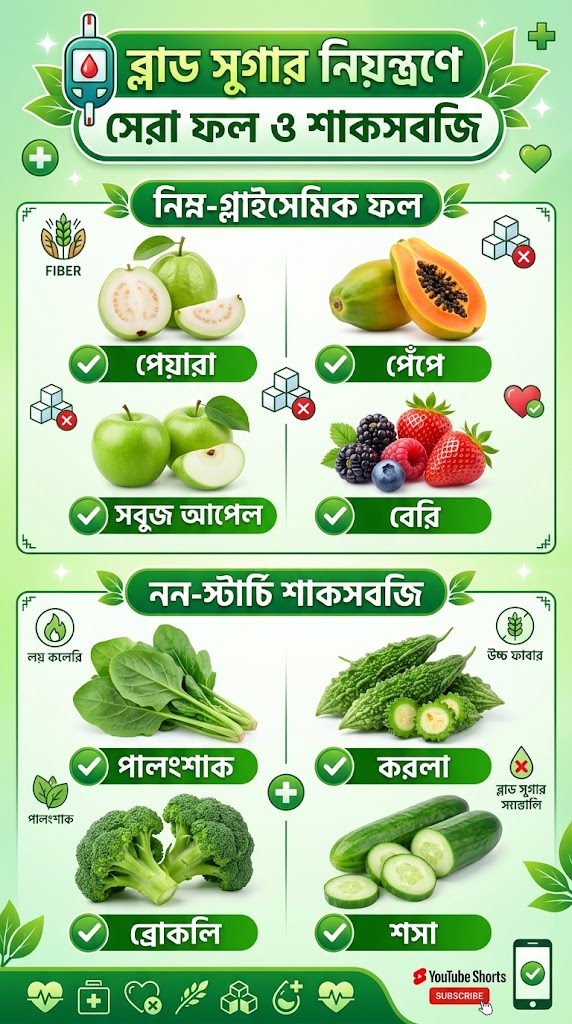
১. থালার মূল ভিত্তি: নন–স্টার্চি শাকসবজি
যেসকল সবজিতে স্টার্চ বা কার্বোহাইড্রেট অত্যন্ত কম এবং পানি ও ফাইবারের পরিমাণ বেশি, সেগুলোকে খাদ্যতালিকায় অগ্রাধিকার দেওয়া উচিত:
পালংশাক ও মেথিশাক: এগুলো ম্যাগনেসিয়াম ও ফাইবারের সমৃদ্ধ উৎস। ম্যাগনেসিয়াম কোষের ইনসুলিন রিসেপ্টরগুলোকে সক্রিয় রাখতে সাহায্য করে।
ব্রোকলি ও ফুলকপি: সালফোরাফেন নামক শক্তিশালী অ্যান্টিঅক্সিডেন্টে সমৃদ্ধ, যা কোষের অক্সিডেটিভ চাপ কমায় এবং গ্লুকোজের সঠিক বিপাকক্রিয়ায় সাহায্য করে।
শসা ও ঝিঙে: এগুলোতে প্রায় ৯৫% পানি থাকে এবং ক্যালোরি বা কার্বোহাইড্রেট প্রায় নেই বললেই চলে। এগুলো শরীরকে আর্দ্র রাখে এবং পেট ভরাতে সাহায্য করে।
করলা বা উচ্ছে: করলায় রয়েছে চ্যারান্টিন ও পলিপেপটাইড-পি এর মতো প্রাকৃতিক উপাদান, যা শরীরে প্রাকৃতিক ইনসুলিনের মতো কাজ করে এবং রক্ত থেকে গ্লুকোজ কমাতে সাহায্য করে।
২. সঠিক ফল নির্বাচন: গোটা, আঁশযুক্ত ও লো–জিআই ফল
মিষ্টি স্বাদের কারণে অনেকেই ফল খাওয়া পুরোপুরি বন্ধ করে দেন। কিন্তু গোটা ফলে থাকা ভিটামিন, খনিজ ও পলিফেনল শরীরের জন্য অপরিহার্য। নিয়ম হলো জুস করে না খেয়ে ফলটি গোটা খাওয়া:
পেয়ারা: পেয়ারায় রয়েছে উচ্চ ফাইবার এবং ভিটামিন সি। এর গ্লাইসেমিক ইনডেক্স অত্যন্ত কম হওয়ায় এটি সুগার রোগীদের জন্য আদর্শ।
কাঁচা বা পাকা পেঁপে: পেঁপেতে থাকে পাপাইন নামক পাচক এনজাইম এবং ফাইবার, যা হজম ভালো রাখে ও রক্তে গ্লুকোজ দ্রুত বাড়তে দেয় না।
সবুজ আপেল ও নাশপাতি: এগুলোতে থাকে পেকটিন নামের বিশেষ আঁশ। এই আঁশ সুগার শোষণ ধীর করে দেয়। এগুলো সবসময় খোসাসহ খাওয়া উচিত।
বেরি বা জাম জাতীয় ফল (কালোজাম, স্ট্রবেরি): এগুলোতে অ্যান্থোসায়ানিন থাকে, যা অগ্ন্যাশয়ের বিটা কোষকে সুস্থ রাখে এবং খাবারের পর হঠাৎ সুগার বৃদ্ধি রোধ করে।
লেবু ও সাইট্রাস ফল: পাতিলেবু, কমলালেবু ও বাতাবিলেবুতে থাকা ফ্ল্যাভোনয়েড গ্লুকোজ সহনশীলতা বৃদ্ধি করে।
নিয়ম: ফলের জুস বা স্মুদি না খেয়ে গোটা ফল চিবিয়ে খান এবং সাথে কিছু বাদাম বা বীজ খেলে শর্করার শোষণ আরও নিয়ন্ত্রিত হয়।
৩. খাবারের সঠিক সংমিশ্রণ: প্রোটিন ও স্বাস্থ্যকর ফ্যাটের সমন্বয়
শুধু শর্করা খেলে তা দ্রুত রক্তে গ্লুকোজ বাড়িয়ে দেয়। কিন্তু কার্বোহাইড্রেটের সাথে যখন প্রোটিন ও ফ্যাট মেশানো হয়, তখন পুরো হজম প্রক্রিয়াটি ধীর হয়ে যায়।
খাদ্যতালিকায় উদ্ভিজ্জ বা স্বাস্থ্যকর তেল (সরিষার তেল, অলিভ অয়েল), কাঁচা বাদাম (আমন্ড, আখরোট) এবং বীজ (চিয়া সিড, ফ্ল্যাক্সসিড, মিষ্টি কুমড়ার বীজ) রাখুন।
পর্যাপ্ত ডাল, ছোলা, পনির, ডিম বা মাছ যোগ করুন। এগুলো দীর্ঘক্ষণ পেট ভরা রাখে এবং অতিরিক্ত খাওয়ার প্রবণতা কমায়।
৪. রক্তে শর্করা নিয়ন্ত্রণে রাখার ৭টি কার্যকর দৈনন্দিন অভ্যাস
খাবারের পাশাপাশি আমাদের দৈনন্দিন অভ্যাস রক্তে গ্লুকোজ নিয়ন্ত্রণে অত্যন্ত গুরুত্বপূর্ণ ভূমিকা পালন করে:
1. খাবার খাওয়ার সঠিক ক্রম মেনে চলুন (Food Sequencing):
খাবারের প্লেট সাজানোর ক্ষেত্রে প্রথমে সালাদ বা শাকসবজি (ফাইবার) খান, এরপর ডাল/মাছ/ডিম (প্রোটিন ও ফ্যাট) খান এবং সবশেষে ভাত বা রুটি (কার্বোহাইড্রেট) খান। এতে পরিপাকতন্ত্রে শর্করার শোষণ প্রায় ৩০-৪০% ধীর হয়ে যায়।
2. খাওয়ার পর ১০–১৫ মিনিট হালকা হাঁটুন:
খাবার শেষ করার পর অলস বসে না থেকে হালকা গতিতে ১০-১৫ মিনিট পায়চারি করুন। এতে পেশীগুলো সরাসরি রক্ত থেকে গ্লুকোজ শোষণ করে শক্তিতে পরিণত করে, ফলে ইনসুলিনের ওপর চাপ কমে।
3. খাওয়ার ঠিক আগে লেবুজল বা ভিনেগার:
ভারী খাবার খাওয়ার ১০ মিনিট আগে এক গ্লাস পানিতে এক চামচ পাতিলেবুর রস বা আপেল সিডার ভিনেগার মিশিয়ে পান করলে পরিপাক এনজাইমের গতি কিছুটা ধীর হয় এবং খাবারের পর সুগার স্পাইক উল্লেখযোগ্যভাবে কমে।
4. ধীরে ধীরে ও মনোযোগ দিয়ে চিবিয়ে খান:
খাবার তাড়াহুড়ো করে না খেয়ে প্রতি লোকমা অন্তত ২০-২৫ বার চিবিয়ে খান। এটি হজমশক্তি বাড়ায়, মস্তিষ্কে সঠিক সময়ে তৃপ্তির সংকেত পাঠায় এবং মানসিক চাপজনিত হরমোন কমায়।
5. নিয়মিত পর্যাপ্ত ঘুম (৭ থেকে ৮ ঘণ্টা):
ঘুমের অভাব শরীরে কর্টিসল (স্ট্রেস হরমোন) বাড়িয়ে দেয়। এর ফলে ইনসুলিন প্রতিরোধ (Insulin Resistance) তৈরি হয় এবং পরদিন সকালে খালি পেটে সুগারের মাত্রা বেড়ে যেতে পারে।
6. ঘুমানোর ২–৩ ঘণ্টা আগে রাতের খাবার শেষ করুন:
দেরিতে রাতের খাবার খেলে বা ঘুমানোর ঠিক আগে কিছু খেলে শরীরের মেলাটোনিন হরমোনের স্বাভাবিক নিঃসরণ ব্যাহত হয়, যা রাতে রক্তে গ্লুকোজের মাত্রাকে দীর্ঘক্ষণ বাড়িয়ে রাখে।
7. সকালের মিষ্টি রোদ ও গভীর শ্বাস–প্রশ্বাসের অভ্যাস (Pranayama):
সকালে ১০-১৫ মিনিট গায়ে প্রাকৃতিক রোদ লাগালে শরীরের জৈবিক ঘড়ি (Circadian Rhythm) ঠিক থাকে। পাশাপাশি দিনে ৫ মিনিট গভীর শ্বাস নিলে মানসিক চাপ কমে, যা লিভার থেকে অপ্রয়োজনীয় গ্লুকোজ নিঃসরণ বন্ধ রাখতে সাহায্য করে।
উপসংহার
রক্তে শর্করার মাত্রা নিয়ন্ত্রণ রাখা কোনো কঠিন বা অবাস্তব লক্ষ্য নয়। এটি প্রতিদিনের সচেতন কয়েকটি সহজ সিদ্ধান্তের সমষ্টি। রঙিন ও তাজা শাকসবজি নির্বাচন, পরিমিত লো-জিআই ফল, খাবারের পর সামান্য হাঁটা এবং সঠিক সময়ে বিশ্রাম—এই ছোট ছোট পদক্ষেপগুলো একত্রিত হয়ে আপনাকে দীর্ঘমেয়াদী সুস্থতা ও প্রাণবন্ত জীবন উপহার দেবে। আজ থেকেই একটি বা দুটি পরিবর্তন দিয়ে শুরু করুন এবং নিজের শরীরের ইতিবাচক পরিবর্তন নিজেই উপলব্ধি করুন।