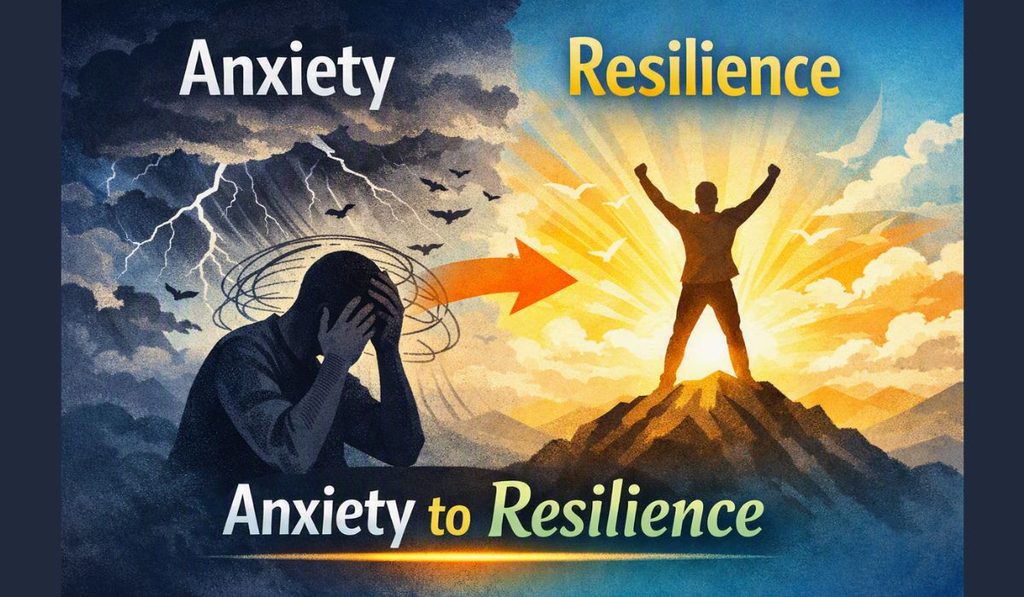
Anxious Mind, Anxious Brain: Turning Worry into Resilience
Anxiety is one of the most common yet least understood experiences of modern life. For many, it feels like a constant shadow — racing thoughts, sleepless nights, and an inner restlessness that never quite fades. But what if anxiety is not simply a burden to escape, but a teacher that can guide us toward clarity, resilience, and intentional living? That is the central message of this article – Anxious Mind, Anxious Brain.
Anxiety has become one of the defining emotions of our time. It touches students preparing for exams, professionals juggling deadlines, parents managing responsibilities, and even those who appear calm on the surface. The anxious mind is not a flaw — it is a signal. It tells us that something needs attention, understanding, and balance. Yet, how we respond to that signal determines whether anxiety becomes a source of growth or a spiral of distress.
The Pros: When Anxiety Becomes a Teacher
1. Heightened Awareness Anxiety sharpens perception. It alerts us to potential risks, helping us prepare and adapt. A moderate level of worry can improve focus and performance, especially in challenging situations.
2. Motivation for Change The discomfort of anxiety often pushes people to seek solutions — healthier routines, mindfulness practices, or emotional boundaries. It can become the spark for transformation.
3. Empathy and Connection Those who experience anxiety deeply often develop greater empathy. Understanding one’s own vulnerability can make it easier to connect with others and offer genuine support.
4. Creative Energy Many creative minds channel anxious energy into art, writing, or innovation. The restless search for meaning can lead to profound insight and originality.
The Cons: When Anxiety Takes Control
1. Physical and Mental Exhaustion Chronic anxiety drains energy, disrupts sleep, and weakens concentration. The body remains in a constant state of alert, which can lead to fatigue and burnout.
2. Distorted Thinking An anxious brain tends to magnify threats and minimize strengths. This distortion can create cycles of fear, self doubt, and avoidance that limit personal growth.
3. Isolation and Withdrawal When worry becomes overwhelming, people often retreat from social contact or opportunities. This isolation reinforces anxiety, making recovery harder.
4. Reduced Decision Making Ability Anxiety clouds judgment. The mind becomes trapped in “what if” scenarios, making even simple choices feel risky or impossible.
Turning Worry into Resilience
Transformation begins when we stop fighting anxiety and start listening to it. The goal is not to eliminate worry but to retrain the mind and brain to respond differently.
• Mindful Awareness: Observe thoughts without judgment. Naming anxiety often reduces its power.
• Physical Grounding: Deep breathing, stretching, and movement help the body signal safety to the brain.
• Cognitive Reframing: Replace catastrophic thoughts with balanced perspectives — “I’m uncertain, but I can handle this.”
• Routine and Rest: Consistency in sleep, nutrition, and daily rhythm stabilizes the nervous system.
• Connection: Sharing feelings with trusted people breaks the illusion of isolation.
• Purposeful Action: Channel anxious energy into meaningful goals — creativity, service, or learning.
Resilience is not the absence of anxiety; it is the ability to rise each time with greater understanding. The anxious mind and the resilient brain are not opposites — they are partners in growth. When we learn to listen, adapt, and act with awareness, worry becomes wisdom.
Closing Reflection
Anxiety is a universal experience, but resilience is a conscious choice. Every moment of worry carries within it the seed of transformation. By turning inward with compassion and outward with courage, we discover that peace is not found in escaping fear — it is found in learning to walk through it with grace.
Why Anxiety Grows: Understanding the Spiral and Its Increasing Severity
Anxiety rarely appears suddenly. It grows quietly, layer by layer, until it feels overwhelming. To understand how worry becomes a spiral, we must look at the psychological, neurological, and situational factors that feed it. When readers understand this process, they gain the power to interrupt it — and eventually transform it.
1. The Brain’s Alarm System Becomes Oversensitive
The human brain is designed to detect danger. The amygdala — the brain’s alarm center — reacts instantly to anything that feels threatening. When anxiety grows, this alarm system becomes hypersensitive.
Why this happens
• Past stressful experiences
• Chronic pressure
• Lack of rest
• Repeated exposure to uncertainty
Over time, the brain begins to fire alarms even when there is no real danger. A small worry becomes a big one. A minor mistake feels catastrophic. This is the first step in the anxiety spiral.
2. Negative Thought Loops Reinforce Fear
An anxious mind tends to repeat the same thoughts: “What if I fail?” “What if something goes wrong?” “What if I’m not good enough?”
Why this increases severity
• The brain believes what it repeatedly hears.
• Repetition strengthens neural pathways.
• The mind begins to expect negative outcomes.
This loop creates a self fulfilling cycle: the more you worry, the more your brain becomes trained to worry.
3. Avoidance Makes Anxiety Grow Stronger
Avoidance feels comforting in the moment — skipping a difficult conversation, delaying a task, avoiding a social situation. But avoidance teaches the brain that the feared situation is dangerous.
How avoidance fuels the spiral
• The brain never gets evidence that the situation is manageable.
• Fear grows because it is never challenged.
• Avoidance becomes a habit, shrinking confidence.
What begins as a small hesitation can become a long-term pattern of withdrawal.
4. Stressful Environments Intensify the Cycle
Certain situations make anxiety spike quickly:
High-pressure workplaces
Deadlines, competition, and constant digital communication overstimulate the brain.
Unpredictable life events
Illness, financial uncertainty, relationship conflict — these create emotional instability.
Social comparison
Social media amplifies feelings of inadequacy and fear of judgment.
Lack of emotional support
When people feel alone, anxiety grows unchecked.
These environments act like fuel, accelerating the spiral.
5. Physical Factors Amplify Anxiety
The body and mind are deeply connected. When the body is stressed, the mind becomes anxious.
Key physical contributors
• Poor sleep
• Excess caffeine
• Hormonal changes
• Sedentary lifestyle
• Nutrient deficiencies
When the body is out of balance, the brain becomes more reactive, making anxiety harder to manage.
6. Catastrophic Thinking Pushes Anxiety Higher
Anxiety often exaggerates possibilities:
• A small problem becomes a disaster.
• A minor conflict becomes a relationship threat.
• A single mistake becomes a fear of failure.
Why this happens
The anxious brain tries to “prepare” for danger by imagining worst-case scenarios. But this preparation becomes mental overload, increasing severity.
7. Emotional Suppression Creates Internal Pressure
Many people hide their anxiety — from family, colleagues, or even themselves. But suppressed emotions do not disappear; they accumulate.
Effects of suppression
• Increased tension
• Sudden emotional outbursts
• Physical symptoms (headache, chest tightness, fatigue)
• Heightened sensitivity to stress
The more emotions are pushed down, the more powerful they become.
8. Lack of Coping Skills Allows Anxiety to Spiral
When people don’t have tools to manage worry, anxiety grows unchecked.
Examples
• No grounding techniques
• No emotional regulation strategies
• No healthy routines
• No support system
Without coping skills, anxiety expands into every area of life.
How Anxiety Spirals Through Situations
Anxiety rarely stays in one place. It spreads.
From mind → body
Worry becomes physical symptoms.
From one situation → many
A fear of failure at work becomes fear of judgment in social life.
From small triggers → major reactions
A minor setback becomes a full emotional collapse.
From temporary stress → chronic anxiety
The brain learns to stay in “alert mode,” even when life is calm.
This is how anxiety becomes severe — not through one event, but through repeated reinforcement.
Breaking the Spiral: A Path Forward
Understanding the spiral is the first step to transformation. Anxiety grows when:
• The brain becomes oversensitive
• Thoughts become repetitive
• Avoidance becomes habitual
• Stress becomes constant
• The body becomes imbalanced
• Emotions remain suppressed
• Coping skills are missing
But each of these can be reversed with awareness, practice, and support.
Resilience is built gradually — through small daily actions that retrain the mind and calm the brain. When readers understand the mechanics of anxiety, they gain the power to reshape it.
How the Brain Heals from Anxiety: Science of Recovery and Resilience
Anxiety is not a permanent condition. The brain is not fixed in its patterns of fear, worry, or overthinking. Modern neuroscience shows that the anxious brain can heal, adapt, and rebuild itself through a process called neuroplasticity — the brain’s ability to change its structure and function based on experience. Understanding how this healing happens gives people hope and practical direction for recovery.
Healing from anxiety is not about eliminating fear; it is about retraining the brain to respond differently. Below is a detailed look at how the brain heals and how resilience grows over time.
1. Neuroplasticity: The Brain’s Built In Healing System
Neuroplasticity allows the brain to form new neural pathways and weaken old ones. When anxiety dominates, the brain strengthens circuits related to fear, hypervigilance, and negative thinking. But with consistent practice, the brain can:
• Build new pathways for calm and clarity
• Reduce the intensity of fear responses
• Strengthen emotional regulation networks
• Improve decision-making and problem-solving
Why this matters: Anxiety is not a life sentence. The brain can be rewired.
2. The Amygdala Learns to Calm Down
The amygdala is the brain’s alarm center. In anxiety, it becomes oversensitive, firing signals even when there is no real danger.
How healing happens
• Mindfulness and breathing exercises reduce amygdala activity
• Exposure to manageable challenges teaches the amygdala that situations are safe
• Positive experiences create “safety memories” that weaken fear responses
Over time, the amygdala becomes less reactive, allowing the mind to stay grounded.
3. The Prefrontal Cortex Gets Stronger
The prefrontal cortex (PFC) is responsible for reasoning, planning, and emotional control. In anxiety, the PFC becomes overwhelmed by the amygdala’s alarm signals.
Healing process
• Cognitive reframing strengthens rational thinking
• Journaling and reflection improve emotional clarity
• Problem-solving exercises enhance mental resilience
As the PFC strengthens, it becomes better at calming the amygdala and regulating emotions.
4. The Hippocampus Rebuilds Emotional Memory
The hippocampus stores memories and helps distinguish real threats from imagined ones. Chronic anxiety can shrink the hippocampus, making it harder to separate past fear from present reality.
How healing occurs
• Consistent relaxation practices increase hippocampal volume
• Positive experiences create new emotional memories
• Sleep plays a major role in hippocampal repair
A healthier hippocampus helps the brain respond to situations with balance instead of panic.
5. The Nervous System Learns Safety Through Repetition
The autonomic nervous system has two modes:
• Sympathetic (fight or flight)
• Parasympathetic (rest and calm)
An anxious brain stays stuck in fight-or-flight mode.
Healing happens when
• Slow breathing activates the parasympathetic system
• Grounding techniques signal safety
• Consistent routines stabilize the nervous system
With repetition, the body learns to return to calm more quickly.
6. Emotional Processing Reduces Internal Pressure
Unprocessed emotions intensify anxiety. Healing requires acknowledging feelings rather than suppressing them.
How the brain heals emotionally
• Talking to trusted people reduces emotional load
• Therapy helps reprocess painful memories
• Self-compassion reduces internal conflict
When emotions are processed, the brain no longer needs to stay in alert mode.
7. Healthy Habits Repair the Brain Physically
Anxiety affects the body, and the body affects the brain. Healing requires physical support.
Key contributors
• Sleep: Repairs neural circuits
• Nutrition: Supports neurotransmitter balance
• Movement: Releases anxiety-reducing chemicals
• Sunlight: Regulates mood hormones
A healthy body creates a healthy environment for the brain to recover.
8. Resilience Grows Through Small, Repeated Actions
Resilience is not a personality trait; it is a skill built over time. The brain becomes resilient when it repeatedly experiences:
• Manageable challenges
• Emotional support
• Positive reinforcement
• Purposeful action
• Moments of calm
Each small step strengthens neural pathways for confidence and stability.
The Healing Journey: What Readers Should Remember
• The brain can change at any age
• Anxiety is not a permanent identity
• Healing is gradual, not instant
• Small daily practices create major long-term changes
• Resilience grows through awareness, action, and consistency
The anxious brain can become a resilient brain. With understanding, patience, and practice, the mind learns to move from fear to clarity, from worry to strength, and from chaos to calm.

7 practical, psychologically grounded tips for managing worry:
1. Name the Worry to Neutralize It
When you identify and label a worry (“I’m worried about my performance,” “I’m worried about my health”), you shift it from emotion to information. Why it works: Naming reduces emotional intensity and activates rational thinking. How to apply: Write down the worry in one sentence. Then ask: Is this a real problem or an imagined fear?
2. Separate What You Can Control from What You Cannot
Worry often mixes controllable and uncontrollable elements. Why it works: Focusing on controllable actions reduces helplessness. How to apply: Make two columns:
• Things I can influence
• Things beyond my control Act on the first, release the second.
3. Use the 5 Minute “Worry Window”
Instead of worrying all day, confine worry to a short, fixed time. Why it works: It trains the brain to delay rumination and reduces impulsive anxiety. How to apply: Set a timer for 5 minutes. Allow yourself to worry freely. When time ends, stop. Over time, worries lose their grip.
4. Ground Yourself Physically
Worry lives in the mind, but grounding calms the nervous system. Why it works: Slow breathing and sensory grounding activate the parasympathetic system (the body’s “calm mode”). How to apply:
• Inhale for 4 seconds
• Hold for 2
• Exhale for 6 Repeat 5 times. Or use the 5 4 3 2 1 sensory method to anchor yourself in the present.
5. Challenge the “Worst Case Story”
Worry exaggerates danger and underestimates your ability to cope. Why it works: Reframing breaks catastrophic thinking. How to apply: Ask three questions:
• What’s the worst that can realistically happen?
• What’s the best that can happen?
• What’s most likely to happen? This shifts your mind from fear to balance.
6. Build a Daily Routine of Stability
Worry thrives in chaos and unpredictability. Why it works: Routine reduces cognitive load and gives the brain a sense of safety. How to apply:
• Wake and sleep at consistent times
• Plan 3 anchor habits (exercise, journaling, meditation)
• Keep a simple daily checklist Small routines create big emotional stability.
7. Share Your Worries with Someone You Trust
Worry grows in silence but shrinks when spoken. Why it works: Social connection reduces stress hormones and increases emotional clarity. How to apply: Talk to a friend, family member, mentor, or mental health professional. Sharing is not weakness — it is emotional intelligence.
Final Reflection
Worry is not the enemy. It is a messenger. When we learn to listen without fear, act without panic, and respond with clarity, worry becomes a pathway to resilience. Personal transformation begins not by eliminating worry, but by understanding it and using it wisely.
উদ্বিগ্ন মন, উদ্বিগ্ন মস্তিষ্ক: উদ্বেগকে স্থিতিস্থাপকতায় রূপান্তর
উদ্বেগ আজকের জীবনের সবচেয়ে সাধারণ অথচ সবচেয়ে ভুলভাবে বোঝা অভিজ্ঞতাগুলোর একটি। অনেকের কাছে এটি এক অদৃশ্য ছায়া—অস্থির চিন্তা, ঘুমের ব্যাঘাত, এবং এক অন্তর্লীন অশান্তি যা কখনও পুরোপুরি থামে না। কিন্তু যদি উদ্বেগকে কেবল একটি বোঝা না ভেবে, এক শিক্ষক হিসেবে দেখা যায়—যে আমাদের সচেতনতা, স্থিতিস্থাপকতা এবং উদ্দেশ্যমূলক জীবনের পথে নিয়ে যায়?
উদ্বেগ আমাদের সময়ের সংজ্ঞায়িত আবেগগুলোর একটি হয়ে উঠেছে। এটি ছাত্রছাত্রী, কর্মজীবী মানুষ, অভিভাবক—এমনকি বাইরে থেকে শান্ত দেখানো মানুষকেও স্পর্শ করে। উদ্বিগ্ন মন কোনও ত্রুটি নয়; এটি একটি সংকেত। এটি বলে যে আমাদের ভেতরে কিছু মনোযোগ, বোঝাপড়া এবং ভারসাম্য প্রয়োজন। আমরা সেই সংকেতে কীভাবে সাড়া দিই, সেটিই নির্ধারণ করে উদ্বেগ আমাদের বিকাশের পথ হবে নাকি পতনের সর্পিল।
যখন উদ্বেগ শিক্ষক হয়ে ওঠে: ইতিবাচক দিক
১. সচেতনতা বৃদ্ধি
উদ্বেগ আমাদের উপলব্ধিকে তীক্ষ্ণ করে। এটি সম্ভাব্য ঝুঁকি সম্পর্কে সতর্ক করে এবং প্রস্তুত হতে সাহায্য করে। মাঝারি মাত্রার উদ্বেগ অনেক সময় কর্মক্ষমতা বাড়ায়।
২. পরিবর্তনের অনুপ্রেরণা
উদ্বেগের অস্বস্তি মানুষকে স্বাস্থ্যকর অভ্যাস, মাইন্ডফুলনেস বা সীমারেখা তৈরি করতে উদ্বুদ্ধ করে। এটি রূপান্তরের স্ফুলিঙ্গ হতে পারে।
৩. সহানুভূতি ও সংযোগ
যারা গভীরভাবে উদ্বেগ অনুভব করেন, তারা প্রায়ই বেশি সহানুভূতিশীল হন। নিজের দুর্বলতা বোঝা অন্যকে বোঝার ক্ষমতা বাড়ায়।
৪. সৃজনশীল শক্তি
অনেক সৃজনশীল মানুষ উদ্বেগের শক্তিকে শিল্প, লেখা বা উদ্ভাবনে রূপান্তর করেন। অর্থের সন্ধান তাদের গভীর অন্তর্দৃষ্টি দেয়।
যখন উদ্বেগ নিয়ন্ত্রণ নিয়ে নেয়: নেতিবাচক দিক
১. শারীরিক ও মানসিক ক্লান্তি
দীর্ঘস্থায়ী উদ্বেগ শক্তি ক্ষয় করে, ঘুম নষ্ট করে এবং মনোযোগ দুর্বল করে। শরীর ক্রমাগত সতর্ক অবস্থায় থাকে।
২. বিকৃত চিন্তাভাবনা
উদ্বিগ্ন মস্তিষ্ক হুমকিকে বড় করে দেখে এবং নিজের শক্তিকে ছোট করে। এতে আত্মসন্দেহ ও ভয়ের চক্র তৈরি হয়।
৩. বিচ্ছিন্নতা ও প্রত্যাহার
অতিরিক্ত উদ্বেগ মানুষকে সামাজিক যোগাযোগ থেকে দূরে সরিয়ে দেয়। এই বিচ্ছিন্নতা উদ্বেগকে আরও বাড়ায়।
৪. সিদ্ধান্ত নেওয়ার ক্ষমতা কমে যাওয়া
“What if” চিন্তায় আটকে গিয়ে সাধারণ সিদ্ধান্তও কঠিন হয়ে যায়।
উদ্বেগকে স্থিতিস্থাপকতায় রূপান্তর
রূপান্তর শুরু হয় যখন আমরা উদ্বেগের সঙ্গে লড়াই বন্ধ করে তাকে শুনতে শুরু করি। লক্ষ্য উদ্বেগ দূর করা নয়; বরং মন ও মস্তিষ্ককে নতুনভাবে প্রতিক্রিয়া জানাতে প্রশিক্ষণ দেওয়া।
মূল কৌশলগুলো
মাইন্ডফুল সচেতনতা: বিচারহীনভাবে চিন্তা পর্যবেক্ষণ করা।
শারীরিক গ্রাউন্ডিং: শ্বাসপ্রশ্বাস ও নড়াচড়া শরীরকে নিরাপত্তার সংকেত দেয়।
কগনিটিভ রিফ্রেমিং: বিপর্যয়মূলক চিন্তার বদলে ভারসাম্যপূর্ণ ভাবনা।
রুটিন ও বিশ্রাম: ঘুম, খাদ্য ও দৈনন্দিন ছন্দ স্নায়ুতন্ত্রকে স্থিতিশীল করে।
সংযোগ: বিশ্বাসযোগ্য মানুষের সঙ্গে অনুভূতি ভাগ করা।
উদ্দেশ্যমূলক কাজ: উদ্বেগের শক্তিকে সৃজনশীলতা বা সেবায় রূপান্তর করা।
কেন উদ্বেগ বাড়ে: সর্পিলের বিজ্ঞান
উদ্বেগ হঠাৎ আসে না; এটি স্তর করে বাড়ে। নথিতে বর্ণিত প্রধান কারণগুলো হলো:
– অতিসংবেদনশীল মস্তিষ্কের অ্যালার্ম সিস্টেম
– নেতিবাচক চিন্তার পুনরাবৃত্তি
– এড়িয়ে যাওয়ার অভ্যাস
– চাপপূর্ণ পরিবেশ
– শারীরিক ভারসাম্যহীনতা
– বিপর্যয়মূলক চিন্তা
– আবেগ দমন
– মোকাবিলা দক্ষতার অভাব
এই কারণগুলো উদ্বেগকে এক পরিস্থিতি থেকে অন্য পরিস্থিতিতে ছড়িয়ে দেয়—মন থেকে শরীরে, কাজ থেকে সম্পর্কের ক্ষেত্রে, ছোট ট্রিগার থেকে বড় প্রতিক্রিয়ায়।
মস্তিষ্ক কীভাবে উদ্বেগ থেকে সেরে ওঠে: পুনরুদ্ধারের বিজ্ঞান
নথিতে ব্যাখ্যা করা হয়েছে যে মস্তিষ্কের পুনরুদ্ধার ঘটে আটটি প্রধান প্রক্রিয়ায়:
নিউরোপ্লাস্টিসিটি: নতুন স্নায়ুপথ তৈরি হয়।
অ্যামিগডালার শান্ত হওয়া: নিরাপত্তার অভিজ্ঞতা বাড়লে অ্যালার্ম কমে।
প্রিফ্রন্টাল কর্টেক্স শক্তিশালী হওয়া: যুক্তি ও আবেগ নিয়ন্ত্রণ বাড়ে।
হিপোক্যাম্পাসের পুনর্গঠন: স্মৃতি ও বাস্তবতা আলাদা করার ক্ষমতা বাড়ে।
স্নায়ুতন্ত্রের নিরাপত্তা শেখা: পুনরাবৃত্ত অনুশীলনে শরীর শান্ত হতে শেখে।
আবেগ প্রক্রিয়াকরণ: দমন করা অনুভূতি মুক্ত হলে চাপ কমে।
শারীরিক অভ্যাস: ঘুম, পুষ্টি, ব্যায়াম মস্তিষ্ককে পুনরুদ্ধার করে।
ছোট ছোট পদক্ষেপে স্থিতিস্থাপকতা বৃদ্ধি।
উদ্বেগ নিয়ন্ত্রণের ৭টি কার্যকর টিপস
1. উদ্বেগকে নাম দিন — নাম দিলে আবেগ তথ্য হয়ে যায়।
2. নিয়ন্ত্রণযোগ্য ও অনিয়ন্ত্রণযোগ্য বিষয় আলাদা করুন।
3. ৫‑মিনিটের ‘উদ্বেগ উইন্ডো’ ব্যবহার করুন।
4. শরীরকে গ্রাউন্ড করুন।
5. সবচেয়ে খারাপ সম্ভাবনার গল্পকে চ্যালেঞ্জ করুন।
6. দৈনন্দিন স্থিতিশীল রুটিন তৈরি করুন।
7. বিশ্বাসযোগ্য কারও সঙ্গে উদ্বেগ ভাগ করুন।
শেষ কথা
উদ্বেগ শত্রু নয়; এটি এক বার্তাবাহক। যখন আমরা ভয় ছাড়া শুনতে শিখি, আতঙ্ক ছাড়া কাজ করি, এবং স্পষ্টতার সঙ্গে প্রতিক্রিয়া জানাই—উদ্বেগই হয়ে ওঠে স্থিতিস্থাপকতার পথ। ব্যক্তিগত রূপান্তর শুরু হয় উদ্বেগকে দূর করার চেষ্টা থেকে নয়, বরং তাকে বোঝা এবং বুদ্ধিমত্তার সঙ্গে ব্যবহার করার মাধ্যমে।