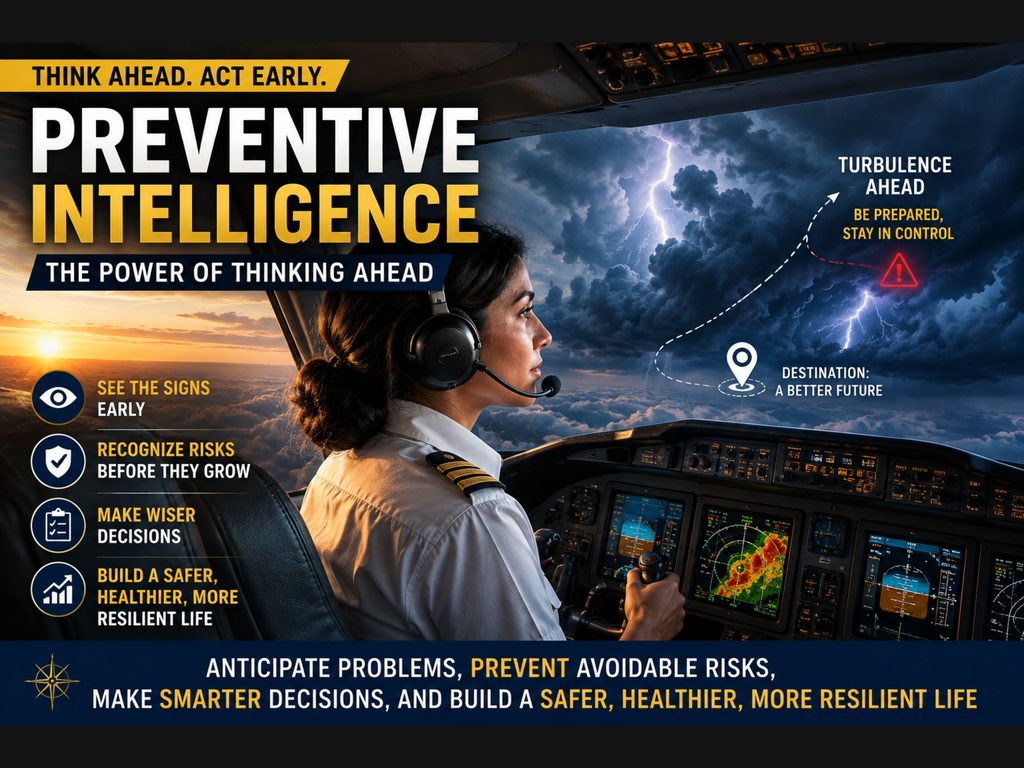
Preventive Intelligence: The Power to See Problems Before They Become Problems
Think Ahead. Act Early. Protect What Matters.
“Wisdom is not only knowing what to do when a problem arrives; it is noticing what is changing, imagining what may follow, and acting while the problem is still small enough to prevent.”
— Dr. Gurudas Bandyopadhyay
Most of us have been trained to solve problems. Far fewer have been trained to see problems developing before they demand a solution.
We visit a doctor after becoming ill. We repair relationships after conflict becomes serious. We control spending after debt accumulates. Organizations strengthen safety after an accident. We improve cybersecurity after an account is compromised. We develop emergency plans after experiencing disruption.
Yet many problems do not begin on the day they become visible. They develop gradually. There may have been a weak signal, an unusual change, a recurring pattern, a near miss, an ignored warning, or a small vulnerability long beforehand.
This is where Preventive Intelligence becomes valuable.
What Is Preventive Intelligence?
Preventive Intelligence is the ability to think ahead, recognize emerging risks and opportunities for intervention, anticipate possible consequences, prepare appropriately, and take timely action before manageable problems become serious ones.
It combines several human capabilities:
Awareness + Observation + Foresight + Risk Recognition + Judgment + Preparedness + Timely Action
It is not simply risk management. Nor is it worrying about everything that could go wrong.
It is a practical way of thinking:
“What deserves my attention today because it could influence tomorrow?”
A preventively intelligent person does not attempt to predict everything. Instead, that person develops the ability to recognize what matters early enough to retain choices.
1. Prevention Begins with Awareness
We cannot prevent what we do not notice.
Many problems provide signals before consequences. The difficulty is that these signals are often subtle.
A person may notice gradually declining energy.
A family may notice expenses rising month after month.
A manager may see recurring minor errors.
A relationship may experience increasing emotional distance.
A driver may experience several near misses.
A computer user may receive an unusual request for credentials.
Each event may appear insignificant when viewed alone.
Preventive Intelligence asks us to pay attention to changes from the normal baseline.
The first question therefore becomes:
“What has changed?”
2. Learn to Recognize Weak Signals
A weak signal is a small, incomplete, or early indication that something may be changing.
Weak signals can appear as:
• repeated minor problems,
• unusual deviations,
• small complaints,
• near misses,
• gradual deterioration,
• unexpected behavior,
• unusual financial transactions,
• changing patterns,
• recurring errors,
• or something noticeably different from normal.
One weak signal may mean little.
But repeated or connected signals may reveal a developing pattern.
A useful sequence is:
Change → Signal → Pattern → Warning → Action
The challenge is neither to ignore every small signal nor to exaggerate every anomaly.
Preventive Intelligence requires curiosity before conclusion.
Ask:
Is this unusual?
Has it happened before?
Is it becoming more frequent?
Could it be connected with something else?
What happens if the trend continues?
3. Understand How Psychology Works Against Prevention
Knowing about a risk does not guarantee preventive behavior.
Human psychology can quietly work against us.
Optimism Bias
“It probably won’t happen to me.”
Complacency
“Everything has been fine so far.”
Normalization of Deviance
“We have done it this way many times without a problem.”
Overconfidence
“I have enough experience to handle it.”
Present Bias
Choosing today’s convenience over tomorrow’s protection.
Procrastination
“I will take care of it later.”
Diffusion of Responsibility
“Someone else will handle it.”
These mental tendencies help explain why intelligent people sometimes ignore risks they already understand.
Preventive Intelligence therefore requires more than knowledge.
It requires moving through:
KNOW → RECOGNIZE → DECIDE → ACT
4. Ask “What If?”—Without Becoming Fearful
One of the simplest tools of preventive thinking is the question:
“What if?”
Before an important journey:
What if the flight is delayed?
Before a project:
What if the key assumption is wrong?
Before a financial commitment:
What if my income temporarily declines?
Before relying entirely on technology:
What if this device, account, or service becomes unavailable?
The purpose is not to imagine endless disasters.
It is to discover reasonable vulnerabilities.
A useful four-question exercise is:
1. What could reasonably go wrong?
2. Why might it happen?
3. What could the consequences be?
4. What can I do beforehand?
Five minutes of thinking beforehand may prevent hours, days, or months of difficulty afterward.
5. Think in Terms of Consequences
Preventive Intelligence improves when we stop evaluating decisions only by their immediate benefits.
Suppose someone repeatedly postpones exercise.
Today’s consequence may appear negligible.
But repeated over months and years, the cumulative effect may matter.
The same principle applies to money, learning, relationships, safety, cybersecurity, and career development.
Ask:
“If I continue doing this, where might it lead?”
This creates a bridge between:
Today’s Choice → Tomorrow’s Consequence
Foresight is essentially the ability to mentally travel forward before physically arriving there.
6. Learn from Near Misses
A near miss is an event in which something almost went wrong.
People often celebrate:
“Nothing happened.”
Preventive Intelligence asks a different question:
“Why did nothing happen?”
Was the outcome prevented by a safeguard?
Good judgment?
Or simply luck?
Near misses provide valuable opportunities to learn without paying the full price of failure.
The rule should be:
Never Waste a Near Miss.
Ask what happened, what could have happened, why it almost happened, and what should change before it happens again.
7. Build Backups and Safety Margins
Prevention sometimes fails.
Therefore, Preventive Intelligence must include resilience.
A backup asks:
“What will I do if Plan A fails?”
A safety margin asks:
“How much room do I have before failure becomes serious?”
We can maintain reasonable margins in:
time, money, health capacity, skills, information, emergency supplies, technology, and support networks.
For example, scheduling an important journey with no spare time creates fragility. Depending upon a single copy of an important document creates fragility. Relying on one income source, one critical employee, one device, or one supplier can also create vulnerability.
A useful principle is:
Prevent What You Can. Prepare for What You Cannot. Recover from What Still Happens.
8. Apply Preventive Intelligence Across Life
Preventive Intelligence is not confined to workplace safety.
Health
Healthy routines, appropriate preventive care, and attention to meaningful changes can reduce avoidable problems.
Relationships
Small misunderstandings are easier to address than accumulated resentment.
Money
Budgeting, emergency reserves, fraud awareness, and careful financial decisions strengthen security.
Personal Safety
Home hazards, road risks, travel preparation, fire prevention, and emergency planning deserve attention before an incident.
Career
Learning new skills before old ones become obsolete is preventive career management.
Digital Life
Strong security practices, backups, privacy awareness, and verification can reduce exposure to phishing, fraud, misinformation, deepfakes, and identity theft.
Organizations
Hazard reporting, near-miss learning, scenario planning, maintenance, employee participation, and preventive leadership can identify vulnerabilities before major failures.
9. Prevention Is Increasingly Important in the AI Age
Artificial intelligence and digital technology offer enormous opportunities, but they also introduce new uncertainties.
Deepfakes can imitate people.
AI-generated information may sound authoritative while being incorrect.
Cyber fraud is becoming more sophisticated.
Automation can create unexpected dependencies.
Information overload can impair judgment.
Therefore, an important modern preventive habit is:
PAUSE → VERIFY → THINK → ACT
The higher the consequence of being wrong, the stronger the verification should be.
At the same time, AI itself can strengthen prevention by helping identify patterns, analyze information, model scenarios, detect anomalies, and support earlier decisions.
The future may increasingly depend on combining:
Human Judgment + Technology + Preventive Thinking
10. Develop Your Personal Early-Warning System
Ask yourself:
What indicators would tell me that something important is beginning to deteriorate?
For health, it might be a persistent change from normal.
For finances, declining savings or rising debt.
For relationships, repeated unresolved conflict.
For career, declining demand for an important skill.
For cybersecurity, unusual account activity.
Once identified, decide:
“At what point will I act?”
This is important because warning signs are useless if we repeatedly notice them without responding.
The PREVENT Framework
A simple way to remember the entire philosophy is:
P — Perceive
Notice weak signals and changes.
R — Recognize
Identify the possible risk.
E — Evaluate
Consider likelihood, vulnerability, and consequence.
V — Visualize
Imagine where the situation could lead.
E — Establish
Create preventive measures, backups, or safeguards.
N — Notice
Monitor changing conditions.
T — Take Action
Act while intervention remains possible.
PERCEIVE → RECOGNIZE → EVALUATE → VISUALIZE → ESTABLISH → NOTICE → TAKE ACTION
Prevention Must Remain Balanced
There is an important caution.
Preventive Intelligence should never become Preventive Anxiety.
We cannot eliminate every risk.
We should not continuously search for danger.
We should not avoid worthwhile opportunities merely because uncertainty exists.
And we should not mistake every unusual event for a crisis.
The goal is:
Alert—not alarmed.
Prepared—not preoccupied.
Prudent—not fearful.
Resilient—not rigid.
Prevention should give us greater freedom to live—not less.
Seven Questions for Everyday Preventive Intelligence
If you remember nothing else, periodically ask:
1. What is changing?
2. What weak signal am I overlooking?
3. What could happen if the present trend continues?
4. What assumption might be wrong?
5. What can I do before the problem grows?
6. What backup or safety margin do I need?
7. What should I act on today rather than postpone?
These questions require no sophisticated technology or specialist knowledge.
They require only the willingness to look beyond the immediate moment.
From Preventive Intelligence to Preventive Living
The ultimate purpose of Preventive Intelligence is not merely to prevent accidents or crises.
It is to protect possibilities.
Protecting health preserves the possibility of an active life.
Protecting relationships preserves love and connection.
Protecting finances preserves independence.
Protecting safety preserves capability.
Protecting skills preserves opportunity.
Protecting digital identity preserves security.
Protecting time allows us to pursue meaningful goals.
Thus, prevention should not be viewed only as protection from something.
It is also protection for something—for the future we hope to live.
The transformation is:
Awareness → Anticipation → Preparation → Timely Action → Resilience → Better Future
And perhaps the most important question to carry with us is:
“What small action can I take today that my future self will thank me for?”
“The future rarely announces every problem in advance, but it often leaves clues. Preventive Intelligence is the wisdom to notice those clues without fear, interpret them without haste, and act while tomorrow can still be influenced.”
— Dr. Gurudas Bandyopadhyay
Think Ahead. Act Early. Protect What Matters. Live Wisely.

প্রিভেন্টিভ ইন্টেলিজেন্স: সমস্যা বড় হয়ে ওঠার আগেই তাকে চিনতে শেখার বুদ্ধিমত্তা
আগে ভাবুন। সময়মতো কাজ করুন। যা মূল্যবান, তা রক্ষা করুন।
“প্রজ্ঞা শুধু সমস্যা এসে গেলে কী করতে হবে তা জানা নয়; প্রজ্ঞা হলো পরিবর্তনের আভাস বুঝতে পারা, এরপর কী হতে পারে তা আগাম ভাবা, এবং সমস্যা ছোট থাকতেই যথাসময়ে ব্যবস্থা নেওয়া।”
— ড. গুরুদাস বন্দ্যোপাধ্যায়
আমাদের অধিকাংশকেই শেখানো হয়েছে সমস্যা হলে কীভাবে তার সমাধান করতে হয়। কিন্তু সমস্যা বড় হয়ে ওঠার আগেই কীভাবে তার আগাম সংকেত চিনতে হয়—সেই শিক্ষা আমরা তুলনামূলকভাবে অনেক কম পাই।
আমরা অসুস্থ হওয়ার পরে চিকিৎসকের কাছে যাই। সম্পর্কের দূরত্ব বেড়ে যাওয়ার পরে তা মেরামত করার চেষ্টা করি। ঋণ বেড়ে যাওয়ার পরে খরচ কমাই। দুর্ঘটনার পরে নিরাপত্তাব্যবস্থা জোরদার করি। অনলাইন প্রতারণার শিকার হওয়ার পরে ডিজিটাল নিরাপত্তা নিয়ে সচেতন হই।
অথচ অনেক সমস্যাই হঠাৎ তৈরি হয় না। তার আগে হয়তো ছিল একটি দুর্বল সংকেত, ছোট পরিবর্তন, বারবার ঘটতে থাকা ঘটনা, প্রায় ঘটে যাওয়া দুর্ঘটনা, উপেক্ষিত সতর্কতা কিংবা ছোট কোনো দুর্বলতা।
এখানেই Preventive Intelligence বা প্রতিরোধমূলক বুদ্ধিমত্তা গুরুত্বপূর্ণ হয়ে ওঠে।
Preventive Intelligence কী?
Preventive Intelligence হলো এমন এক সক্ষমতা, যার মাধ্যমে আমরা আগে থেকে চিন্তা করি, সম্ভাব্য ঝুঁকি ও প্রাথমিক সতর্কসংকেত চিহ্নিত করি, ভবিষ্যৎ পরিণতি বিবেচনা করি, প্রয়োজনীয় প্রস্তুতি নিই এবং ছোট সমস্যা বড় হওয়ার আগেই যথাসময়ে ব্যবস্থা গ্রহণ করি।
এটি কয়েকটি গুরুত্বপূর্ণ মানবিক সক্ষমতার সমন্বয়:
সচেতনতা + পর্যবেক্ষণ + দূরদৃষ্টি + ঝুঁকি শনাক্তকরণ + বিচারবুদ্ধি + প্রস্তুতি + সময়মতো পদক্ষেপ
Preventive Intelligence মানে সব সময় বিপদের কথা চিন্তা করা নয়।
বরং এর মূল প্রশ্ন হলো:
“আজ এমন কী ঘটছে, যার প্রতি এখন মনোযোগ দিলে আগামীকাল ভালো হতে পারে?”
১. প্রতিরোধ শুরু হয় সচেতনতা থেকে
যে বিষয়টি আমরা লক্ষ্যই করি না, সেটিকে প্রতিরোধ করা কঠিন।
অনেক বড় সমস্যা ঘটার আগে ছোট ছোট সংকেত দেয়।
হয়তো একজন মানুষ লক্ষ্য করছেন তাঁর স্বাভাবিক কর্মশক্তি ধীরে ধীরে কমছে।
একটি পরিবার দেখছে কয়েক মাস ধরে খরচ ক্রমশ বাড়ছে।
একজন ম্যানেজার দেখছেন একই ধরনের ছোট ভুল বারবার হচ্ছে।
একটি সম্পর্কে কথাবার্তা ও আন্তরিকতা ধীরে ধীরে কমছে।
একজন চালক বারবার অল্পের জন্য দুর্ঘটনা এড়িয়ে যাচ্ছেন।
কোনো ডিজিটাল অ্যাকাউন্টে অস্বাভাবিক লগইন দেখা যাচ্ছে।
প্রতিটি ঘটনাকে আলাদাভাবে দেখলে হয়তো খুব গুরুত্বপূর্ণ মনে হবে না। কিন্তু Preventive Intelligence আমাদের শেখায়:
“স্বাভাবিক অবস্থার তুলনায় কী পরিবর্তন হচ্ছে?”
এই প্রশ্ন থেকেই প্রতিরোধমূলক চিন্তার শুরু।
২. Weak Signal বা দুর্বল সংকেত চিনতে শিখুন
Weak Signal হলো এমন একটি ছোট, অসম্পূর্ণ বা প্রাথমিক ইঙ্গিত, যা ভবিষ্যতে কোনো গুরুত্বপূর্ণ পরিবর্তন বা সমস্যার সূচনা নির্দেশ করতে পারে।
যেমন:
• একই ছোট সমস্যা বারবার হওয়া,
• অস্বাভাবিক পরিবর্তন,
• ছোট ছোট অভিযোগ বাড়তে থাকা,
• Near Miss বা অল্পের জন্য বিপদ এড়ানো,
• কর্মক্ষমতা ধীরে ধীরে কমে যাওয়া,
• অস্বাভাবিক আচরণ,
• সন্দেহজনক আর্থিক লেনদেন,
• একই ধরনের ভুলের পুনরাবৃত্তি।
একটি দুর্বল সংকেত হয়তো নিছক ঘটনাও হতে পারে। কিন্তু একাধিক সম্পর্কিত সংকেত একটি Pattern বা প্রবণতা নির্দেশ করতে পারে।
মনে রাখা যেতে পারে:
পরিবর্তন → সংকেত → প্রবণতা → সতর্কতা → পদক্ষেপ
তবে প্রতিটি ছোট ঘটনাকে বিপদ মনে করাও ঠিক নয়।
Preventive Intelligence আমাদের শেখায়—প্রথমে লক্ষ্য করুন, তারপর যাচাই করুন, তারপর সিদ্ধান্ত নিন।
৩. কেন আমরা জানা সত্ত্বেও ঝুঁকি উপেক্ষা করি?
মানুষ শুধু যুক্তি দিয়ে সিদ্ধান্ত নেয় না। আমাদের মনস্তত্ত্বও সিদ্ধান্তকে প্রভাবিত করে।
Optimism Bias
“আমার সঙ্গে এমন হবে না।”
Complacency
“এতদিন তো কিছু হয়নি।”
Normalization of Deviance
“আমরা তো বহুদিন ধরেই এভাবে করছি।”
Overconfidence
“আমার যথেষ্ট অভিজ্ঞতা আছে, আমি সামলে নিতে পারব।”
Present Bias
ভবিষ্যতের নিরাপত্তার চেয়ে আজকের সুবিধাকে বেশি গুরুত্ব দেওয়া।
Procrastination
“আজ নয়, পরে করব।”
Diffusion of Responsibility
“অন্য কেউ নিশ্চয়ই বিষয়টি দেখবে।”
এ কারণেই কেবল ঝুঁকি সম্পর্কে জানা যথেষ্ট নয়।
প্রয়োজন:
জানা → উপলব্ধি করা → সিদ্ধান্ত নেওয়া → কাজ করা
৪. ভয় না পেয়ে জিজ্ঞাসা করুন—“যদি এমন হয়?”
Preventive Intelligence-এর একটি অত্যন্ত সহজ কিন্তু শক্তিশালী প্রশ্ন:
“What If — যদি এমন হয়?”
ভ্রমণের আগে:
যদি বিমান দেরি করে?
কোনো প্রকল্পের আগে:
যদি আমাদের প্রধান অনুমানটি ভুল হয়?
বড় আর্থিক সিদ্ধান্তের আগে:
যদি সাময়িকভাবে আয় কমে যায়?
প্রযুক্তির ওপর সম্পূর্ণ নির্ভর করার আগে:
যদি ডিভাইস, অ্যাকাউন্ট বা পরিষেবাটি হঠাৎ কাজ না করে?
উদ্দেশ্য সব সম্ভাব্য বিপদ কল্পনা করা নয়।
বরং চারটি প্রশ্ন করুন:
1. কী ভুল হতে পারে?
2. কেন হতে পারে?
3. তার পরিণতি কী হতে পারে?
4. আগে থেকেই কী করলে ক্ষতি কমানো যায়?
কখনো কখনো কাজ শুরুর আগে পাঁচ মিনিট চিন্তা পরবর্তী কয়েক দিনের সমস্যাও বাঁচাতে পারে।
৫. আজকের সিদ্ধান্তের আগামীকালের ফল ভাবুন
আমরা প্রায়ই সিদ্ধান্তের তাৎক্ষণিক সুবিধা দেখি, কিন্তু দীর্ঘমেয়াদি পরিণতি দেখি না।
আজ ব্যায়াম না করলে হয়তো কিছুই হবে না।
আজ সামান্য বেশি খরচ করলেও হয়তো সমস্যা হবে না।
আজ একটি গুরুত্বপূর্ণ কথোপকথন এড়িয়ে গেলেও সম্পর্ক ভেঙে পড়বে না।
আজ নতুন কিছু না শিখলেও চাকরি চলে যাবে না।
কিন্তু একই আচরণ যদি মাসের পর মাস কিংবা বছরের পর বছর চলতে থাকে?
Preventive Intelligence আমাদের জিজ্ঞাসা করতে শেখায়:
“আমি যদি এভাবেই চলতে থাকি, ভবিষ্যতে কোথায় পৌঁছাতে পারি?”
অর্থাৎ:
আজকের সিদ্ধান্ত → আগামীকালের পরিণতি
৬. Near Miss থেকে শিক্ষা নিন
Near Miss হলো এমন ঘটনা যেখানে বড় কিছু ঘটতে পারত, কিন্তু অল্পের জন্য ঘটেনি।
আমরা সাধারণত বলি:
“ভাগ্য ভালো, কিছু হয়নি।”
Preventive Intelligence আরেকটি প্রশ্ন করে:
“কেন কিছু হলো না?”
ভালো প্রস্তুতির জন্য?
নিরাপত্তাব্যবস্থার জন্য?
সঠিক সিদ্ধান্তের জন্য?
নাকি নিছক ভাগ্যের জন্য?
Near Miss হলো ক্ষতি ছাড়াই শিক্ষা নেওয়ার সুযোগ।
তাই একটি গুরুত্বপূর্ণ নীতি:
Never Waste a Near Miss — অল্পের জন্য এড়ানো বিপদ থেকে শিক্ষা নেওয়ার সুযোগ কখনো নষ্ট করবেন না।
৭. Backup এবং Safety Margin তৈরি করুন
সব সমস্যা প্রতিরোধ করা সম্ভব নয়।
তাই Preventive Intelligence-এর আরেকটি স্তম্ভ হলো Resilience বা ঘুরে দাঁড়ানোর সক্ষমতা।
নিজেকে জিজ্ঞাসা করুন:
“Plan A কাজ না করলে আমার Plan B কী?”
এবং:
“অপ্রত্যাশিত পরিস্থিতি সামলানোর জন্য আমার কতটা অতিরিক্ত সামর্থ্য আছে?”
Safety Margin থাকতে পারে:
সময়, অর্থ, স্বাস্থ্য, শক্তি, দক্ষতা, তথ্য, ডিজিটাল ব্যাকআপ, জরুরি সরঞ্জাম এবং সহায়ক মানুষের ক্ষেত্রে।
মূলনীতি:
**যা প্রতিরোধ করা যায়, প্রতিরোধ করুন।
যা প্রতিরোধ করা যায় না, তার জন্য প্রস্তুত থাকুন।
তারপরও যা ঘটে, তা থেকে দ্রুত ঘুরে দাঁড়াতে শিখুন।**
৮. জীবনের সর্বত্র Preventive Intelligence
Preventive Intelligence শুধু কর্মক্ষেত্রের নিরাপত্তার বিষয় নয়।
স্বাস্থ্য
স্বাস্থ্যকর অভ্যাস, উপযুক্ত প্রতিরোধমূলক যত্ন এবং শরীরের অর্থপূর্ণ পরিবর্তনের প্রতি সচেতনতা।
সম্পর্ক
ছোট ভুল বোঝাবুঝি গভীর ক্ষোভে পরিণত হওয়ার আগেই আলোচনা।
অর্থ
বাজেট, সঞ্চয়, জরুরি তহবিল, ঋণ নিয়ন্ত্রণ এবং প্রতারণা সম্পর্কে সতর্কতা।
ব্যক্তিগত নিরাপত্তা
বাড়ি, আগুন, রাস্তা, ভ্রমণ ও জরুরি পরিস্থিতির জন্য প্রস্তুতি।
কর্মজীবন
বর্তমান দক্ষতা অচল হয়ে যাওয়ার আগেই নতুন দক্ষতা শেখা।
ডিজিটাল জীবন
Phishing, cybercrime, misinformation, deepfake, privacy loss এবং identity theft সম্পর্কে সচেতনতা।
সংগঠন
Near miss reporting, hazard identification, scenario planning, maintenance এবং preventive leadership।
৯. AI-এর যুগে Preventive Intelligence
Artificial Intelligence আমাদের সামনে অসাধারণ সুযোগ তৈরি করছে, একই সঙ্গে নতুন ধরনের ঝুঁকিও আনছে।
Deepfake মানুষের কণ্ঠস্বর বা চেহারা নকল করতে পারে।
AI-নির্মিত তথ্য বিশ্বাসযোগ্য শোনালেও ভুল হতে পারে।
Digital fraud আরও sophisticated হতে পারে।
Automation নতুন dependency তৈরি করতে পারে।
তাই একটি সহজ ডিজিটাল প্রতিরোধমূলক অভ্যাস মনে রাখা যায়:
থামুন → যাচাই করুন → ভাবুন → তারপর কাজ করুন
সিদ্ধান্ত ভুল হলে ক্ষতি যত বেশি হতে পারে, যাচাই তত শক্তিশালী হওয়া উচিত।
অন্যদিকে AI pattern শনাক্ত করা, anomaly খোঁজা, scenario বিশ্লেষণ এবং early warning তৈরিতেও সাহায্য করতে পারে।
ভবিষ্যতের কার্যকর সমন্বয় হতে পারে:
Human Judgment + AI Capability + Preventive Thinking
১০. নিজের Early-Warning System তৈরি করুন
নিজেকে প্রশ্ন করুন:
“কোন লক্ষণ আমাকে আগে থেকেই জানাবে যে গুরুত্বপূর্ণ কোনো বিষয় খারাপের দিকে যাচ্ছে?”
স্বাস্থ্যে হতে পারে দীর্ঘস্থায়ী অস্বাভাবিক পরিবর্তন।
অর্থে হতে পারে সঞ্চয় ক্রমাগত কমা।
সম্পর্কে হতে পারে একই দ্বন্দ্বের পুনরাবৃত্তি।
কর্মজীবনে হতে পারে নিজের দক্ষতার চাহিদা কমে যাওয়া।
ডিজিটাল নিরাপত্তায় হতে পারে অস্বাভাবিক account activity।
শুধু সংকেত জানলেই হবে না।
আগেই ঠিক করুন:
“কোন পর্যায়ে পৌঁছালে আমি ব্যবস্থা নেব?”
কারণ যে সতর্কসংকেত দেখে কোনো কাজ করা হয় না, তার প্রতিরোধমূলক মূল্য খুব কম।
PREVENT Framework
Preventive Intelligence মনে রাখার একটি সহজ কাঠামো:
P — Perceive
পরিবর্তন ও দুর্বল সংকেত লক্ষ্য করুন।
R — Recognize
সম্ভাব্য ঝুঁকি চিনুন।
E — Evaluate
সম্ভাবনা ও পরিণতি বিচার করুন।
V — Visualize
ভাবুন—এভাবে চললে কোথায় পৌঁছাতে পারে?
E — Establish
প্রতিরোধমূলক ব্যবস্থা, backup ও safeguard তৈরি করুন।
N — Notice
পরিস্থিতির পরিবর্তন পর্যবেক্ষণ করুন।
T — Take Action
সময় থাকতে ব্যবস্থা নিন।
PERCEIVE → RECOGNIZE → EVALUATE → VISUALIZE → ESTABLISH → NOTICE → TAKE ACTION
Preventive Intelligence যেন ভয়ে পরিণত না হয়
এখানে ভারসাম্য অত্যন্ত গুরুত্বপূর্ণ।
Preventive Intelligence যেন Preventive Anxiety হয়ে না ওঠে।
সব ঝুঁকি দূর করা সম্ভব নয়।
সব সময় বিপদ খুঁজে বেড়ানোও সুস্থ জীবন নয়।
অনিশ্চয়তা আছে বলে ভালো সুযোগ ছেড়ে দেওয়াও বুদ্ধিমানের কাজ নয়।
তাই আমাদের লক্ষ্য হওয়া উচিত:
সতর্ক—কিন্তু আতঙ্কিত নয়।
প্রস্তুত—কিন্তু দুশ্চিন্তাগ্রস্ত নয়।
বিচক্ষণ—কিন্তু ভীত নয়।
স্থিতিস্থাপক—কিন্তু অনমনীয় নয়।
প্রতিরোধ আমাদের জীবনকে সংকুচিত করবে না; বরং আরও স্বাধীন ও আত্মবিশ্বাসীভাবে বাঁচতে সাহায্য করবে।
প্রতিদিনের জন্য ৭টি গুরুত্বপূর্ণ প্রশ্ন
মাঝেমধ্যে নিজেকে জিজ্ঞাসা করুন:
1. কী পরিবর্তন হচ্ছে?
2. কোন দুর্বল সংকেত আমি উপেক্ষা করছি?
3. বর্তমান প্রবণতা চলতে থাকলে কী হতে পারে?
4. আমার কোন অনুমানটি ভুল হতে পারে?
5. সমস্যা বড় হওয়ার আগে এখন কী করতে পারি?
6. আমার কী backup বা safety margin দরকার?
7. কোন কাজটি আর পিছিয়ে না দিয়ে আজই করা উচিত?
এই সাতটি প্রশ্নই Preventive Intelligence-এর দৈনন্দিন অনুশীলন শুরু করতে পারে।
Preventive Intelligence থেকে Preventive Living
Preventive Intelligence-এর চূড়ান্ত উদ্দেশ্য শুধু বিপদ এড়ানো নয়।
এর উদ্দেশ্য সম্ভাবনাকে রক্ষা করা।
স্বাস্থ্য রক্ষা করলে আমরা সক্রিয় জীবনের সম্ভাবনা রক্ষা করি।
সম্পর্ক রক্ষা করলে ভালোবাসা ও বিশ্বাসের সম্ভাবনা রক্ষা করি।
অর্থ রক্ষা করলে স্বাধীনতা রক্ষা করি।
নিরাপত্তা রক্ষা করলে জীবন ও কর্মক্ষমতা রক্ষা করি।
দক্ষতা বাড়ালে ভবিষ্যতের সুযোগ রক্ষা করি।
ডিজিটাল পরিচয় রক্ষা করলে ব্যক্তিগত নিরাপত্তা রক্ষা করি।
অর্থাৎ:
Prevention Protects Possibility — প্রতিরোধ ভবিষ্যতের সম্ভাবনাকে রক্ষা করে।
শেষ পর্যন্ত আমাদের যাত্রাটি হলো:
সচেতনতা → আগাম চিন্তা → প্রস্তুতি → সময়মতো পদক্ষেপ → স্থিতিস্থাপকতা → উন্নত ভবিষ্যৎ
তাই প্রতিদিন একটি ছোট প্রশ্ন আমাদের জীবন বদলে দিতে পারে:
“আজ আমি এমন কোন ছোট কাজটি করতে পারি, যার জন্য আমার ভবিষ্যতের আমি একদিন আমাকে ধন্যবাদ জানাবে?”
“ভবিষ্যৎ সব সমস্যার আগাম ঘোষণা দেয় না, কিন্তু অনেক সময় কিছু সংকেত রেখে যায়। Preventive Intelligence হলো ভয় না পেয়ে সেই সংকেত দেখা, তাড়াহুড়ো না করে তার অর্থ বোঝা, এবং ভবিষ্যৎকে প্রভাবিত করার সময় থাকতেই বিচক্ষণতার সঙ্গে কাজ করা।”
— ড. গুরুদাস বন্দ্যোপাধ্যায়
আগে লক্ষ্য করুন। আগে ভাবুন। প্রস্তুত থাকুন। সময়মতো কাজ করুন।
Think Ahead. Act Early. Protect What Matters. Live Wisely.