
— A Story Society Must Hear
In a postgraduate class while teaching “Human Rights” in Bangalore, I asked one question to my students:
“Would you choose arranged marriage or love marriage?”
Almost all boys and girls in the class were unmarried. Few were very intimate with each other what I could sense in the class.
Only one girl raised her hand for love. The rest?
Arranged — by their fathers.
Not because they believed it was better.
Because they didn’t feel free enough to say otherwise.
They were still students. Dependent. Conditioned. And terrified to disappoint their families.
But behind their silence hides a darker truth: when society values obedience over awareness, marriage becomes a risk, not a joy.
So let me tell you a story. A story that’s real in its essence, though the names are changed. It’s a story of not one, but three marriages — and one woman’s refusal to surrender her life to silence.
Ananya: The First Marriage
Ananya was the “ideal daughter.” Top of her class. Quiet. Always respectful.
So when her father chose a groom for her through a local newspaper ad — an engineer with a “clean background” — she said yes, even though her instincts said no.
He was everything the ad promised.
On paper.
In person, he was controlling, sharp-tongued, and greedy. Within weeks of marriage, his family began to demand “gifts” — first a fridge, then gold, then money “to help with business.”
When she resisted, the emotional abuse started. Then isolation.
Ananya tried speaking to her parents. The response?
“Adjust. All marriages have problems.”
But this wasn’t a problem. It was a pattern.
Six months later, bruised emotionally and exhausted mentally, she walked out. Alone.
The Second Marriage Offer
Coming back home was no victory parade.
Relatives stopped visiting.
Neighbors whispered.
Even prospective employers gave her odd glances at the word “divorced.”
Still, she finished her degree, got a respectable job, and began to rebuild her life.
Then came marriage proposal #2.
A divorced man from another city. His family said he was “more understanding this time.” But Ananya noticed the cracks quickly — he refused to talk about his past marriage, didn’t believe in equal partnership, and expected her to quit her job after marriage.
She declined.
Her parents panicked:
“How many rejections will you make? Do you want to remain alone forever?”
To which Ananya calmly replied:
“I’d rather be alone than trapped again.”
The Third, Unexpected Love
She met Rahul at a social science seminar. No matchmaker. No profile photo. No agenda.
They debated gender norms over coffee, exchanged books, and began spending time together. He never asked about her past like it was baggage — he listened to it like it was context.
One day, he told her:
“I don’t care how many times you’ve married. I care how much you’ve learned — and how willing we both are to grow.”
They married simply. No dowry. No demands. Just vows they wrote themselves.
At their reception, Ananya spoke — not to boast, but to remind:
“If I had stayed in my first marriage to protect my family’s image, I would’ve buried myself alive. I didn’t ruin a tradition. I revealed the rot behind it.
Every woman deserves to leave what breaks her — and walk toward what builds her. Again, if needed.”
Why This Story Matters
Ananya’s journey isn’t rare. It’s repeated in thousands of homes where:
Girls are pressured to obey rather than choose.
Background checks for arranged matches are skipped for “respectable families.”
Dowry demands start after marriage and continue like blackmail.
Divorced women are treated like damaged goods.
But here’s the truth:
A bad marriage is not a badge of shame.
Leaving is not failure. It’s survival.
A woman has every right to marry again — and again — until she’s treated with dignity.
Love isn’t one-size-fits-all. It’s not bound by first chances.
We Need to Talk. Loudly.
Families must stop hiding behind “honor” and start standing for their daughters’ happiness.
Marriages must stop being traps of obligation.
Girls must be raised to question, not just comply.
If we want a more just society, we must stop worshipping the wedding, and start respecting the woman.
Share This. Start Something.

If this story moved you, don’t let it end here.
Share it with your daughters.
Share it with your students.
Talk about it with your sons.
Discuss it in your classrooms, living rooms, and community halls.
We don’t need more perfect marriages.
We need braver people who choose wisely — and refuse to stay silent when they’re treated wrongly.
Because love is not about luck. It’s about courage.
And courage, like Ananya’s, is contagious.

A real-world example of what happens when women are allowed to rewrite their destinies.
Kalpana: The CEO Who Refused to Stay Small
If Ananya walked away from what broke her, Kalpana sprinted toward what built her.
Her arranged marriage had started with silk sarees and smiling family photos. But behind the scenes, her husband had no intention of letting her continue her MBA. “What’s the point?” he asked. “You’ll be home raising kids anyway.”
Kalpana tried to reason. He laughed. His family scolded her for being “too ambitious.” The kitchen, they said, was her real office.
So she waited. Quietly. Strategically.
She completed her degree through night classes. Took freelance consulting gigs during the day. Built networks online when no one was watching.
One day, her husband found out — and slapped her.
That was her signal.
Kalpana walked out. With no alimony, no family support, and just enough savings for two months of rent.
She didn’t just survive.
She built.
Over the next decade, she climbed her way from analyst to department head to CEO of a social impact firm, mentoring young women across India to pursue leadership — not just in business, but in life.
At a summit last year, when asked what drove her, Kalpana said:
“I wasn’t fighting just for freedom. I was fighting to prove that women don’t owe silence to tradition.
We owe courage to the next generation.”
Today, she funds scholarships for girls in Tier 2 cities who want to study after marriage — or instead of it.
Together, Their Stories Say This Loudly:
Women don’t need society’s permission to live again.
One failed marriage doesn’t define the worth of a lifetime.
Every girl must be taught that her dreams are not optional.
The path to a stronger, more ethical generation begins with letting women choose — not just their husbands, but their purpose.
If you want to learn more on social issues, read our book :
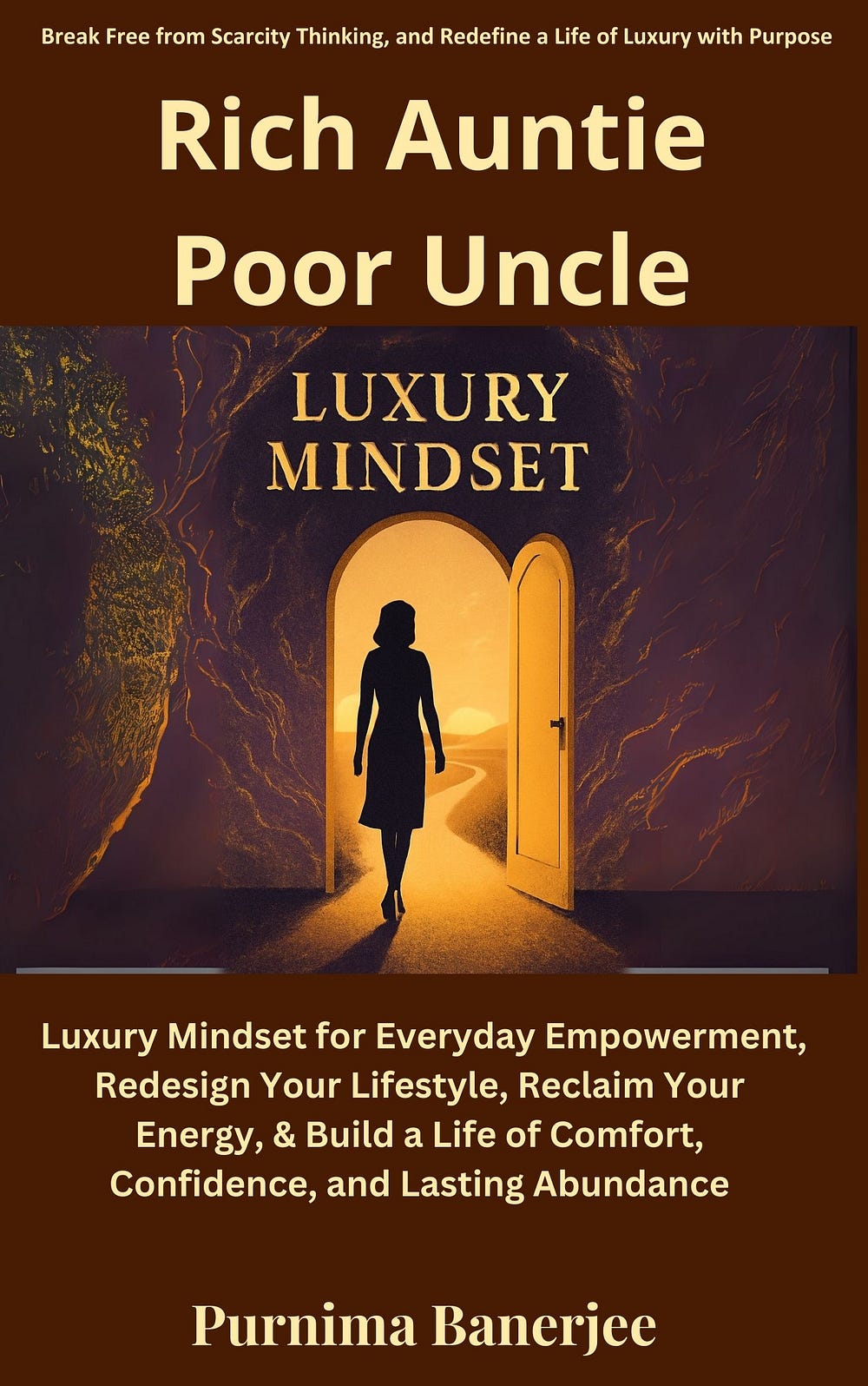
Rich Auntie Poor Uncle: Luxury Mindset for Everyday Empowerment, Redesign Your Lifestyle, Reclaim Your Energy, & Build a Life of Comfort, Confidence, and Lasting Abundance. https://relinks.me/B0FMQT41GR
Cheers!