The Bhagavad Gita – 151 Essential Lessons (1st Part)
Action, Mind & Balance (Lessons 1–90)
(English · বাংলা · हिन्दी)
The Bhagavad Gita is not meant to be read quickly.
Its teachings unfold gradually, guiding a person from right action, through inner discipline, toward balance and steadiness in life.
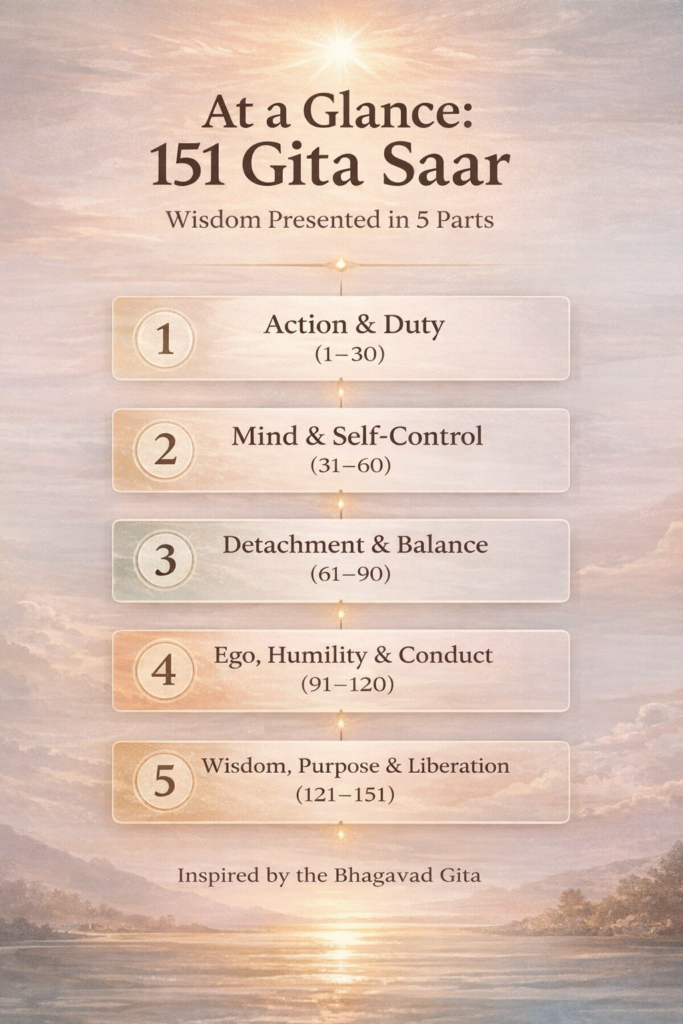
This article presents the first 90 essential lessons of the Gita, arranged in three parts:
• Action & Duty
• Mind & Self-Control
• Detachment & Balance
Each lesson is shared in English, Bengali, and Hindi, to support slow reading, reflection, and memorization.
These are distilled reminders, not explanations.
Part 1: Action & Duty (Lessons 1–30)
Right living begins with responsible action.
(Here you paste Lessons 1–30 exactly as you already have them
English → Bengali → Hindi, no commentary)
After Lesson 30, add only this:
Reflection
Right action is the foundation of all higher wisdom.
Without responsibility, inner growth cannot stand.
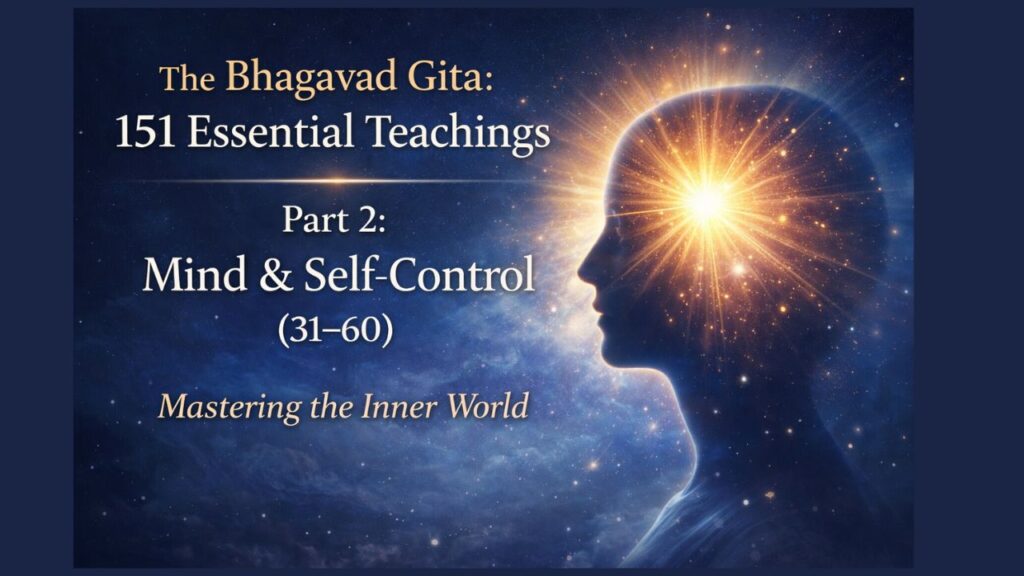
Part 2: Mind & Self-Control (Lessons 31–60)
Inner discipline sustains right action.
(Paste Lessons 31–60)
Reflection
A disciplined mind becomes a steady companion.
Without self-control, clarity cannot last.
Part 3: Detachment & Balance (Lessons 61–90)
Balance allows engagement without bondage.
(Paste Lessons 61–90)
Reflection
Detachment is not withdrawal, but freedom within action.
Balance is the sign of maturity.
Closing of Part I
Act rightly.
Train the mind.
Remain balanced.
These three prepare the ground for deeper wisdom.
To be continued:
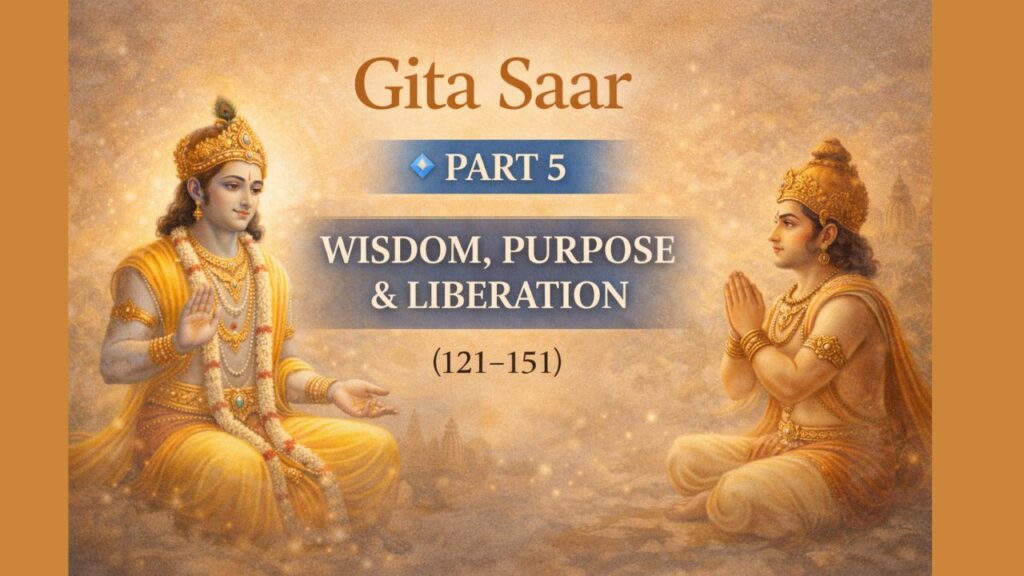
Part II – Ego, Wisdom & Liberation (Lessons 91–151)
The Bhagavad Gita – 151 Essential Lessons (Part I)
Action, Mind & Balance (Lessons 1–90)
(English · বাংলা · हिन्दी)
The Bhagavad Gita is not a text to be rushed through.
Its wisdom unfolds gradually, guiding a person from right action, through inner discipline, toward balance and steadiness in life.
This article presents the first 90 essential lessons of the Gita, arranged in three parts:
• Action & Duty
• Mind & Self-Control
• Detachment & Balance
Each lesson is shared in English, Bengali, and Hindi to support slow reading, reflection, and memorization.
These are distilled reminders, not detailed explanations.
Part 1: Action & Duty (Lessons 1–30)
Right living begins with responsible action.
Lesson 1
Action is unavoidable.
কর্ম অনিবার্য।
कर्म अनिवार्य है।
Lesson 2
Life demands participation.
জীবন অংশগ্রহণ দাবি করে।
जीवन सहभागिता मांगता है।
Lesson 3
Duty comes before comfort.
সুখের আগে কর্তব্য।
सुख से पहले कर्तव्य।
Lesson 4
Right action matters more than liking.
পছন্দের চেয়ে সঠিক কাজ গুরুত্বপূর্ণ।
पसंद से अधिक सही कर्म महत्वपूर्ण है।
Lesson 5
Work without attachment to results.
ফলের আসক্তি ছাড়া কাজ করো।
फल की आसक्ति बिना कर्म करो।
Lesson 6
Effort is yours, results are not.
চেষ্টা তোমার, ফল নয়।
प्रयास तुम्हारा है, फल नहीं।
Lesson 7
Fear arises from attachment.
আসক্তি থেকেই ভয় জন্মায়।
आसक्ति से भय उत्पन्न होता है।
Lesson 8
Selfless action brings peace.
নিষ্কাম কর্ম শান্তি আনে।
निष्काम कर्म शांति लाता है।
Lesson 9
Action purifies the mind.
কর্ম মনকে শুদ্ধ করে।
कर्म मन को शुद्ध करता है।
Lesson 10
Escape is not freedom.
পালিয়ে যাওয়া মুক্তি নয়।
पलायन स्वतंत्रता नहीं है।
Lesson 11
Discipline steadies life.
শৃঙ্খলা জীবন স্থির করে।
अनुशासन जीवन को स्थिर करता है।
Lesson 12
Undisciplined action creates unrest.
অশৃঙ্খল কর্ম অশান্তি আনে।
अअनुशासित कर्म अशांति लाता है।
Lesson 13
Sincere duty builds character.
সত্যনিষ্ঠ কর্তব্য চরিত্র গড়ে।
निष्ठापूर्ण कर्तव्य चरित्र बनाता है।
Lesson 14
Duty does not seek recognition.
কর্তব্য স্বীকৃতি চায় না।
कर्तव्य मान्यता नहीं चाहता।
Lesson 15
Selfless work lightens the heart.
নিষ্কাম কাজ হৃদয় হালকা করে।
निष्काम कर्म हृदय को हल्का करता है।
Lesson 16
Avoiding duty weakens the mind.
কর্তব্য এড়ানো মন দুর্বল করে।
कर्तव्य से बचना मन को कमजोर करता है।
Lesson 17
Action aligned with values brings clarity.
মূল্যবোধসম্মত কর্ম স্পষ্টতা আনে।
मूल्य आधारित कर्म स्पष्टता लाता है।
Lesson 18
Consistency matters more than intensity.
তীব্রতার চেয়ে ধারাবাহিকতা গুরুত্বপূর্ণ।
तीव्रता से अधिक निरंतरता महत्वपूर्ण है।
Lesson 19
Duty shapes identity.
কর্তব্য পরিচয় গঠন করে।
कर्तव्य पहचान गढ़ता है।
Lesson 20
Right effort purifies intention.
সঠিক প্রচেষ্টা অভিপ্রায় শুদ্ধ করে।
सही प्रयास भावना को शुद्ध करता है।
Lesson 21
Ego distorts action.
অহং কর্ম বিকৃত করে।
अहंकार कर्म को विकृत करता है।
Lesson 22
Let go of doership.
কর্তৃত্ববোধ ত্যাগ করো।
कर्तृत्व छोड़ो।
Lesson 23
Service transforms work.
সেবা কাজকে রূপান্তরিত করে।
सेवा कार्य को रूपांतरित करती है।
Lesson 24
Right action builds confidence.
সঠিক কর্ম আত্মবিশ্বাস গড়ে।
सही कर्म आत्मविश्वास बनाता है।
Lesson 25
Responsibility is an opportunity.
দায়িত্ব এক সুযোগ।
उत्तरदायित्व एक अवसर है।
Lesson 26
Delaying duty delays growth.
কর্তব্য বিলম্বে বিকাশ বিলম্বিত হয়।
कर्तव्य में विलंब विकास में विलंब है।
Lesson 27
Willing action reduces strain.
স্বেচ্ছায় কাজ করলে চাপ কমে।
स्वेच्छा से कर्म करने से बोझ घटता है।
Lesson 28
Right effort brings inner order.
সঠিক প্রচেষ্টা অন্তরের শৃঙ্খলা আনে।
सही प्रयास आंतरिक व्यवस्था लाता है।
Lesson 29
Duty prepares for wisdom.
কর্তব্য প্রজ্ঞার প্রস্তুতি।
कर्तव्य ज्ञान की तैयारी है।
Lesson 30
Right action is the foundation of the Gita.
সঠিক কর্মই গীতার ভিত্তি।
सही कर्म गीता की नींव है।
Reflection
Right action is the ground on which all higher wisdom stands.
Part 2: Mind & Self-Control (Lessons 31–60)
Inner discipline sustains right action.
Lesson 31
The mind can be a friend or an enemy.
মন বন্ধু কিংবা শত্রু হতে পারে।
मन मित्र भी हो सकता है और शत्रु भी।
Lesson 32
An uncontrolled mind creates suffering.
অসংযত মন দুঃখ সৃষ্টি করে।
असंयमित मन दुःख उत्पन्न करता है।
Lesson 33
A disciplined mind brings peace.
সংযত মন শান্তি আনে।
संयमित मन शांति लाता है।
Lesson 34
Self-control begins with awareness.
আত্মসংযম সচেতনতা থেকে শুরু।
आत्मसंयम जागरूकता से शुरू होता है।
Lesson 35
Restlessness weakens clarity.
অস্থিরতা স্পষ্টতা নষ্ট করে।
अस्थिरता स्पष्टता को कमजोर करती है।
Lesson 36
Focus steadies the mind.
একাগ্রতা মনকে স্থির করে।
एकाग्रता मन को स्थिर करती है।
Lesson 37
Desire distracts the mind.
আকাঙ্ক্ষা মনকে বিচলিত করে।
इच्छा मन को विचलित करती है।
Lesson 38
Restraint protects inner balance.
সংযম অন্তরের সামঞ্জস্য রক্ষা করে।
संयम आंतरिक संतुलन बचाता है।
Lesson 39
The wandering mind needs patience.
ভ্রমণশীল মন ধৈর্য চায়।
भटकते मन को धैर्य चाहिए।
Lesson 40
Control grows through practice.
অনুশীলনে নিয়ন্ত্রণ বাড়ে।
अभ्यास से नियंत्रण बढ़ता है।
Lesson 41
Gentle discipline works best.
নরম শৃঙ্খলাই কার্যকর।
कोमल अनुशासन सबसे प्रभावी है।
Lesson 42
Craving disturbs mental peace.
লোভ মানসিক শান্তি নষ্ট করে।
लालसा मानसिक शांति भंग करती है।
Lesson 43
Contentment calms the mind.
সন্তোষ মনকে শান্ত করে।
संतोष मन को शांत करता है।
Lesson 44
Sense control strengthens willpower.
ইন্দ্রিয় সংযম ইচ্ছাশক্তি বাড়ায়।
इंद्रिय संयम इच्छाशक्ति बढ़ाता है।
Lesson 45
Uncontrolled senses pull the mind outward.
অসংযত ইন্দ্রিয় মনকে বাইরে টানে।
असंयमित इंद्रियाँ मन को बाहर खींचती हैं।
Lesson 46
Turning inward restores balance.
অন্তর্মুখী হওয়া ভারসাম্য ফেরায়।
अंतर्मुखता संतुलन लौटाती है।
Lesson 47
The mind follows repeated thoughts.
পুনরাবৃত্ত চিন্তাই মনকে চালায়।
बार-बार के विचार मन को दिशा देते हैं।
Lesson 48
Right thoughts shape inner life.
সঠিক চিন্তা অন্তর্জীবন গড়ে।
सही विचार आंतरिक जीवन बनाते हैं।
Lesson 49
Negative thinking drains energy.
নেতিবাচক চিন্তা শক্তি হ্রাস করে।
नकारात्मक सोच ऊर्जा घटाती है।
Lesson 50
Calm thinking preserves strength.
শান্ত চিন্তা শক্তি রক্ষা করে।
शांत विचार शक्ति बचाते हैं।
Lesson 51
Discipline protects mental freedom.
শৃঙ্খলা মানসিক স্বাধীনতা রক্ষা করে।
अनुशासन मानसिक स्वतंत्रता बचाता है।
Lesson 52
Self-control is not suppression.
আত্মসংযম দমন নয়।
आत्मसंयम दमन नहीं है।
Lesson 53
Understanding replaces suppression.
বোঝাপড়া দমনের জায়গা নেয়।
समझ दमन का स्थान लेती है।
Lesson 54
Balance is the goal of discipline.
ভারসাম্যই শৃঙ্খলার লক্ষ্য।
संतुलन अनुशासन का लक्ष्य है।
Lesson 55
Excess weakens the mind.
অতিরিক্ততা মন দুর্বল করে।
अतिशयता मन को कमजोर करती है।
Lesson 56
Moderation strengthens clarity.
মধ্যমতা স্পষ্টতা বাড়ায়।
मितता स्पष्टता बढ़ाती है।
Lesson 57
A steady mind sees clearly.
স্থির মন স্পষ্ট দেখে।
स्थिर मन स्पष्ट देखता है।
Lesson 58
Self-control prepares for wisdom.
আত্মসংযম প্রজ্ঞার প্রস্তুতি।
आत्मसंयम ज्ञान की तैयारी है।
Lesson 59
Mastery of the mind is inner victory.
মনের জয়ই প্রকৃত বিজয়।
मन पर विजय ही सच्ची विजय है।
Lesson 60
A disciplined mind sustains peace.
সংযত মন শান্তি ধরে রাখে।
संयमित मन शांति बनाए रखता है।
Reflection
A trained mind becomes a steady ally.
Part 3: Detachment & Balance (Lessons 61–90)
Balance allows engagement without bondage.
Lesson 61
Attachment binds the mind.
আসক্তি মনকে বেঁধে ফেলে।
आसक्ति मन को बाँधती है।
Lesson 62
Detachment brings freedom.
অনাসক্তি স্বাধীনতা আনে।
अनासक्ति स्वतंत्रता लाती है।
Lesson 63
Clinging creates suffering.
আঁকড়ে ধরা দুঃখ আনে।
आसक्ति दुःख लाती है।
Lesson 64
Letting go restores balance.
ছেড়ে দেওয়ায় ভারসাম্য ফেরে।
छोड़ देने से संतुलन लौटता है।
Lesson 65
Balance is wisdom in action.
ভারসাম্যই কর্মের প্রজ্ঞা।
संतुलन कर्म में ज्ञान है।
Lesson 66
Excess disturbs inner peace.
অতিরিক্ততা অন্তরের শান্তি নষ্ট করে।
अतिशयता आंतरिक शांति भंग करती है।
Lesson 67
Moderation preserves clarity.
মধ্যমতা স্পষ্টতা রক্ষা করে।
मितता स्पष्टता बचाती है।
Lesson 68
Equanimity steadies the mind.
সমভাব মনকে স্থির করে।
समभाव मन को स्थिर करता है।
Lesson 69
Pleasure and pain are transient.
সুখ ও দুঃখ ক্ষণস্থায়ী।
सुख और दुःख क्षणिक हैं।
Lesson 70
Do not cling to either.
কোনোটাকেই আঁকড়ে ধরো না।
किसी से भी चिपके मत रहो।
Lesson 71
Attachment clouds judgment.
আসক্তি বিচারবুদ্ধি ঢেকে দেয়।
आसक्ति विवेक को ढक देती है।
Lesson 72
Detachment sharpens vision.
অনাসক্তি দৃষ্টিকে তীক্ষ্ণ করে।
अनासक्ति दृष्टि को तीक्ष्ण करती है।
Lesson 73
Balance prevents extremes.
ভারসাম্য চরমতা রোধ করে।
संतुलन अतिवाद से बचाता है।
Lesson 74
Extremes weaken stability.
চরমতা স্থিতি দুর্বল করে।
अतिवाद स्थिरता को कमजोर करता है।
Lesson 75
Calmness supports right action.
শান্তভাব সঠিক কর্মে সহায়ক।
शांति सही कर्म का सहारा है।
Lesson 76
Restlessness fuels desire.
অস্থিরতা আকাঙ্ক্ষা বাড়ায়।
अस्थिरता इच्छा बढ़ाती है।
Lesson 77
Contentment reduces craving.
সন্তোষ লালসা কমায়।
संतोष लालसा घटाता है।
Lesson 78
Detachment is not indifference.
অনাসক্তি উদাসীনতা নয়।
अनासक्ति उदासीनता नहीं है।
Lesson 79
It is inner freedom.
এটি অন্তরের স্বাধীনতা।
यह आंतरिक स्वतंत्रता है।
Lesson 80
Balance allows engagement without bondage.
ভারসাম্য বন্ধন ছাড়াই যুক্ত রাখে।
संतुलन बिना बंधन जुड़ाव देता है।
Lesson 81
The wise remain steady in change.
প্রজ্ঞাবান পরিবর্তনে স্থির থাকেন।
ज्ञानी परिवर्तन में स्थिर रहते हैं।
Lesson 82
Uncertainty tests balance.
অনিশ্চয়তা ভারসাম্যের পরীক্ষা।
अनिश्चितता संतुलन की परीक्षा है।
Lesson 83
Equanimity protects clarity.
সমভাব স্পষ্টতা রক্ষা করে।
समभाव स्पष्टता बचाता है।
Lesson 84
Desire intensifies attachment.
আকাঙ্ক্ষা আসক্তি বাড়ায়।
इच्छा आसक्ति बढ़ाती है।
Lesson 85
Awareness dissolves attachment.
সচেতনতা আসক্তি দূর করে।
जागरूकता आसक्ति मिटाती है।
Lesson 86
Balance strengthens inner poise.
ভারসাম্য অন্তরের স্থিরতা বাড়ায়।
संतुलन आंतरिक स्थिरता बढ़ाता है।
Lesson 87
Steady living calms the mind.
স্থির জীবন মনকে শান্ত করে।
स्थिर जीवन मन को शांत करता है।
Lesson 88
Detachment prepares for wisdom.
অনাসক্তি প্রজ্ঞার প্রস্তুতি।
अनासक्ति ज्ञान की तैयारी है।
Lesson 89
Balance sustains freedom.
ভারসাম্য স্বাধীনতা বজায় রাখে।
संतुलन स्वतंत्रता बनाए रखता है।
Lesson 90
Equanimity is true maturity.
সমভাবই প্রকৃত পরিপক্বতা।
समभाव ही सच्ची परिपक्वता है।
Reflection
Balance is the mark of inner growth.
Closing of 1st Part ( Lessons 1-90)
Act rightly.
Train the mind.
Remain balanced.
These prepare the ground for deeper wisdom.
To be continued:
Part II – Ego, Wisdom & Liberation (Lessons 91–151)