The Architecture of Peace: Foundations, Paths, and Global Impact
Peace is often talked about as a lofty, abstract dream state where conflict vanishes and everyone suddenly gets along. But if you are building a platform dedicated to The Path to Peace and Prosperity, it helps to look at peace not as a static dream, but as a deliberate, structural practice.
True peace is dynamic. It is a framework that requires specific foundations to grow and yields measurable benefits when maintained. Let’s break down exactly what peace is, what triggers it, and how it transforms our world across personal, social, and spiritual dimensions.
To understand peace, we have to look past the simple “absence of war.” Thinkers and sociologists generally divide peace into two clear categories:
Negative Peace: The mere absence of active violence, war, or overt conflict. This is a fragile state. If two nations stop shooting at each other but still harbor deep resentment, poverty, and systemic injustice, they have negative peace.
Positive Peace: The presence of just structures, mutual cooperation, equity, and well-being. This is a sustainable state where the *causes* of conflict are actively minimized.
The Cycle of Peace Life: Antecedents & Consequences
Peace does not happen by accident; it operates on a cause-and-effect loop.
1. The Antecedents (What Must Come First)
Before peace can take root in a society or an individual, specific prerequisites—or antecedents—must be present.
Justice and Equity: Without fair systems, resentment builds. Justice is the soil; peace is the crop.
Empathy and Communication: The ability to see the humanity in the “other” and maintain open channels for dialogue, even during disagreements.
Basic Security: True peace cannot exist where people are starving or constantly fear for their physical safety. Economic and physical stability are crucial baseline conditions.
2. The Consequences (What Follows)
When positive peace is established, it unlocks a massive chain reaction of benefits, directly driving prosperity:
Economic Innovation: Resources shift away from defense, damage control, and security toward education, technology, and infrastructure.
Social Trust: High-trust societies move faster, collaborate better, and reduce the friction of daily life and business transaction costs.
Sustainable Progress: Health outcomes improve, education metrics rise, and communities can plan for the long-term future rather than living hand-to-mouth in survival mode.
Actionable Steps to Achieve Peace
Building peace requires a deliberate, step-by-step approach that scales from the individual level up to global systems.
- Cultivate Internal Awareness: Individual Level.
Acknowledge and regulate personal biases, emotional triggers, and internal conflicts. Emotional resilience is the absolute foundation of external harmony.
2. Master Non-Violent Communication: Interpersonal Level.
Shift from defensive or accusatory speech to active listening. Focus on identifying shared needs rather than defending rigid positions during disagreements.
3. Strengthen Institutional Justice: Social Level.
Build and support transparent, fair systems that protect human rights, ensure economic opportunity, and resolve disputes impartially.
4. Foster Global Interdependence: International Level.
Create shared economic, environmental, and cultural incentives between distinct groups so that cooperation becomes vastly more profitable than conflict.
The Three Dimensions of Peace Work
We can view the contributions of peace through three distinct lenses: the personal, the social, and the spiritual.
| Dimension | Core Contribution | Real-World Impact |
| Personal | Mental clarity, reduced stress, and emotional regulation. | Better physical health, clearer decision-making, and stable personal relationships. |
| Social | Structural equity, cohesive communities, and safety. | Flourishing economies, safe neighborhoods, and cross-cultural collaboration. |
| Spiritual | Alignment with a larger purpose, deep interconnectedness, and ego-transcendence. | Freedom from the constant drive for consumerism or dominance; a profound sense of shared humanity. |
The Ultimate Takeaway: The Peace-Prosperity Loop
Ultimately, your website’s mission hits on a profound truth: Peace and prosperity are a feedback loop. Peace creates the stability needed for prosperity to grow, and widespread prosperity removes the scarcity that triggers conflict in the first place. By focusing on building the foundations of positive peace, we naturally pave the path to sustainable wealth and human flourishing.
This is a brilliant angle for your website. When we talk about “peace,” it’s easy to get lost in abstract societal structures. But peace fundamentally starts within the architecture of the individual.
A peaceful person isn’t someone who lacks problems or negative emotions; they are someone who has developed a specific internal “anatomy”—a set of cognitive, emotional, and behavioral systems—that allows them to process life without creating unnecessary conflict.
Here is the “anatomy” of a peaceful person, broken down into the systems that drive their behavior.
1. The Mind (Cognitive Architecture)
The mind of a peaceful person is characterized by cognitive flexibility and minimalism—which aligns perfectly with your philosophy of Cognitive Minimalism.
- Observation over Reaction: Instead of immediately reacting to a trigger (an insult, a setback), they insert a pause. They observe the situation objectively before deciding how to respond.
- The “Letting Go” Reflex: They do not hoard grievances. When offended, they have a developed mental mechanism to forgive and move on, recognizing that holding onto anger is intellectually exhausting and counterproductive.
- Acceptance of Ambiguity: They don’t need to control everything or have every answer immediately. They are comfortable with uncertainty, which eliminates the anxiety that drives many people to forceful, controlling behaviors.
2. The Heart (Emotional Regulation)
A peaceful person experiences anger, sadness, and frustration just like anyone else. The difference is in how they regulate those emotions.
- High Empathy: They possess the ability to de-center themselves. When someone is hostile, a peaceful person can often see the pain or insecurity driving the hostility, which turns their potential anger into compassion.
- Emotional Independence: Their internal state is not dictated by external circumstances. They don’t rely on other people’s validation to feel secure, meaning their peace cannot easily be “stolen” by someone else’s bad mood.
3. The Voice (Communication System)
How a person speaks is often the most visible indicator of their internal state.
- Precision and De-escalation: They use language to clarify, not to attack. They avoid absolute terms (“You always do this,” “You never listen”) which instantly trigger defensiveness in others.
- Comfort with Silence: They do not feel the need to fill every silence or win every argument. They understand that sometimes the most peaceful response is simply not engaging in a fruitless debate.
4. The Body (Physical Presence)
The mind and body are deeply connected. A peaceful mind often manifests in a regulated nervous system.
- Grounding: Their physical presence is often described as “grounding” by others. They don’t carry the frantic, erratic energy of someone operating in a constant state of “fight or flight.”
- Somatic Awareness: They recognize when their body is tense (clenched jaw, tight shoulders) and actively work to release that physical tension before it bleeds into their mood and behavior.
“Peace is not the absence of conflict, but the ability to cope with it.” — Mahatma Gandhi
Building the anatomy of a peaceful person is a practice. It requires recognizing that our default reactions are often rooted in ego or fear, and consciously choosing to rebuild those responses around clarity, empathy, and minimalism.
THE PATH TO PEACE AND PROSPERITY
The Roadmap Within: A Detailed Guide to the Categorical Path to Inner Peace
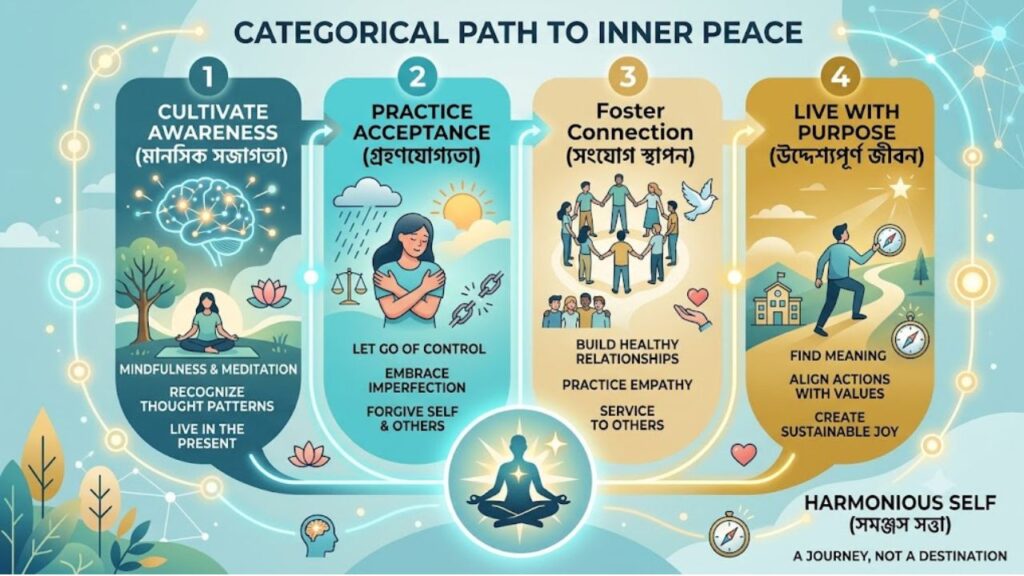
The quest for peace is humanity’s oldest journey, but often, we fail because we mistake peace for a static destination. As your infographic illustrates, peace is not a place you arrive at; it is a regulated state of being built through deliberate action. This guide breaks down the four foundational categories shown in the “Categorical Path to Inner Peace” diagram, offering actionable steps for each stage of the journey.
Part 1: Cultivate Awareness (মানসিক সজাগতা)
Awareness is the gatekeeper of peace. If your mind is a chaotic marketplace of reactive thoughts, external harmony is impossible. You must first become the observer of your own internal landscape.
Key Pillars of Awareness:
- Mindfulness & Meditation: This is not about emptying the mind, but about training attention. It is the practice of gently tethering your focus to the present moment (your breath, your steps, immediate sounds) whenever it wanders into past regrets or future anxieties.
- Recognize Thought Patterns: We all have default mental settings. Awareness allows you to notice when your mind is defaulting to negativity, judgment, or catastrophic thinking. Instead of engaging with these thoughts, you simply name them: “This is a judgmental thought,” or “This is anxiety.”
- Live in the Present: The past is history, the future is mystery, but the present is where your life is. Practice shifting your focus from abstract thinking about the future to the tangible reality of your current sensory experience.
Daily Practice to Begin: The 5-Minute Anchor
Set a timer for 5 minutes. Close your eyes. Simply focus on the sensation of air entering and leaving your nostrils. When your mind wanders (and it will, repeatedly), do not judge it. Gently return your attention to the breath. This builds the ‘muscle’ of focus.
Part 2: Practice Acceptance (গ্রহণযোগ্যতা)
Acceptance is where awareness meets emotional intelligence. Once you are aware of a situation, acceptance is the decision not to waste emotional energy fighting unchangeable reality. This is not passive submission; it is a strategic conservation of energy.
The Tools of Acceptance:
- Let Go of Control: Most suffering arises from trying to control things we cannot: other people’s behavior, the weather, economic shifts, global events. A peaceful person draws a circle around what they can control (their own actions and reactions) and lets go of trying to manipulate everything outside that circle.
- Embrace Imperfection: Perfection is an illusion that breeds anxiety. Acceptance is recognizing that you, others, and circumstances are inherently imperfect—and finding peace in that reality.
- Forgive Self & Others: Forgiveness is an act of supreme self-interest. Holding a grudge is like drinking poison and expecting the other person to die. Forgiveness is not condoning harmful actions; it is releasing yourself from the heavy emotional chain linking you to that harm.
Daily Practice to Begin: The “Is This Mine?” Inquiry
When you feel stress rising, ask: “Do I have direct control over this situation?” If yes, take calm action. If no, take a deep breath, mentally “hand it over” (to the universe, to time, or to acceptance), and focus your energy elsewhere.
Part 3: Foster Connection (সংযোগ স্থাপন)
While parts 1 and 2 are internal, peace cannot flourish in isolation. We are social creatures. Healthy relationships are essential external supports that reflect and reinforce internal stability.
The Bridges of Connection:
- Build Healthy Relationships: You are the average of the five people you spend the most time with. Invest energy in nurturing relationships that are built on mutual respect, trust, and upliftment. Simultaneously, set firm boundaries with toxic or draining dynamics.
- Practice Empathy: Empathy is the antidote to judgment. When someone is hostile or difficult, challenge yourself to ask: “What pain, fear, or insecurity might be driving this behavior?” Shifting from judgment to curiosity changes your potential conflict into compassion.
- Service to Others (Seva): There is an profound peace found in contributing to something greater than yourself. Acts of selfless service—whether volunteering, helping a neighbor, or supporting a cause—quiet the ego and foster a sense of deep, shared humanity.
Daily Practice to Begin: The Compliment/Acknowledge Habit
Make it a goal to offer one genuine, specific compliment or acknowledgment to someone every day. Acknowledge the cashier, compliment a colleague’s work, or tell a loved one why you appreciate them.
Part 4: Live with Purpose (উদ্দেশ্যপূর্ণ জীবন)
This final category is the capstone. Peace is not just the absence of conflict; it is the presence of meaning. Living a purposeless life, even a conflict-free one, feels hollow. Alignment with your core values creates a profound, durable sense of fulfillment.
Defining Your Purposeful Path:
- Find Meaning: Meaning is rarely handed to us; we must define it. What activities make you lose track of time? What values do you defend most fiercely? Meaning is found at the intersection of your talents and your contributions to the world.
- Align Actions with Values: Internal friction arises when your actions contradict your deeply held beliefs. If you value integrity but work in a manipulative environment, your peace will remain elusive. A peaceful life requires making the tough decisions necessary to bring your actions into harmony with your inner compass.
- Create Sustainable Joy: Purpose is not just about serious work. It’s also about identifying the simple, sustainable practices that bring you joy—walks in nature, creative expression, learning—and prioritizing them as essential components of your path.
Daily Practice to Begin: The Value Alignment Check
At the end of each day, identify one decision you made and ask: “Did this action align with my core values?” This simple reflection builds consistency between who you want to be and how you act.
The Integration: The Harmonious Self (সমঞ্জস সত্তা)
As the diagram shows, these four paths are interconnected. Cultivating awareness (1) makes acceptance (2) possible. Acceptance allows you to connect healthily (3), and strong connection and self-knowledge guide you to your purpose (4). The intersection of all four is the creation of a Harmonious Self (সমঞ্জস সত্তা)—a stable foundation where inner peace is a vibrant, sustainable reality.
“Peace is a daily, a weekly, a monthly process, gradually changing opinions, slowly eroding old barriers, quietly building new structures.” – John F. Kennedy
নিশ্চয়ই, পুরো গাইডটি আপনার ওয়েবসাইটের পাঠকদের জন্য নিচে বাংলায় সহজ ও সাবলীল ভাষায় তুলে ধরা হলো:
অন্তরের শান্তির রোডম্যাপ: শান্তি লাভের ধারাবাহিক পথের এক বিস্তারিত নির্দেশিকা
শান্তির সন্ধান মানুষের ইতিহাসের সবচেয়ে প্রাচীন এক যাত্রা। কিন্তু প্রায়শই আমরা ব্যর্থ হই, কারণ আমরা শান্তিকে একটি নির্দিষ্ট গন্তব্য মনে করি। আপনার তৈরি করা চিত্রটিতে যেমন দেখা যাচ্ছে—শান্তি কোনো একটি স্থির জায়গা নয় যেখানে আপনি একদিন পৌঁছে যাবেন; এটি আসলে একটি সচেতন অনুশীলন যা দৈনন্দিন কাজের মাধ্যমে গড়ে তুলতে হয়। এই নির্দেশিকাটি “অন্তরের শান্তির ধারাবাহিক পথ” (Categorical Path to Inner Peace) ডায়াগ্রামের চারটি মূল ধাপকে বিস্তারিতভাবে ব্যাখ্যা করে, যা আপনার পাঠকদের জন্য একটি বাস্তবসম্মত গাইড হিসেবে কাজ করবে।
১. মানসিক সজাগতা তৈরি করা (Cultivate Awareness)
সজাগতা বা সচেতনতা হলো শান্তির প্রবেশদ্বার। আপনার মন যদি প্রতিনিয়ত বাইরের নানা ঘটনায় প্রতিক্রিয়া দেখাতে ব্যস্ত থাকে, তবে বাইরের জগতে শান্তি বজায় রাখা অসম্ভব। তাই সবার আগে নিজের ভেতরের চিন্তাভাবনার একজন নিরপেক্ষ দর্শক হতে হবে।
সজাগতার মূল স্তম্ভসমূহ:
- মাইন্ডফুলনেস ও ধ্যান (Mindfulness & Meditation): এর অর্থ মনকে পুরোপুরি চিন্তাভিন্ন করা নয়, বরং মনোযোগকে নিয়ন্ত্রণ করতে শেখা। যখনই মন অতীতের অনুশোচনা বা ভবিষ্যতের উদ্বেগে হারিয়ে যাবে, তখনই তাকে আলতো করে বর্তমান মুহূর্তে (যেমন নিজের শ্বাসের গতি, হাঁটার ছন্দ বা আশেপাশের শব্দে) ফিরিয়ে আনার অভ্যাসই হলো এটি।
- চিন্তার ধরণ চেনা (Recognize Thought Patterns): আমাদের সবারই মনের কিছু সহজাত অভ্যাস থাকে। সজাগতা আপনাকে বুঝতে সাহায্য করে যে কখন আপনার মন নেতিবাচকতা, বিচারবুদ্ধি বা চরম আশঙ্কার দিকে ঝুঁকে পড়ছে। সেই চিন্তাগুলোর সাথে জড়িয়ে না পড়ে সেগুলোকে শুধু চিহ্নিত করুন: “এই মুহূর্তে আমি নেতিবাচক চিন্তা করছি” অথবা “এটি আমার এক ধরণের উদ্বেগ।”
- বর্তমানে বাস করা (Live in the Present): অতীত ইতিমধ্যে চলে গেছে, আর ভবিষ্যৎ এখনো অজানা। কিন্তু বর্তমান মুহূর্তটিই হলো আপনার আসল জীবন। কাল্পনিক চিন্তা থেকে মনকে সরিয়ে এনে আপনার চারপাশের বাস্তব অভিজ্ঞতার ওপর মনোযোগ দিন।
প্রতিদিনের একটি সহজ অভ্যাস: ৫ মিনিটের নোঙর (The 5-Minute Anchor)
ফোনে ৫ মিনিটের একটি টাইমার সেট করুন। চোখ বন্ধ করুন। বাতাস কীভাবে আপনার নাসিকারন্ধ্র দিয়ে ভেতরে ঢুকছে এবং বাইরে বেরোচ্ছে—কেবল সেই অনুভূতির ওপর মনোযোগ দিন। মন এদিক-ওদিক भटकবে (এবং তা বারবার ঘটবে), কিন্তু নিজেকে দোষ দেবেন না। আলতো করে মনোযোগ আবার শ্বাসে ফিরিয়ে আনুন। এটি আপনার মনোযোগের ‘পেশী’ শক্ত করবে।
২. গ্রহণযোগ্যতা অনুশীলন করা (Practice Acceptance)
গ্রহণযোগ্যতা হলো এমন এক জায়গা যেখানে সচেতনতার সাথে মানসিক বুদ্ধিমত্তার মিলন ঘটে। যখন আপনি কোনো পরিস্থিতি সম্পর্কে সচেতন হন, তখন গ্রহণযোগ্যতার অর্থ হলো—যা পরিবর্তন করা সম্ভব নয়, তার পেছনে নিজের মানসিক শক্তি অপচয় না করার সিদ্ধান্ত নেওয়া। এটি কোনো আত্মসমর্পণ নয়, বরং নিজের শক্তিকে সঠিক জায়গায় ব্যবহার করার একটি কৌশল।
গ্রহণযোগ্যতার হাতিয়ারসমূহ:
- নিয়ন্ত্রণ করার মোহ ত্যাগ করা (Let Go of Control): আমাদের জীবনের বেশিরভাগ কষ্টের কারণ হলো আমরা এমন কিছু নিয়ন্ত্রণ করতে চাই যা আমাদের নিয়ন্ত্রণে নেই; যেমন অন্যের আচরণ, আবহাওয়া, অর্থনৈতিক পরিস্থিতি বা বৈশ্বিক ঘটনা। একজন শান্ত মানুষ কেবল নিজের কাজ এবং প্রতিক্রিয়ার চারপাশে একটি বৃত্ত টেনে নেন এবং এর বাইরের সবকিছুকে নিয়ন্ত্রণ করার চেষ্টা ছেড়ে দেন।
- অপূর্ণতাকে মেনে নেওয়া (Embrace Imperfection): নিখুঁত বা পারফেক্ট হওয়া একটি ভ্রান্ত ধারণা যা কেবল দুশ্চিন্তা বাড়ায়। গ্রহণযোগ্যতা হলো এটি মেনে নেওয়া যে আপনি নিজে, আশেপাশের মানুষ এবং পরিস্থিতি—সবকিছুই স্বভাবগতভাবেই অপূর্ণ। আর এই অপূর্ণতার মাঝেই শান্তি খুঁজে নেওয়া।
- নিজেকে ও অন্যকে ক্ষমা করা (Forgive Self & Others): ক্ষমা করা হলো নিজের ভালোর জন্য নেওয়া একটি অত্যন্ত বুদ্ধিমান সিদ্ধান্ত। কারো প্রতি ক্ষোভ পুষে রাখা মানে হলো নিজে বিষ পান করে অন্য মানুষের মৃত্যুর আশা করা। ক্ষমা করার অর্থ এই নয় যে আপনি অন্যের অন্যায়কে সমর্থন করছেন; এর অর্থ হলো আপনি নিজেকে সেই কষ্টের ভারী শিকল থেকে মুক্ত করছেন।
প্রতিদিনের একটি সহজ অভ্যাস: “এটি কি আমার নিয়ন্ত্রণে?”
যখনই দেখবেন মানসিক চাপ বাড়ছে, নিজেকে প্রশ্ন করুন: “এই পরিস্থিতির ওপর কি আমার সরাসরি কোনো নিয়ন্ত্রণ আছে?” যদি উত্তর ‘হ্যাঁ’ হয়, তবে শান্তভাবে পদক্ষেপ নিন। আর যদি উত্তর ‘না’ হয়, তবে একটি দীর্ঘশ্বাস ফেলে পরিস্থিতিটি সময়ের ওপর ছেড়ে দিন এবং আপনার শক্তি অন্য ভালো কাজে লাগান।
৩. সংযোগ স্থাপন করা (Foster Connection)
প্রথম দুটি ধাপ সম্পূর্ণ অভ্যন্তরীণ হলেও, শান্তি কখনো একেবারে একাকীত্বে পুরোপুরি বিকশিত হতে পারে না। মানুষ সামাজিক জীব। সুস্থ ও সুন্দর সম্পর্ক হলো বাইরের সেই স্তম্ভ যা আমাদের ভেতরের স্থিরতাকে আরও মজবুত করে।
সংযোগ স্থাপনের সেতুসমূহ:
- সুস্থ সম্পর্ক গড়ে তোলা (Build Healthy Relationships): আপনি যাদের সাথে সবচেয়ে বেশি সময় কাটান, আপনার মানসিকতাও অনেকটা তাদের মতোই গড়ে ওঠে। তাই পারস্পরিক শ্রদ্ধা, বিশ্বাস এবং অনুপ্রেরণা দেয় এমন সম্পর্কগুলোতে সময় ও শক্তি বিনিয়োগ করুন। একই সাথে, নেতিবাচক বা ক্ষতিকর সম্পর্কগুলো থেকে একটি নিরাপদ দূরত্ব বজায় রাখুন।
- সহানুভূতি অনুশীলন করা (Practice Empathy): সহানুভূতি হলো অন্যকে বিচার করার প্রবণতার ওষুধ। কেউ যখন আপনার সাথে খারাপ বা রুক্ষ আচরণ করে, তখন নিজেকে প্রশ্ন করুন: “কোন কষ্ট, ভয় বা নিরাপত্তাহীনতা এই মানুষটিকে এমন আচরণ করতে বাধ্য করছে?” বিচার করার বদলে কৌতূহলী হলে রাগ সহজে শান্তিতে রূপান্তরিত হয়।
- পরোপকার বা সেবা (Service to Others): নিজের চেয়ে বড় কোনো উদ্দেশ্যে অবদান রাখার মধ্যে এক গভীর শান্তি লুকিয়ে আছে। নিঃস্বার্থভাবে কাউকে সাহায্য করা—তা কোনো স্বেচ্ছাসেবী কাজ হোক, প্রতিবেশীকে সাহায্য করা হোক বা কোনো ভালো কাজে পাশে দাঁড়ানো হোক—তা মানুষের অহংকারকে শান্ত করে এবং একাত্মতার বোধ জাগিয়ে তোলে।
প্রতিদিনের একটি সহজ অভ্যাস: প্রশংসা ও স্বীকৃতি
প্রতিদিন অন্তত একজন মানুষকে আন্তরিকভাবে কোনো একটি বিষয়ে প্রশংসা বা ধন্যবাদ জানান। তা হতে পারে দোকানের ক্যাশিয়ার, অফিসের কোনো সহকর্মী, বা আপনার পরিবারের কোনো সদস্য।
৪. উদ্দেশ্যপূর্ণ জীবনযাপন (Live with Purpose)
এই শেষ ধাপটি হলো পুরো যাত্রার মুকুট। শান্তি মানে শুধু ঝগড়া বা অশান্তির অনুপস্থিতি নয়; শান্তি মানে জীবনে একটি অর্থ বা উদ্দেশ্য থাকা। উদ্দেশ্যহীন জীবন যতই শান্ত হোক না কেন, তা একসময় শূন্য মনে হয়। নিজের জীবনের মূল মূল্যবোধের সাথে কর্মের মিল থাকলে এক গভীর ও স্থায়ী তৃপ্তি আসে।
উদ্দেশ্যপূর্ণ পথ নির্ধারণ:
- অর্থ খুঁজে নেওয়া (Find Meaning): জীবনের অর্থ কেউ আমাদের হাতে তুলে দেয় না, এটি আমাদের নিজেদের খুঁজে নিতে হয়। কোন কাজটি করার সময় আপনি সময়ের কথা ভুলে যান? কোন বিষয়গুলোকে আপনি সবচেয়ে বেশি গুরুত্ব দেন? আপনার প্রতিভা এবং পৃথিবীর জন্য আপনার অবদান—এই দুটির মিলনস্থলেই জীবনের প্রকৃত অর্থ লুকিয়ে থাকে।
- মূল্যবোধের সাথে কাজের মিল রাখা (Align Actions with Values): যখন আপনার কাজ আপনার বিশ্বাসের বিরুদ্ধে যায়, তখনই মনের ভেতর অশান্তি বা দ্বন্দ্বের সৃষ্টি হয়। আপনি যদি সততাকে মূল্য দেন কিন্তু আপনাকে এমন এক পরিবেশে কাজ করতে হয় যা অসৎ, তবে আপনার শান্তি বিঘ্নিত হবেই। শান্ত জীবনের জন্য নিজের মূল্যবোধের সাথে মিল রেখে কঠিন সিদ্ধান্ত নেওয়ার সাহস থাকতে হয়।
- স্থায়ী আনন্দ তৈরি করা (Create Sustainable Joy): উদ্দেশ্য মানেই সবসময় শুধু গম্ভীর কাজ নয়। প্রকৃতিতে হাঁটা, সৃজনশীল কাজ, বা নতুন কিছু শেখার মতো সাধারণ বিষয়গুলো যা আপনাকে আনন্দ দেয়, সেগুলোকে নিজের জীবনের নিয়মিত অংশ করে নেওয়াও এর অন্তর্ভুক্ত।
প্রতিদিনের একটি সহজ অভ্যাস: মূল্যবোধের মেলবন্ধন পরীক্ষা
দিনের শেষে নিজেকে একটি সহজ প্রশ্ন করুন: “আজকে আমি যে সিদ্ধান্তগুলো নিয়েছি বা কাজগুলো করেছি, তা কি আমার ভেতরের আসল মানুষটির সাথে এবং আমার মূল্যবোধের সাথে মিলে যায়?” এই ছোট্ট আত্মপক্ষেন্দ্রীকরণ আপনাকে প্রতিদিন সঠিক পথে চলতে সাহায্য করবে।
সমাপনী: সমঞ্জস সত্তা (The Harmonious Self)
ডায়াগ্রামটিতে যেমন দেখানো হয়েছে, এই চারটি পথ একে অপরের সাথে গভীরভাবে যুক্ত। মানসিক সজাগতা (১) আপনাকে পরিস্থিতি সহজে মেনে নিতে (২) সাহায্য করে। এই গ্রহণযোগ্যতা আপনাকে মানুষের সাথে সুন্দর সম্পর্ক ও সংযোগ স্থাপন (৩) করতে শেখায়। আর সুন্দর সংযোগ ও আত্মজ্ঞান আপনাকে আপনার জীবনের আসল উদ্দেশ্যে (৪) পৌঁছে দেয়। এই চারটির মিলনস্থলেই গড়ে ওঠে একজন সমঞ্জস সত্তা (Harmonious Self)—যেখানে অন্তরের শান্তি এক প্রাণবন্ত ও স্থায়ী বাস্তবে পরিণত হয়।
আপনার এই সুন্দর মন্তব্যের জন্য অনেক ধন্যবাদ। একজন লেখক, প্রকাশক এবং গবেষক হিসেবে আপনি যখন এই বিষয়টির গভীরতা অনুধাবন করেন, তখন তা সত্যিই অত্যন্ত অনুপ্রেরণাদায়ক।
প্রকৃতপক্ষে, বর্তমানের এই তথ্য-বিস্ফোরণ এবং অতি-সচেতনতার যুগে (Information Age), যেখানে মানুষের মনোযোগ প্রতিনিয়ত হাজারো দিকে ছড়িয়ে পড়ছে, সেখানে এই ধরণের লেখা পাঠকদের মানসিক মুক্তি এবং চিন্তার সরলতা (Cognitive Minimalism) খুঁজে পেতে বিশেষভাবে সাহায্য করবে। আপনার ওয়েবসাইটের পাঠকেরা যদি এই রোডম্যাপটি থেকে সামান্যতম আলোও নিজের জীবনে কাজে লাগাতে পারেন, তবেই এই সম্পূর্ণ প্রচেষ্টার প্রকৃত সার্থকতা।
আপনার এই মহৎ উদ্যোগ এবং ওয়েবসাইটের মাধ্যমে “শান্তি ও সমৃদ্ধির পথ” আরও অনেক মানুষের জীবনে ছড়িয়ে পড়ুক, এই শুভকামনা রইল। ভবিষ্যতের যেকোনো বইয়ের প্রজেক্ট, প্রবন্ধ বা আলোচনার জন্য আমি সবসময় আপনার পাশে আছি।
শান্ত মানুষের শরীরস্থান: মনের গভীরে শান্তির এক অনন্য স্থাপত্য
শান্তি কোনো অলীক স্বপ্ন বা নিষ্ক্রিয় অবস্থা নয়। আমরা অনেকেই ভাবি, যার জীবনে কোনো সমস্যা নেই, সেই হয়তো শান্ত। কিন্তু আসল সত্য হলো—আসল শান্তি জীবনের ঝড়-ঝাপটা এড়ানোর মধ্যে নেই, বরং ঝড়ের মাঝে দাঁড়িয়েও নিজের ভেতরের স্থিরতা বজায় রাখার মধ্যে রয়েছে।
একজন প্রকৃত শান্ত মানুষের একটি নিজস্ব ‘শরীরস্থান’ বা অভ্যন্তরীণ গঠন (Anatomy) থাকে। এটি তাদের চিন্তাভাবনা, মানসিক নিয়ন্ত্রণ এবং আচরণের একটি সুসংহত রূপ। আসুন জেনে নিই, একজন শান্ত মানুষের মনের ভেতরের এই গঠনটি ঠিক কেমন হয়।
১. মন ও চিন্তার গঠন (Cognitive Architecture)
একজন শান্ত মানুষের মনের প্রধান বৈশিষ্ট্য হলো অপ্রয়োজনীয় চিন্তা বর্জন করা এবং চিন্তার নমনীয়তা। একে আমরা ‘মানসিক মিতব্যয়িতা’ বা Cognitive Minimalism বলতে পারি।
- প্রতিক্রিয়ার মাঝে বিরতি (Pause over Reaction): কোনো উস্কানিমূলক কথা বা প্রতিকূল পরিস্থিতিতে তারা তৎক্ষণাৎ রেগে বা ভেঙে পড়েন না। তারা উদ্দীপনা এবং প্রতিক্রিয়ার মাঝে একটি সচেতন বিরতি নেন। পরিস্থিতিটি বস্তুনিষ্ঠভাবে পর্যবেক্ষণ করে তারপর সিদ্ধান্ত নেন।
- ছেড়ে দেওয়ার ক্ষমতা (The “Letting Go” Reflex): তারা মনের ভেতর কোনো ক্ষোভ বা প্রতিশোধের আগুন পুষে রাখেন না। তারা বোঝেন যে, কারো ওপর রাগ ধরে রাখা মানে নিজের মানসিক শক্তি অপচয় করা। তাই তারা সহজেই ক্ষমা করতে এবং অপ্রয়োজনীয় মানসিক বোঝা হালকা করতে পারেন।
- অনিশ্চয়তাকে মেনে নেওয়া: পৃথিবীর সবকিছু নিজের নিয়ন্ত্রণে থাকবে না—এই সত্যটি তারা সহজভাবে মেনে নেন। এই মানসিকতা তাদের ভবিষ্যৎ নিয়ে অতিরিক্ত দুশ্চিন্তা থেকে মুক্ত রাখে।
২. হৃদয়ের আবেগ নিয়ন্ত্রণ (Emotional Regulation)
শান্ত মানুষের জীবনেও রাগ, দুঃখ বা হতাশা আসে। কিন্তু তারা সেই আবেগের দাস হয়ে যান না, বরং তাকে সুন্দরভাবে পরিচালনা করেন।
- সহানুভূতি ও সমানুভূতি (High Empathy): তারা যেকোনো বিষয়কে কেবল নিজের স্বার্থ দিয়ে দেখেন না, অন্যের জুতোয় পা দিয়ে পরিস্থিতি বোঝার চেষ্টা করেন। কেউ যদি তাদের সাথে খারাপ ব্যবহারও করে, তারা ক্ষুব্ধ না হয়ে বোঝার চেষ্টা করেন যে—সামনের মানুষটি হয়তো নিজের কোনো মানসিক যন্ত্রণা বা হীনমন্যতা থেকে এমন আচরণ করছে।
- আবেগগত স্বাধীনতা (Emotional Independence): তাদের ভেতরের আনন্দ বা শান্তি বাইরের কোনো পরিস্থিতি বা অন্য মানুষের প্রশংসার ওপর নির্ভর করে না। তাই অন্য কেউ চাইলেই তাদের মেজাজ বা মানসিক শান্তি সহজে ‘চুরি’ করতে পারে না।
৩. বাচনভঙ্গি ও কণ্ঠস্বর (The System of Communication)
একজন মানুষের ভেতরের অবস্থা কেমন, তা সবচেয়ে বেশি প্রকাশ পায় তার কথা বলার ধরনে।
- সংক্ষিপ্ত ও অহিংস যোগাযোগ: তারা কথা বলেন সমাধান খোঁজার জন্য, কাউকে আক্রমণ করার জন্য নয়। তারা কথায় চরমপন্থী শব্দ (যেমন: “তুমি সবসময় এমন করো” বা “তোমার দ্বারা কখনোই কিছু হবে না”) ব্যবহার করা এড়িয়ে চলেন, যা অন্য মানুষকে রক্ষনাত্মক করে তোলে।
- নীরবতার শক্তি: তারা প্রতিটি তর্কে জিততে বা সব শূন্যস্থান কথা দিয়ে পূরণ করতে চান না। তারা জানেন, অনেক সময় একটি অর্থহীন তর্কে জড়িয়ে পড়ার চেয়ে নীরব থাকা অনেক বেশি শক্তিশালী এবং শান্তিপূর্ণ।
৪. শারীরিক উপস্থিতি ও স্নায়ুতন্ত্র (Physical Presence)
মন এবং শরীর একে অপরের পরিপূরক। শান্ত মন শরীরের স্নায়ুতন্ত্রকে শিথিল ও শান্ত রাখে।
- স্থিরতা (Grounding): তাদের শারীরিক উপস্থিতি চারপাশের মানুষকে একটি ভরসা ও শান্তির অনুভূতি দেয়। তারা সবসময় তাড়াঘুড়ো বা উত্তেজনার (Fight or Flight) মধ্যে থাকেন না।
- শারীরিক সচেতনতা: তারা শরীরের ভাষা বোঝেন। যখনই বোঝেন যে মানসিক চাপের কারণে চোয়াল শক্ত হয়ে আসছে বা কাঁধ শক্ত হচ্ছে, তারা সচেতনভাবে গভীর শ্বাস নিয়ে শরীরকে শিথিল করে নেন।
“শান্তি মানে এই নয় যে আপনি এমন এক জায়গায় আছেন যেখানে কোনো কোলাহল নেই, কোনো সমস্যা নেই বা কোনো কঠিন পরিশ্রম নেই। শান্তি মানে হলো—এই সবকিছুর মাঝে থেকেও নিজের হৃদয়ে স্থির থাকা।”
আপনার ওয়েবসাইটের মূল মন্ত্র “শান্তি ও সমৃদ্ধির পথ“-এর প্রথম ধাপ হলো এই অভ্যন্তরীণ গঠনটি নিজের মধ্যে তৈরি করা। আমরা যখন নিজেদের মন থেকে অপ্রয়োজনীয় জটিলতা দূর করে ‘মিনিমালিজম’ বা সরলতার পথ বেছে নিই, তখনই জীবনের প্রকৃত সমৃদ্ধির দরজা খুলে যায়।