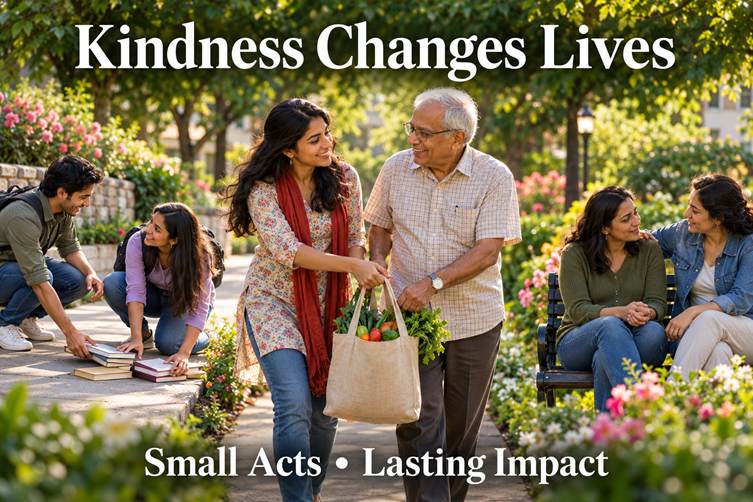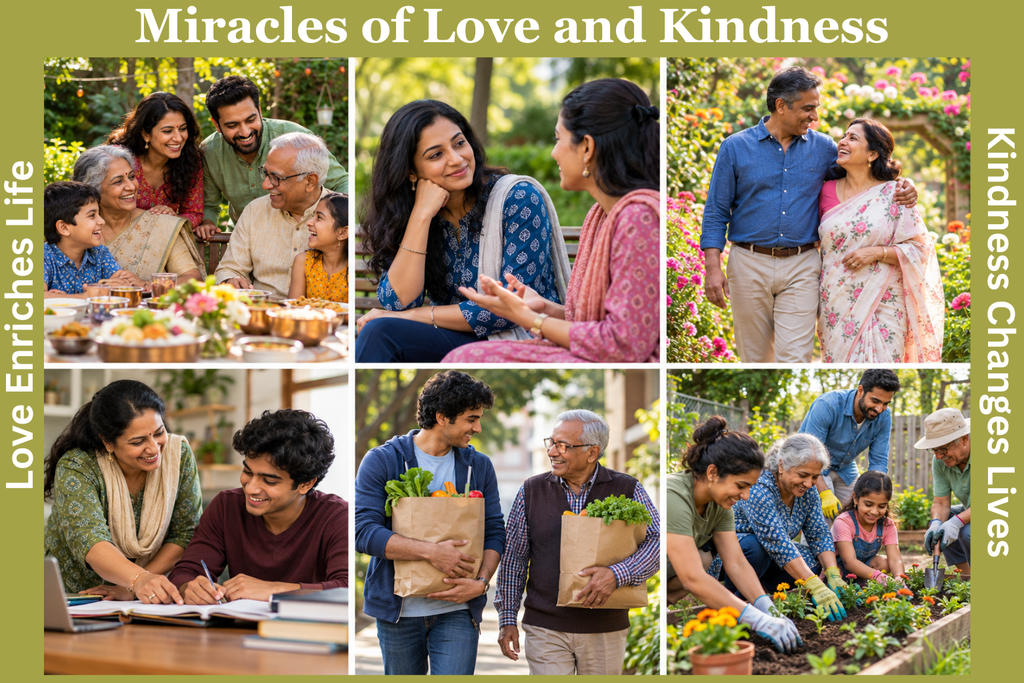
Miracles of Love and Kindness in Human Life
Seven Ways Love Enriches Us & Seven Ways Kindness Makes a Difference
By Dr. Gurudas Bandyopadhyay
Sometimes, a few gentle words change the direction of a day.
Someone listens when we feel troubled. A family member stands beside us after a disappointment. A stranger notices our difficulty and offers help. The problem may remain, yet we feel more able to face it.
Such moments reveal the quiet power of love and kindness.
Here, “miracles” means the remarkable changes that ordinary human care can bring: loneliness softened, trust renewed, courage restored, and hope awakened.
Love gives care depth and continuity. Kindness gives care a visible expression. Together, they remind us that our words and actions can make another person’s life more bearable—and sometimes more beautiful.
Seven Ways Love Enriches Human Life
1. Love Gives Us a Sense of Belonging
To feel loved is to feel that our presence matters.
A child welcomed home, an older person included in a conversation, or a friend remembered during a difficult week receives a powerful message: You have a place in my life.
Belonging grows through small, repeated gestures. We ask how someone is doing, wait for the answer, and remember what they shared.
Put it into practice: Contact someone today simply to say, “I was thinking of you. How are you?”
2. Love Creates Space for Honesty
We often hide our fears because we expect criticism, ridicule, or rejection. Caring relationships can give us room to speak honestly.
When someone listens with patience, we may find the courage to admit, “I made a mistake,” “I am worried,” or “I need help.”
This openness allows people to understand one another more deeply. It also makes it easier to address difficulties before silence turns into distance.
Put it into practice: When a loved one shares a concern, listen fully before offering advice.
3. Love Strengthens Courage During Adversity
Disappointment can make us doubt our abilities. The steady presence of someone who cares can help us take the next step.
A student who struggles, a person seeking employment, or someone rebuilding life after loss may draw strength from the words, “I am here with you.”
Loving support becomes especially meaningful when it includes practical help: preparing for an interview, sharing a responsibility, or accompanying someone through a difficult day.
Put it into practice: Ask a struggling person, “What would make this week a little easier?”
4. Love Encourages Personal Growth
Love pays attention to the person we are becoming.
A thoughtful teacher notices a learner’s potential. A friend encourages us to begin the work we have postponed. A family member helps us recognize a habit that needs changing.
Such encouragement respects our freedom while reminding us of our capabilities. It combines warmth with honest feedback.
Put it into practice: Recognize someone’s effort specifically: “I noticed how patiently you handled that situation.”
5. Love Makes Everyday Life More Meaningful
Much of life consists of ordinary moments—meals, errands, conversations, and familiar routines.
Love adds meaning to these moments. Preparing tea for someone, walking together, tending a garden, or sharing a memory can become an expression of companionship.
We need not wait for a celebration to experience closeness. Daily attention gives relationships their texture and depth.
Put it into practice: Give someone ten minutes of your undivided attention, with your phone put away.
6. Love Helps Us Repair Relationships
People who care about one another still misunderstand, disappoint, and disagree.
Love can motivate us to acknowledge harm, apologize sincerely, and change our behavior. Repair begins when protecting the relationship matters enough for us to examine our own actions.
Healthy love also respects boundaries. Forgiveness is a personal choice; rebuilding trust requires accountability and consistent conduct. Nobody has to accept mistreatment to prove their love.
Put it into practice: Replace a defensive explanation with an honest beginning: “What I said hurt you. I am sorry.”
7. Love Expands Our Sense of Responsibility
Love often begins with those closest to us, then reaches outward.
Concern for our children can deepen our concern for other children. Love of our surroundings can inspire us to protect shared spaces. Gratitude for our own opportunities can move us to support someone else’s learning.
In this way, personal affection can grow into contribution.
Put it into practice: Turn something you care deeply about into one useful action for others.

Bring More Love into Your Everyday Life 💕
How can we express love more thoughtfully, strengthen emotional bonds, and handle disagreements with greater understanding?
Explore my book, Power of Love: Master Love Languages, Strengthen Emotional Bonds, Resolve Conflicts, and Be Inspired for a Joyful & Connected Life—an invitation to turn loving intentions into everyday actions that nurture meaningful relationships.
Take the next step toward a more loving, connected life:

Find the book on Amazon · Choose your preferred bookstore · Apple Books · Kobo
POL https://relinks.me/B0DGZGPLP4
Power of Love https://books2read.com/u/mY2Q6W
Every day offers an opportunity to listen more closely, appreciate more openly, and care more thoughtfully.
Seven Ways Kindness Makes a Difference
1. Kindness Helps People Feel Seen
Being overlooked can be painful. A greeting, a patient response, or a sincere thank-you acknowledges another person’s presence.
The person cleaning a building, delivering a parcel, or serving at a counter deserves the same everyday courtesy we offer those we know well.
Recognition is a small gift available to everyone.
Put it into practice: Thank someone whose work usually passes unnoticed.
2. Kindness Reduces an Immediate Burden
A kind act can solve a small problem at exactly the right moment.
Helping someone carry a bag, explaining an unfamiliar process, or sharing useful information may save them effort and frustration.
The value of help depends partly on how well it fits the person’s need. Asking first preserves their choice and dignity.
Put it into practice: Say, “Would you like a hand?” and respect the answer.
3. Kindness Can Change the Tone of an Encounter
A delay, misunderstanding, or sharp reply can quickly create tension.
Responding calmly gives the interaction a chance to move in a better direction. We can be courteous while remaining clear about what needs to be resolved.
Kindness does not guarantee cooperation, but it gives respectful conversation room to begin.
Put it into practice: During a frustrating exchange, pause and ask, “How can we resolve this?”
4. Kindness Builds Trust Through Consistency
Trust grows when care is matched by dependable behavior.
Keeping a promise, respecting privacy, giving credit, and following through on an offer of help show that our goodwill has substance.
Repeated acts of consideration help people feel more comfortable approaching us.
Put it into practice: Fulfill one small commitment you have left pending.
5. Kindness Offers an Example Others Can Follow
People notice how we treat others.
A child watches an adult speak respectfully. A colleague sees someone welcome a newcomer. A neighbor observes another person caring for a shared space.
A kind example can suggest a possibility: I could do that too. Its influence may travel beyond anything we see.
Put it into practice: Make one helpful action part of your normal routine.
6. Kindness Gives Us an Opportunity to Contribute
We cannot solve every problem, but we can often make a useful difference within our reach.
Sharing knowledge, mentoring a learner, checking on a neighbor, or helping someone understand a form turns concern into participation.
There can be quiet satisfaction in knowing that our time and abilities have served a purpose.
Put it into practice: Ask yourself, “What do I know or have that could be useful to someone today?”
7. Kindness Makes Shared Life More Humane
Families, workplaces, and communities are shaped by everyday conduct.
When people listen respectfully, assist those facing difficulty, and avoid humiliating others, shared spaces become more welcoming.
Personal kindness belongs alongside fairness, responsible leadership, and reliable institutions. Each helps create conditions in which people can live with dignity.
Put it into practice: Choose one setting you belong to and help make it easier for someone else to participate.
Let Care Include Yourself
Our circle of care should include our own needs.
Speaking to ourselves with patience after a mistake, allowing time for rest, asking for support, and setting reasonable boundaries help us live with self-respect.
Generosity becomes more sustainable when we recognize our limits. We can care deeply without agreeing to every request.
A Small Beginning for Today
Before this day ends, consider three questions:
• Who would appreciate hearing from me?
• Whose burden could I make a little lighter?
• What caring action have I postponed?
Choose one answer and act on it.
The miracles of love and kindness often arrive quietly: a conversation that restores connection, an apology that opens a door, or a helping hand offered at the right time.
We may never know the full effect of our care. Still, we can choose to offer it thoughtfully.
“Let your love be felt through your attention, and your kindness be remembered through your actions.”
—Dr. Gurudas Bandyopadhyay
Make Everyday Kindness a Way of Life 💕
A thoughtful word, a patient response, or a helping hand can make someone’s day brighter. How can we bring more of these moments into our daily lives?
Explore Power of Everyday Kindness: Discover Joy, Strengthen Relationships, Inspire Change – Harness the Life-Changing Power of Kindness for a Better You.
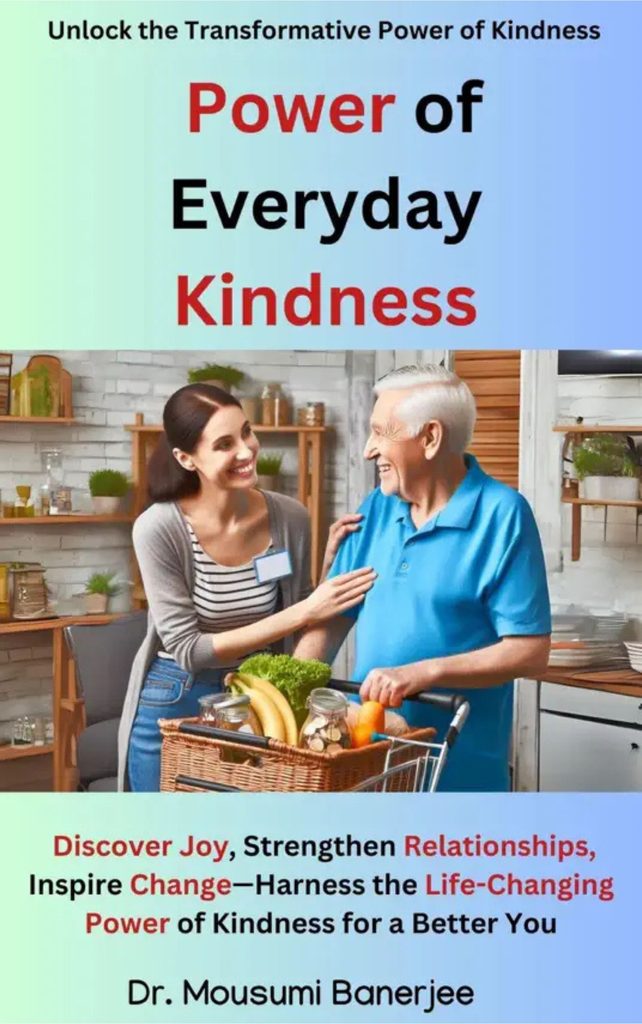
Let this book inspire you to recognize everyday opportunities for kindness and turn caring intentions into meaningful action.
https://books2read.com/u/mKke5V
Begin your journey toward a kinder, more connected life:
Choose your preferred bookstore · Apple Books · Kobo · Barnes & Noble
One small act of kindness today may become someone’s reason to smile tomorrow.