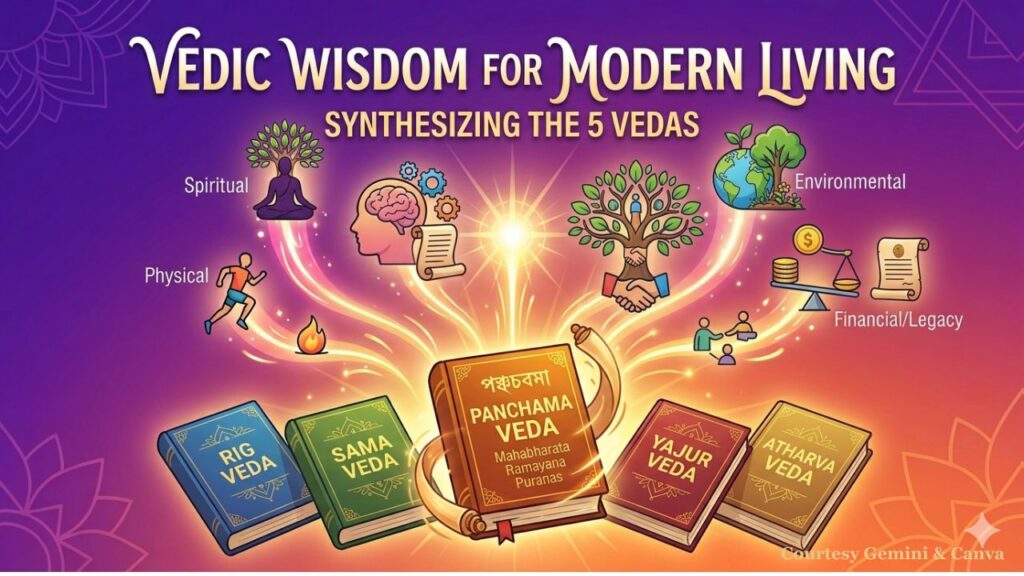
Mastering Modern Life: 40 Timeless Lessons from the Four Vedas + 10 Lessons from the 5th Pancham Veda
In an era defined by information overload, digital noise, and constant distraction, finding absolute clarity can feel like an impossible task. Yet, thousands of years ago, the ancient sages of India mapped out a profound blueprint for psychological, physical, and cosmic harmony. This knowledge is compiled in the four foundational texts known as the **Vedas** (from the Sanskrit root *Vid*, meaning “to know”).
Far from being mere archaic relics, the Vedas offer highly practical tools for contemporary living. By looking at the four distinct pillars of Vedic knowledge, we can extract **40 timeless principles** to help us reduce cognitive clutter and design a balanced, holistic life.
10 distinct, profound lessons from each of the four Vedas.
These are framed to bridge ancient philosophical wisdom with universal, modern concepts, keeping them accessible to a global audience.
1. Rig Veda: Lessons on Philosophy, Truth, and Cosmos
The Rig Veda focuses on the grand design of the universe, cosmic order, and the nature of ultimate reality.
1. Cosmic Order (*Rita*): The universe operates on an inherent, intelligent, and ethical rhythm. To live well, humanity must align its laws and behaviors with this natural order.
2. Pluralism of Truth (Ekam Sat): Absolute truth or reality is one, though realized and described differently by various cultures and thinkers. It dismisses dogmatism.
3. The Spirit of Inquiry (Nasadiya Sukta): Cultivate deep intellectual humility. The famous Creation Hymn reminds us to question, wonder, and accept that some cosmic mysteries are beyond human definition.
4. Interconnected Ecosystems: Human beings are not masters of nature but integral threads within it. The hymns to deities like Agni (Fire), Vayu (Wind), and Prithvi (Earth) emphasize environmental reverence.
5. Universal Brotherhood (Vasudhaiva Kutumbakam roots): The text promotes collective consciousness, suggesting that human society thrives when individuals perceive the same divine spark in everyone.
6. Intellectual Enkindling: The Gayatri Mantra represents the supreme prayer not for wealth or power, but for the sharpening and illumination of human intellect (Dhi).
7. The Power of Intentional Speech (Vach): Words carry creative energy. Speech should be truthful, precise, and intended to uplift rather than destroy.
8. Dynamic Optimism (Charaiveti): Life is a continuous forward march. The text encourages constant movement, exploration, and progress over stagnation.
9. Shared Evolution: True progress is collective. The Rig Veda encourages communities to think together, deliberate together, and evolve harmoniously.
10. The Ultimate Oneness (Purusha Sukta): At a fundamental level, all of creation—organic and inorganic—emerges from a single, unified source, making all life sacred.
2. Sama Veda: Lessons on Resonance, Harmony, and Emotion
The Sama Veda demonstrates that the *way* knowledge is expressed is just as important as the knowledge itself, focusing heavily on the science of vibration and internal alignment.
11. The Power of Resonance: Soundwaves and internal vibrations possess the psychological power to alter brain states, calm anxiety, and induce deep focus.
12. Harmony over Noise: Life should be lived like a well-composed melody (*Saman*). Discordant elements must be consciously tuned to find internal and external peace.
13. Emotional Transcendence: Art, music, and chanting are valid pathways to spiritual liberation (*Moksha*) because they bypass the analytical ego and touch the core of human consciousness.
14. Rhythmic Living: Just as musical notes rely on specific meters (Chhandas), human daily routines require a healthy rhythm of activity, rest, and reflection.
15. The Art of Listening (Shravana): True wisdom begins with active, deep listening. To harmonize with the world, one must first learn to quiet the mind and hear its subtle cues.
16. Aesthetic Elevation: Beauty and aesthetics are not mere distractions; when pure, they elevate human thoughts from the mundane to the sublime.
17. Transformation through Devotion: Logic alone can feel dry; emotional devotion (*Bhakti*) softens the heart and expands our capacity for empathy.
18. Intonation Matters: The meaning of knowledge changes based on the attitude and delivery behind it. Intention changes the impact of our actions.
19. The Universal Scale: The structural roots of musical octaves found here suggest that diverse notes can—and must—coexist to create a beautiful whole.
20. Mind-Body Synchronization: Rhythmic breathing and vocalization serve as an early blueprint for psychophysical wellness, aligning biological rhythms with mental intent.
III. The Yajur Veda: Lessons on Purposeful Action and Mindset
The Yajur Veda is a manual for action (Karma), detailing ceremonies and duties. It teaches us the importance of precision, focus, and dedicated labor.
21. Action as Sacrifice (Yajna): Transform mundane daily labor into a sacred act by treating your professional and personal duties as a selfless contribution to the greater good.
22. Absolute Precision: Cultivate meticulous attention to detail and thoroughness in your daily work. Excellence is born from discipline and execution.
23. The Power of Intent (Sankalpa): Before starting any major endeavor, clearly define your ethical and focused mental intention. The mind’s clarity dictates the ultimate outcome.
24. Continuous Self-Purification: Regularly introspect to burn away internal pollutions like greed, anger, and ego, cleansing your mental workspace.
25. Social Stewardship: True leadership and governance require a deep commitment to protecting the vulnerable and maintaining balance through structured duties.
26. Reciprocity with Nature: When you take resources from the world, make it a point to offer something back—plant a tree, help a neighbor, restore balance.
27. The Pursuit of Peace (Shanti): Cultivate a mindset that actively prays for and works toward calmness in the skies, on the earth, and within the human mind.
28. Inner and Outer Alignment: Outer rituals and actions are meaningless without inner righteousness. Ensure your external behaviors match your internal values.
29. Detachment from Fruits: Act with total dedication, but surrender the ultimate results to the grander scheme of life, eliminating the paralyzing anxiety of anticipation.
30. Navigating Transitions: Life is a series of shifting seasons and stages. Learn to navigate major life transitions with grace, dignity, and ritualistic pause.
IV. The Atharva Veda: Lessons on Daily Living and Wellness
The Atharva Veda is highly practical, addressing the immediate realities of human health, psychology, family life, and material well-being.
31. Holistic Medicine: Health is not merely the absence of disease; it is a dynamic balance between body, mind, and spirit. Treat the root cause, not just the symptom.
32. Psychological Resilience: Mental strength is the foundation of physical health. Proactively protect your mind from fear, anxiety, and negative psychological influences.
33. Domestic Harmony: Treat the family unit as a micro-universe. Nurture mutual love, deep respect, and open communication within the household.
34. Sustainable Ecology: Remember the sacred eternal bond: *”The Earth is my mother, and I am her child.”* Never exploit natural resources beyond their capacity to regenerate.
35. Longevity and Vitality (*Ayushya*): Aim for a long, vibrant lifespan filled with mental clarity, active contributions, and physical independence.
36. Proactive Protection: It is your fundamental duty to protect your body, family, and workspace from external harms, diseases, and negative energy.
37. Ethical Prosperity (Artha): Material wealth and success are highly beneficial tools for societal stability and philanthropy, provided they are earned through honest means.
38. Public Wellbeing: Ensuring community hygiene, clean water, and public health is both a civic duty and a deeply spiritual obligation.
39. Radical Inclusivity: Wish for health, prosperity, and dignity for all individuals across every stratum of society, creating a supportive social fabric.
40. The Wisdom of Nature’s Pharmacy: Learn from the flora and fauna around you. Prioritize preventative wellness by staying close to nature’s natural remedies.
10 profound lessons from the “Fifth Veda” (The Epics and Purans).
These texts take the abstract, cosmic truths of the original four Vedas and ground them into human stories of family, duty, conflict, and resilience—making them incredibly relatable for a modern, global audience.
The Living Philosophy: 10 Core Lessons from the Fifth Veda
If the original four Vedas are the architectural blueprint of cosmic truth, the **Fifth Veda** (The *Ramayana*, *Mahabharata*, and *Purans*) is the actual building we live in. It translates high philosophy into human drama, showing us exactly how to navigate the messy, unpredictable nature of daily life.
Here are 10 timeless lessons from this practical guide to human existence:
41. The Nuance of Righteousness (Dharma)
The Lesson: Dharma is rarely black and white; it is situational and deeply complex.
Modern Application: Life will often present you with moral dilemmas where there is no easy choice. Mastering your life requires looking past rigid rules and acting from a place of deep, conscious integrity based on the situation at hand.
42. The Inevitability of Change (Kala)
The Lesson: Time (Kala) is the ultimate equalizer in the Purans. Great empires fall, seasons turn, and even divine incarnations must face the passage of time.
Modern Application: This aligns perfectly with a holistic view of life stages. Do not cling too tightly to any single phase of life. Embrace the winter of rest just as gracefully as the spring of high productivity.
43. Victory Over the Inner Shadow
The Lesson: The battles in the Epics—whether Rama fighting Ravana or Arjuna facing his kinsmen—are allegories for the human psyche. The real demons are greed, ego, jealousy, and attachment.
Modern Application: True mental freedom is not won by defeating external critics or competitors, but by mastering your own mind and conquering inner chaos.
44. The Power of Choices over Circumstances
The Lesson: In the Mahabharata, characters like Karna and Arjuna face immense hardships. What defines them is not their difficult circumstances, but the choices they make in response to them.
Modern Application: You cannot always control the seasons of life, family disruptions, or external changes. However, you retain absolute ownership over your response and your attitude.
45. Attachment is the Root of Anxiety
The Lesson: King Dhritarashtra’s extreme, blind attachment to his sons led to the destruction of an entire kingdom.
Modern Application: In our modern age, we often develop a “blind attachment” to outcomes, digital metrics, or material accumulation. Practicing **Cognitive Minimalism** means letting go of obsessive control so we can find peace.
46. Legacy is Built Through Personal Sacrifice
The Lesson: Characters like Bhishma or Rama willingly give up personal comfort, kingdoms, and desires to uphold a larger promise or protect societal order.
Modern Application: A truly rewarding life expands beyond the self. True fulfillment comes when we dedicate a portion of our time to building a legacy that protects and uplifts future generations.
47. The Power of Wise Counsel
The Lesson: The outcome of the Kurukshetra war was dictated heavily by who the leaders chose to listen to. Duryodhana listened to Shakuni (deceit), while Arjuna chose Krishna (wisdom).
Modern Application: Be incredibly selective about what and whom you let into your mental workspace. Guard your focus by surrounding yourself with uplifting literature, wise mentors, and positive connections.
48. Every Action Leaves a Footprint (Karma)
The Lesson: No act, whether done in secret or with good intentions, escapes the cosmic ledger of cause and effect.
Modern Application: Treat every daily task—whether organizing a project, writing a page, or speaking to a family member—with high intention. Small, ethical daily actions compound into a life of profound fulfillment.
49. The Sacredness of Family Bonds
The Lesson: The Ramayana highlights the strength of fraternal love (Lakshmana and Bharata’s devotion to Rama), while the *Mahabharata* warns against the tragedy of family feuds.
Modern Application: The family unit is our emotional anchor. Nurturing deep, loving relationships with your spouse, children, and grandchildren is a core pillar of **Social Wellness**.
50. The Ultimate Completeness (Purnata) Within
The Lesson: The Purans frequently show kings leaving behind vast material wealth to meditate in the forests, realizing that outer kingdoms cannot satisfy an inner void.
Modern Application: True success is an inside job. External wealth, fame, or books published are wonderful tools, but ultimate completeness (Purnata) comes from realizing that peace is already inherent within your own consciousness.
আধুনিকজীবনেরপথনির্দেশিকা: চতুর্বেদের৪০টিঅমূল্যশিক্ষা +
আজকের অতি–ডিজিটাল, তথ্যবহুল এবং অস্থির সময়ে মানসিক স্পষ্টতা খুঁজে পাওয়া বেশ কঠিন। অথচ হাজার হাজার বছর আগে, ভারতের প্রাচীন ঋষিগণ মন, শরীর এবং মহাবিশ্বের মধ্যে নিখুঁত ভারসাম্য বজায় রাখার একটি চমৎকার রূপরেখা তৈরি করেছিলেন। এই গভীর জ্ঞানভাণ্ডার সংকলিত রয়েছে চার বেদ–এ (সংস্কৃত মূল *’বিদ‘* থেকে আগত, যার অর্থ ‘জ্ঞান‘)।
বেদ কেবল কোনো প্রাচীন গ্রন্থ নয়, বরং এটি আমাদের আধুনিক জীবনের জটিলতা দূর করার এক বাস্তবসম্মত নির্দেশিকা। বৈদিক জ্ঞানের এই চারটি স্তম্ভ থেকে আমরা এমন ৪০টি চিরন্তন শিক্ষা** পেতে পারি, যা আমাদের জীবনকে সুন্দর ও অর্থপূর্ণ করে তুলতে সাহায্য করবে।
ঋগ্বেদ আপনার বুদ্ধিবৃত্তিক (Intellectual) বিকাশকে পথ দেখায়, সামবেদ মানসিক ও মানসিকতা (Mental/Emotional) সংক্রান্ত, যজুর্বেদ আপনার কর্ম ও আর্থিক (Actions/Finances) বিষয়কে নির্দেশ করে এবং অথর্ববেদ আপনার শারীরিক, সামাজিক ও পরিবেশগত (Physical, Social, Environmental) সুস্থতার কথা বলে।
১. ঋগ্বেদ: দর্শন, সত্য এবং মহাবিশ্বের শিক্ষা
প্রাচীনতম এবং সবচেয়ে গভীর এই সংকলনটি মহাবিশ্বের সৃষ্টিতত্ত্ব এবং পরম সত্যের অনুসন্ধান নিয়ে আলোচনা করে।
১. প্রাকৃতিক শৃঙ্খলা (ঋত): এই মহাবিশ্ব একটি নির্দিষ্ট এবং বুদ্ধিদীপ্ত নিয়মে চলে। জীবনকে সুন্দর করতে হলে প্রতিদিনের অভ্যাসকে প্রকৃতির নিয়মের সাথে সামঞ্জস্যপূর্ণ করুন।
২. সত্যের বহুত্ববাদ (একম্ সত্): “সত্য এক, কিন্তু জ্ঞানীরা তাকে বহু নামে ডাকেন।“* পরম সহনশীলতা অনুশীলন করুন; ভিন্ন ভিন্ন দৃষ্টিভঙ্গি আসলে একই পরম সত্যে পৌঁছানোর ভিন্ন ভিন্ন পথ।
৩. অনুসন্ধিৎসু মন: নিজের জ্ঞানের সীমাবদ্ধতা স্বীকার করার মধ্যে এক ধরনের সততা রয়েছে। বিখ্যাত ‘নাসদীয় সূক্ত‘ আমাদের শেখায় মহাবিশ্বের রহস্য নিয়ে প্রশ্ন তুলতে এবং গভীর বিস্ময় প্রকাশ করতে।
৪. পরিবেশের প্রতি শ্রদ্ধা: মানুষ প্রকৃতির প্রভু নয়, বরং তার একটি অবিচ্ছেদ্য অংশ। মাটি, জল এবং বাতাসকে রক্ষা করা আমাদের প্রত্যেকের আধ্যাত্মিক কর্তব্য।
৫. বিশ্বজনীন ভ্রাতৃত্ববোধ: সমাজ তখনই সমৃদ্ধ হয় যখন আমরা প্রতিটি মানুষের মধ্যে একই চেতনার স্ফুলিঙ্গ দেখতে পাই এবং বাহ্যিক বৈষম্যকে দূরে সরিয়ে রাখি।
৬. বুদ্ধির জাগরণ: আমাদের শ্রেষ্ঠ প্রার্থনা হওয়া উচিত আমাদের সম্মিলিত মেধা, প্রজ্ঞা ও বুদ্ধিকে (*ধী*) শাণিত এবং আলোকিত করার জন্য, যা গায়ত্রী মন্ত্রের মূল বাণী।
৭. সচেতন বাক্য প্রয়োগ (বাক্): শব্দের মধ্যে এক অমোঘ মানসিক শক্তি রয়েছে। কেবল সেই কথাই বলুন যা সত্য, স্পষ্ট এবং অন্যের কল্যাণে নিয়োজিত।
৮. গতিশীল ইতিবাচকতা (চরাইবেতি): জীবন হলো একটি অবিরাম সম্মুখযাত্রা। মানসিক স্থবিরতাকে ত্যাগ করে প্রতিনিয়ত নতুন কিছু অন্বেষণ ও প্রগতির পথে এগিয়ে চলুন।
৯. সম্মিলিত বিবর্তন: প্রকৃত উন্নতি কখনো একা সম্ভব নয়। আমাদের একসাথে চিন্তা করতে হবে, একসাথে কাজ করতে হবে এবং সমাজের সবাইকে নিয়ে একসাথে পথ চলতে হবে।
১০. পরম একত্ব: সৃষ্টির সমস্ত উপাদান মূলত একটি একক উৎস থেকে উৎপন্ন। তাই প্রতিটি জীবনের অস্তিত্বই গভীরভাবে একে অপরের সাথে যুক্ত এবং পবিত্র।
২. সামবেদ: সুর, সম্প্রীতি এবং অনুভূতির শিক্ষা
সামবেদ ঋগ্বেদের মন্ত্রগুলোকে সুরে রূপান্তরিত করেছে। এটি প্রমাণ করে যে—জ্ঞানের কথার চেয়েও সেটি প্রকাশ করার মাধ্যমটি কতখানি গুরুত্বপূর্ণ।
১১. সুর ও কম্পনের শক্তি: সুরের ছন্দ ও অভ্যন্তরীণ কম্পন মানুষের মানসিক অবস্থাকে পরিবর্তন করার ক্ষমতা রাখে; এটি দুশ্চিন্তা দূর করে গভীর একাগ্রতা এনে দেয়।
১২. কোলাহল মুক্ত জীবন: আপনার জীবনকে একটি সুন্দর সঙ্গীতের মতো করে গড়ে তুলুন। মনের শান্তি বজায় রাখতে জীবনের সমস্ত কোলাহল ও নেতিবাচক উপাদানকে সচেতনভাবে পরিহার করুন।
১৩. শিল্পের মাধ্যমে মুক্তি: শিল্প, সঙ্গীত এবং নান্দনিক অভিজ্ঞতা মানুষের অহংকারকে দূরে সরিয়ে সরাসরি আত্মাকে স্পর্শ করে, যা মানসিক মুক্তির এক একটি মাধ্যম।
১৪. ছন্দোবদ্ধ জীবনধারা: গান যেমন নির্দিষ্ট ছন্দের (ছন্দস্) ওপর নির্ভর করে, মানুষের দৈনিক জীবনও তেমনি কাজ, বিশ্রাম এবং আত্মচিন্তার একটি সুনির্দিষ্ট ছন্দের ওপর চলা উচিত।
১৫. গভীর মনোযোগ দিয়ে শোনার শিল্প (শ্রবণ): প্রকৃত জ্ঞান অর্জনের প্রথম ধাপ হলো মন দিয়ে শোনা। নিজের ভেতরের অস্থিরতাকে শান্ত করে চারপাশের সূক্ষ্ম ইঙ্গিতগুলো শুনতে শিখুন।
১৬. নান্দনিক উৎকর্ষ: সুন্দর ও ইতিবাচক পরিবেশের মধ্যে সময় কাটান। দৃশ্যমান এবং শ্রবণযোগ্য সৌন্দর্য মানুষের চিন্তাভাবনাকে সাধারণ স্তর থেকে এক উন্নত স্তরে নিয়ে যায়।
১৭. ভক্তির মাধ্যমে রূপান্তর: কেবল শুষ্ক যুক্তি দিয়ে জীবন পূর্ণ হয় না। হৃদয়ে সহানুভূতি ও ভক্তি ভাব ধারণ করলে তা মনকে নরম করে এবং মানুষের সাথে সংযোগ বাড়ায়।
১৮. উদ্দেশ্যের প্রভাব: আপনার কাজের পেছনের মানসিকতাই তার প্রভাব নির্ধারণ করে। প্রতিদিনের প্রতিটি সাধারণ কাজকে ভালোবাসা এবং ইতিবাচক ইচ্ছা দিয়ে সম্পন্ন করুন।
১৯. বৈচিত্র্যের মধ্যে ঐক্য: গানের যেমন বিভিন্ন সুর একসাথে মিলে একটি সুন্দর সঙ্গীত তৈরি করে, তেমনি সমাজের ভিন্ন ভিন্ন মানুষের দৃষ্টিভঙ্গি মিলেই একটি সুন্দর সমাজ গঠিত হয়।
২০. শরীর ও মনের সমন্বয়: ছন্দোবদ্ধ শ্বাস–প্রশ্বাস এবং সুরের উচ্চারণ আমাদের ভেতরের জৈবিক ঘড়িকে ঠিক রাখে, যা মানসিক চাপ দূর করার একটি প্রাকৃতিক ঢাল।
৩. যজুর্বেদ: কর্ম, আচার এবং মানসিকতার শিক্ষা
যজুর্বেদ মূলত কর্মকাণ্ডের নির্দেশিকা। এটি আমাদের সুনির্দিষ্ট কাজ, নিখুঁত পদ্ধতি এবং একাগ্রতার গুরুত্ব শেখায়।
২১. যজ্ঞ হিসেবে কর্ম (যজ্ঞ): আপনার প্রতিদিনের পেশাগত ও ব্যক্তিগত কর্তব্যকে সমাজের বৃহত্তর কল্যাণে একটি স্বার্থহীন উৎসর্গ হিসেবে দেখুন। এতে সাধারণ কাজও পবিত্র হয়ে ওঠে।
২২. নিখুঁত কর্মদক্ষতা: প্রতিটি কাজে নিখুঁত মনোযোগ এবং আন্তরিকতা বজায় রাখুন। নিয়মিত ডিসিপ্লিন এবং সঠিক বাস্তবায়নের মাধ্যমেই কাজের উৎকর্ষ সৃষ্টি হয়।
২৩. সংকল্পের রূপরেখা (সংকল্প): যেকোনো বড় কাজ শুরু করার আগে নিজের উদ্দেশ্যকে স্পষ্ট ও নৈতিক করুন। মনের স্পষ্টতাই কাজের শেষ ফলাফল নির্ধারণ করে।
২৪. অনবরত আত্মশুদ্ধি: প্রতিনিয়ত আত্মদর্শনের মাধ্যমে নিজের ভেতরের লোভ, রাগ ও অহংকার দূর করে নিজের মানসিক অবস্থাকে পরিশুদ্ধ ও হালকা রাখুন।
২৫. সামাজিক দায়িত্ব: নেতৃত্ব ও দায়িত্বের মূল কথা হলো সমাজের প্রতিটি স্তরের ভারসাম্য বজায় রাখা এবং অপরের কল্যাণে নিজের কর্তব্য পালন করা।
২৬. প্রকৃতির সাথে ভারসাম্য: প্রকৃতি থেকে আমরা যখনই কোনো সম্পদ গ্রহণ করব, তখন প্রকৃতিকে কিছু ফিরিয়ে দেওয়াও আমাদের দায়িত্ব—একটি গাছ লাগানো বা কাউকে সাহায্য করার মাধ্যমে এই ভারসাম্য রক্ষা করুন।
২৭. শান্তির অন্বেষণ (শান্তি): এমন একটি মানসিকতা তৈরি করুন যা নিজের মনে, সমাজে এবং প্রকৃতির প্রতিটি উপাদানে শান্তি বজায় রাখার জন্য সক্রিয়ভাবে কাজ করে।
২৮. অন্তরের সততা: অন্তরের সততা ছাড়া বাইরের কোনো আনুষ্ঠানিকতার কোনো মূল্য নেই। আপনার বাইরের কাজ যেন আপনার ভেতরের আসল মূল্যবোধেরই প্রতিফলন হয়।
২৯. ফল আসক্তি বর্জন: নিজের সর্বোচ্চ শক্তি দিয়ে কাজ করুন, কিন্তু তার ফলাফলকে মহাজাগতিক নিয়মের ওপর ছেড়ে দিন। এতে ভবিষ্যতের দুশ্চিন্তা থেকে মুক্তি পাওয়া যায়।
৩০. জীবনের পরিবর্তনগুলোকে গ্রহণ করা: জীবন হলো বিভিন্ন ঋতু এবং পর্যায়ের সমষ্টি। জীবনের প্রতিটি বয়স ও পরিস্থিতিকে মর্যাদার সাথে এবং সুন্দরভাবে গ্রহণ করতে শিখুন।
৪. Atharva Veda: দৈনন্দিন জীবন, সুস্থতা এবং সমাজের শিক্ষা
অথর্ববেদ অত্যন্ত বাস্তবমুখী। এটি মানুষের শারীরিক ও মানসিক স্বাস্থ্য, পারিবারিক সুখ এবং সামাজিক সমৃদ্ধির বাস্তব দিকগুলো নিয়ে আলোচনা করে।
৩১. সামগ্রিক স্বাস্থ্য বিজ্ঞান: স্বাস্থ্য হলো শরীর, মন এবং আত্মার এক গতিশীল ভারসাম্য। কেবল রোগের লক্ষণের উপশম নয়, বরং তার মূল কারণের নিরাময় করা জরুরি।
৩২. মানসিক দৃঢ়তা: মানসিক শক্তিই হলো শারীরিক সুস্থতার ভিত্তি। ভয়, দুশ্চিন্তা এবং নেতিবাচক মানসিক প্রভাব থেকে আপনার মনকে সচেতনভাবে রক্ষা করুন।
৩৩. পারিবারিক সুখ: পরিবারকে একটি ছোট মহাবিশ্ব হিসেবে বিবেচনা করুন। পরিবারের সদস্যদের মধ্যে পারস্পরিক ভালোবাসা, গভীর শ্রদ্ধা এবং স্পষ্ট যোগাযোগ বজায় রাখুন।
৩৪. টেকসই পরিবেশ বিদ্যা: এই চিরন্তন সত্যটিকে মনে রাখুন: “পৃথিবী আমার মা, আমি তার সন্তান।” মায়ের ধারণক্ষমতার অতিরিক্ত প্রাকৃতিক সম্পদকে কখনো শোষণ করা উচিত নয়।
৩৫. দীর্ঘায়ু ও জীবনীশক্তি (আয়ুষ্য): পূর্ণ মানসিক স্পষ্টতা, সক্রিয় অবদান এবং শারীরিক সুস্থতা নিয়ে একটি দীর্ঘ ও প্রাণবন্ত জীবন কাটানোর লক্ষ্য রাখুন।
৩৬. সচেতন আত্মরক্ষা: যেকোনো রোগব্যাধি, ক্ষতি এবং নেতিবাচক শক্তি থেকে নিজেকে, পরিবারকে এবং নিজের কর্মক্ষেত্রকে সুরক্ষিত রাখা আপনার মৌলিক দায়িত্ব।
৩৭. সততার সাথে সমৃদ্ধি (অর্থ): সততার সাথে অর্থ ও সম্পদ উপার্জন করা অত্যন্ত কল্যাণকর; এটি পরিবারের স্থায়িত্ব এবং সামাজিক জনকল্যাণের জন্য একটি প্রয়োজনীয় মাধ্যম।
৩৮. জনস্বাস্থ্যের যত্ন: নিজের চারপাশ পরিষ্কার রাখা, বিশুদ্ধ জলের উৎসের যত্ন নেওয়া এবং জনস্বাস্থ্য রক্ষা করা কেবল নাগরিক কর্তব্য নয়, এটি একটি আধ্যাত্মিক দায়িত্বও বটে।
৩৯. সামাজিক অন্তর্ভুক্তি: সমাজের প্রতিটি স্তরের মানুষের কল্যাণ, স্বাস্থ্য ও মর্যাদা কামনা করুন, যা একটি সুন্দর ও সহায়ক সমাজ গঠনে সাহায্য করে।
৪০. প্রাকৃতিক ওষুধের জ্ঞান: আপনার চারপাশের প্রকৃতি থেকে শিক্ষা নিন। ভেষজ ও প্রাকৃতিক উপাদানের গুণাগুণ চিনে রোগ প্রতিরোধের মাধ্যমে সুস্থ জীবনযাপন করুন।
জীবনদর্পণ: পঞ্চম বেদ থেকে ১০টি মূল শিক্ষা
মূল চার বেদ যদি হয় মহাজাগতিক সত্যের নকশা, তবে পঞ্চমবেদ (রামায়ণ, মহাভারতএবংপুরাণ) হলো সেইবাস্তব ঘর যেখানে আমরা বাস করি।এটিউচ্চদর্শনকেমানুষেরপারিবারিকওসামাজিকসম্পর্কেরচাদরেমুড়েউপস্থাপনকরে, যাআমাদেরপ্রতিদিনেরওঠাপড়াকেসামালদিতেসাহায্যকরে।
ওয়েবসাইটের পাঠকদের জন্য এই ব্যবহারিক নির্দেশিকা থেকে ১০টি চিরন্তন শিক্ষা নিচে দেওয়া হলো:
৪১. ধর্মের সূক্ষ্মতা ও জটিলতা
মূল শিক্ষা: ধর্ম বা সঠিক পথ সবসময় সাদা–কালোর মতো সহজ হয় না; এটি পরিস্থিতি সাপেক্ষ এবং অত্যন্ত জটিল।
আধুনিক প্রয়োগ: জীবনে প্রায়ই এমন নৈতিক দ্বন্দ্ব আসবে যেখানে কোনো সহজ সিদ্ধান্ত থাকবে না। জীবনকে সুন্দর করতে হলে কেবল অন্ধভাবে নিয়ম না মেনে, পরিস্থিতির গভীরতা বুঝে বিবেক দিয়ে সঠিক কাজটি করতে হবে।
৪২. পরিবর্তনের অবশ্যম্ভাবিতা (কাল)
মূল শিক্ষা: পুরাণের সবচেয়ে বড় সত্য হলো ‘কাল‘ বা সময়। সময়ের নিয়মে বড় বড় সাম্রাজ্যের পতন ঘটে, ঋতু বদলায় এবং পৃথিবীর নিয়ম আবর্তিত হয়।
আধুনিক প্রয়োগ: এটি আমাদের **সামগ্রিক জীবনের বিভিন্ন পর্যায়কে** মেনে নিতে শেখায়। জীবনের কোনো একটি পরিস্থিতির ওপর জোর খাটানোর চেষ্টা করবেন না। কর্মব্যস্ততার দিনগুলোকে যেমন স্বাগত জানাবেন, বিশ্রামের সময়টাকেও ঠিক ততটাই মর্যাদার সাথে গ্রহণ করুন।
৪৩. ভেতরের অন্ধকারের ওপর জয়লাভ
মূল শিক্ষা: মহাকাব্যের যুদ্ধগুলো—তা রাম–রাবণের যুদ্ধই হোক বা অর্জুনের কুরুক্ষেত্র যুদ্ধ—আসলে মানুষের মনের ভেতরের লড়াইয়ের রূপক। আসল রাক্ষস বা শত্রু হলো আমাদের ভেতরের লোভ, অহংকার, হিংসা এবং অতিরিক্ত মোহ।
আধুনিক প্রয়োগ: প্রকৃত মানসিক স্বাধীনতা বাইরের কোনো সমালোচক বা শত্রুকে হারিয়ে আসে না; এটি আসে নিজের মনকে শান্ত করে ভেতরের কোলাহলকে জয় করার মাধ্যমে।
৪৪. পরিস্থিতির চেয়ে সিদ্ধান্তের গুরুত্ব বেশি
মূল শিক্ষা: মহাভারতে কর্ণ বা অর্জুন, দুজনেই চরম কঠিন পরিস্থিতির মুখোমুখি হয়েছিলেন। কিন্তু তারা ইতিহাসে অমর হয়ে আছেন তাদের পরিস্থিতির জন্য নয়, বরং সেই পরিস্থিতিতে দাঁড়িয়ে তারা যে সিদ্ধান্ত নিয়েছিলেন তার জন্য।
আধুনিক প্রয়োগ: আপনি সবসময় আপনার চারপাশের পরিবেশ বা বাইরের পরিবর্তনকে নিয়ন্ত্রণ করতে পারবেন না। কিন্তু সেই পরিস্থিতিতে আপনার প্রতিক্রিয়া এবং মানসিকতা কেমন হবে, তার পূর্ণ নিয়ন্ত্রণ আপনার হাতেই থাকে।
৪৫. অতিরিক্ত মোহই দুশ্চিন্তার মূল কারণ
মূল শিক্ষা: কুরুক্ষেত্রের যুদ্ধে রাজা ধৃতরাষ্ট্রের নিজের সন্তানদের প্রতি অন্ধ এবং অতিরিক্ত মোহ একটি গোটা সাম্রাজ্যের ধ্বংসের কারণ হয়েছিল।
আধুনিক প্রয়োগ: আজকের যুগে আমরা অনেক সময় কাজের ফলাফলের প্রতি, ডিজিটাল পাওয়ার প্রতি বা বস্তুগত সফলতার প্রতি অন্ধ মোহে জড়িয়ে পড়ি। মানসিক মিনিমালিজম (Cognitive Minimalism) আমাদের শেখায় এই অতিরিক্ত মানসিক নিয়ন্ত্রণ ত্যাগ করে শান্ত হতে।
৪৬. ত্যাগের মাধ্যমেই স্থায়ী ঐতিহ্য (Legacy) তৈরি হয়
মূল শিক্ষা: ভীষ্ম বা শ্রীরামচন্দ্রের মতো চরিত্ররা সমাজের বৃহত্তর কল্যাণ ও প্রতিজ্ঞা রক্ষার জন্য নিজেদের ব্যক্তিগত সুখ, রাজ্য এবং ইচ্ছা অনায়াসে ত্যাগ করেছিলেন।
আধুনিক প্রয়োগ: একটি অর্থপূর্ণ জীবন কেবল নিজের পাওয়ার মধ্যে সীমাবদ্ধ থাকে না। আমরা যখন আমাদের সময় এবং মেধার একটি অংশ ভবিষ্যৎ প্রজন্মের জন্য একটি সুন্দর উত্তরাধিকার বা ঐতিহ্য (যেমন আপনার পারিবারিক ইতিহাস বা বইসমূহ) তৈরিতে উৎসর্গ করি, তখনই প্রকৃত তৃপ্তি আসে।
৪৭. সঠিক উপদেশের গুরুত্ব
মূল শিক্ষা: কুরুক্ষেত্র যুদ্ধের ফলাফল অনেকটাই নির্ধারিত হয়েছিল এই কারণে যে—নেতারা কার পরামর্শ শুনছেন। দুর্যোধন শুনেছিলেন শকুনি (ছলনা)-র কথা, আর অর্জুন বেছে নিয়েছিলেন শ্রীকৃষ্ণ (প্রজ্ঞা)-কে।
আধুনিক প্রয়োগ: আপনার মনের ভেতরে আপনি কাকে জায়গা দিচ্ছেন, সে ব্যাপারে অত্যন্ত সতর্ক থাকুন। ভালো বই, বিজ্ঞ মেন্টর এবং ইতিবাচক পারিবারিক সম্পর্কের মাধ্যমে নিজের চিন্তাভাবনাকে সুরক্ষিত রাখুন।
৪৮. প্রতিটি কাজের একটি সুনির্দিষ্ট ফল রয়েছে (কর্ম)
মূল শিক্ষা:কোনো কাজই—তা গোপনে করা হোক বা ভালো উদ্দেশ্যে—মহাজাগতিক কারণ ও ফলের (Cause and Effect) নিয়ম এড়াতে পারে না।
আধুনিক প্রয়োগ: প্রতিদিনের প্রতিটি ছোট কাজকে—তা বইয়ের একটি পাতা লেখা হোক বা পরিবারের কারো সাথে কথা বলা হোক—মহৎ উদ্দেশ্যে করুন। প্রতিদিনের ছোট ছোট সৎ কাজ মিলেই একটি সুন্দর ও অর্থপূর্ণ জীবন গড়ে ওঠে।
৪৯. পারিবারিক বন্ধনের পবিত্রতা
মূল শিক্ষা: রামায়ণ আমাদের ভাইয়ে ভাইয়ে ভালোবাসা ও আত্মত্যাগের মহিমা শেখায় (লক্ষ্মণ ও ভরতের রামের প্রতি ভক্তি), আর মহাভারত আমাদের দেখায় পারিবারিক বিবাদের এক ভয়ানক পরিণতি।
আধুনিক প্রয়োগ: পরিবারই আমাদের মানসিক শক্তির মূল ভিত্তি। জীবনসঙ্গী, সন্তান এবং নাতি–নাতনিদের সাথে গভীর ও ভালোবাসার সম্পর্ক বজায় রাখা আমাদের **সামাজিক সুস্থতার (Social Wellness) একটি প্রধান স্তম্ভ।
৫০. ভেতরের পূর্ণতা (পূর্ণতা)
মূল শিক্ষা: পুরাণে প্রায়ই দেখা যায় রাজারা বিশাল ধন–সম্পদ ত্যাগ করে বনের শান্ত পরিবেশে আত্মানুসন্ধান করছেন। তারা বুঝতে পেরেছিলেন যে, বাইরের রাজ্য মনের ভেতরের শূন্যতা পূরণ করতে পারে না।
আধুনিক প্রয়োগ: প্রকৃত সাফল্য মনের ভেতরের বিষয়। বাইরের অর্থ, যশ বা প্রকাশিত বই অত্যন্ত চমৎকার মাধ্যম, কিন্তু জীবনের চূড়ান্ত ‘পূর্ণতা‘ তখনই আসে যখন আমরা বুঝতে পারি যে মনের আসল শান্তি আমাদের নিজেদের চেতনার ভেতরেই লুকিয়ে রয়েছে।