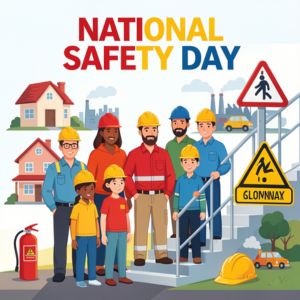
Every year National Safety Day in India reminds us of a simple but powerful truth:
Safety is not just a workplace rule — it is a way of living.
After spending decades working in industrial safety management and working with many institutions like National Safety Council, India; American Society of Safety Professionals (ASSP), to create more community awareness, investigating accidents and discussions with people; I have learned that accidents rarely happen by chance. Most accidents occur when small risks are ignored, precautions are forgotten, or awareness is missing, near miss situations are not respected with due care and caution to prevent repeats.
Safety is not only important in factories or workplaces. It is equally important at home, on the road, in public places, and especially for the elderly. A small mistake or moment of carelessness can sometimes change lives forever.
Why Safety Matters for Self, Family, and Society
We observe National Safety Day in India. It reminds us that safety is not only a workplace requirement—it is a way of life. Accidents can occur anytime, anywhere: at work, during travel, in public places, or even inside our homes.
Most accidents are preventable when awareness, discipline, and responsible behavior are practiced.
Safety is not only about protecting ourselves; it is about protecting our families, colleagues, and society as a whole.
Let us reflect on why safety is important, how it can be achieved, and what practical actions we can take in our daily lives.
WHY Safety Is Required (Simple 10 Common Reasons)
1️⃣ Protection of Human Life
The primary purpose of safety is to protect human life from preventable injuries and fatalities.
2️⃣ Protection of Family Well-being
An accident affects not only the individual but also the entire family emotionally and financially.
3️⃣ Prevention of Suffering and Disability
Many accidents lead to long-term injuries or disabilities that could have been avoided through precautions.
4️⃣ Creating Safe Communities
Safety-conscious individuals contribute to a safer society.
5️⃣ Reducing Medical and Economic Burden
Accidents can lead to high medical expenses and loss of income.
6️⃣ Improving Quality of Life
A safe environment allows people to live and work with confidence and peace of mind.
7️⃣ Protecting Property and Infrastructure
Fires, electrical faults, and negligence can damage homes and workplaces.
8️⃣ Protecting the Elderly and Vulnerable
Senior citizens and children are particularly vulnerable to accidents.
9️⃣ Promoting Responsible Behavior
Safety encourages discipline, awareness, and responsible decision-making.
🔟 Building a Culture of Prevention
A society that prioritizes safety prevents accidents rather than reacting after they occur.
HOW Safety Can Be Achieved (10 Key Approaches)
1️⃣ Creating Awareness of Risks
Understanding potential hazards is the first step toward preventing accidents.
2️⃣ Developing Safe Habits
Consistent safe behavior becomes a protective habit over time.
3️⃣ Following Safety Rules and Procedures
Safety regulations are designed based on lessons from past incidents.
4️⃣ Regular Safety Training and Education
Continuous learning helps people recognize and manage risks.
5️⃣ Maintaining Equipment and Infrastructure
Regular inspection and maintenance prevent unexpected failures.
6️⃣ Using Protective Equipment
Helmets, seat belts, gloves, and other safety equipment reduce injury risks.
7️⃣ Encouraging Reporting of Unsafe Conditions
Prompt reporting helps correct hazards before accidents occur.
8️⃣ Emergency Preparedness and Drills
Preparedness helps people respond effectively during emergencies.
9️⃣ Designing Safe Environments
Good lighting, clear pathways, and proper signage reduce hazards.
🔟 Promoting a Safety Culture
When everyone takes responsibility for safety, accidents reduce significantly.
WHAT We Can Do in Daily Life (10 Practical Actions)
Safety is not limited to workplaces. It should be practiced everywhere—at home, on roads, and in public places.
1️⃣ Practice Road Safety
Always wear helmets and seat belts, follow traffic rules, and avoid distractions while driving.
2️⃣ Prevent Fire Hazards at Home
Check electrical wiring regularly, avoid overloading sockets, and turn off gas cylinders properly.
3️⃣ Maintain Electrical Safety
Use certified electrical appliances and repair faulty wiring immediately.
4️⃣ Prevent Slip, Trip, and Fall Accidents
Keep floors dry, remove obstacles, and use non-slip mats.
5️⃣ Ensure Safety for Elderly Family Members
Install handrails in bathrooms and staircases and ensure proper lighting.
6️⃣ Keep Emergency Numbers Accessible
Important emergency contacts should be easily available for all family members.
7️⃣ Keep Fire Safety Equipment at Home
Basic fire extinguishers or fire blankets can prevent small fires from spreading.
8️⃣ Practice Safe Behavior in Public Places
Stay alert in crowded areas and follow safety instructions.
9️⃣ Store Hazardous Materials Safely
Keep chemicals, medicines, and sharp objects away from children.
🔟 Encourage Safety Awareness in Family and Community
Discuss safety practices with family members and promote awareness among neighbors.
Daily Personal Safety Checklist – a reminder
A few simple habits practiced every day can prevent many accidents. Take a moment each day to ask yourself these safety questions.
1️⃣ Stay Aware of Your Surroundings
Pay attention to potential hazards at home, at work, and in public places.
2️⃣ Follow Basic Road Safety
Wear seat belts or helmets and avoid distractions while driving.
3️⃣ Keep Walkways Clear
Remove clutter, loose wires, or objects that may cause slips or trips.
4️⃣ Check Electrical Safety
Switch off appliances when not in use and avoid overloading power outlets.
5️⃣ Prevent Fire Hazards
Ensure gas stoves, electrical appliances, and candles are used safely.
6️⃣ Maintain Good Lighting
Well-lit staircases, hallways, and entrances reduce the risk of falls.
7️⃣ Use Handrails and Support When Needed
Particularly important for elderly family members to prevent falls.
8️⃣ Store Hazardous Items Safely
Keep medicines, chemicals, and sharp objects away from children.
9️⃣ Keep Emergency Contacts Accessible
Important phone numbers should be easily available for family members.
🔟 Think Before You Act
Pause and ask: “Is this action safe for me and others?”
“Safety is not an extra task — it is a daily habit.”
Small safety habits practiced consistently can protect lives, families, and communities.
Final Reflection
Safety is not just the responsibility of organizations or authorities. It begins with each individual making responsible choices every day.
Whether at work, at home, or on the road, a small moment of awareness can prevent a serious accident.
Safety is not expensive—accidents are.
On this National Safety Day, let us renew our commitment to protecting ourselves, our families, and our society by making safety a daily habit.
The theme of National Safety Day 2026 — “Empowering the Next Generation of Safety Leaders” — reminds us that safety awareness must begin early and extend beyond workplaces into homes, roads, and communities.
To learn more read my books:
Culture-Based Safety: Create safer workplaces, boost employee engagement, and drive compliance—while building a lasting, high-performance safety culture
The Psychology of Safety : Transform Your Mindset, Build Safe Habits, Overcome Barriers & Sustain Lifelong Safety
CARE FOR SAFE ATTITUDE : Positive Attitude Towards Work, Lifestyle Changes, Health and Safety Plan & Behavior Observation
Paperback https://www.amazon.com/dp/B09KF4GLQS
Attitude-Based Safety : Develop positive attitude, foster proactive practices, and create a resilient, accident-free environment
https://books.apple.com/us/book/attitude-based-safety/id6504695714
WORKBOOK ATTITUDE-BASED SAFETY: Transforming Attitudes into Daily Practices for a Safer Environment, Foster Proactive Practices, and Create a Resilient Safety Culture
Stay Alert, Stay Safe!