Balance — The Art of Holding It All Together
In life’s unpredictable rhythm, balance is not about perfection—it’s about presence. It’s the quiet wisdom that tells us when to act and when to pause, when to give and when to receive, when to hold on and when to let go.
Balance doesn’t mean everything is equal.
It means nothing is neglected—not your health, not your peace, not your relationships, not your purpose.
When we lose balance, we often chase what’s urgent over what’s important. But the soul whispers:
“Harmony lies not in doing more, but in doing what truly matters.”
Balance isn’t found—it’s created, one mindful choice at a time.
In the stillness between effort and ease, you find yourself.
“Balance is not something you find. It’s something you create.” – Jana Kingsford
As I sit quietly this morning in Santa Clara, I am reminded how easy it is to be pulled in multiple directions—family, writing, learning, commitments, and inner desires. Yet, within this swirl lies a powerful truth: balance is the art of living wisely.
We are not machines. We are soulful beings navigating a world full of choices, distractions, duties, and dreams.
And that’s why balance is not a luxury; it’s a daily necessity.
What is Balance?
Balance is the gentle alignment between what you give and what you keep.
It’s the conscious space between effort and ease, ambition and acceptance, doing and being.
Balance isn’t about equal time—it’s about right energy, in the right place, at the right time.
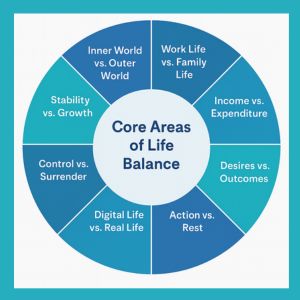
7 Areas Where Balance is Vital
Mind and Body – Mental calm and physical movement must walk hand in hand.
Work and Family – Your success means little if your family feels your absence.
Income and Expenditure – Prosperity is built not by earning more, but by spending wisely.
Self-Care and Service – You cannot pour from an empty cup. Care for yourself too.
Desire and Discipline – What we want and what we’re willing to work for must be in harmony.
Learning and Application – Balance knowledge with action to fuel real growth.
Solitude and Social Time – Silence heals; conversations inspire. You need both.
7 Reflection Prompts to Self-Assess Balance
Am I constantly busy, but rarely fulfilled?
Do I feel energized at the end of the day—or exhausted?
Am I fully present with my family, or just physically there?
Am I saving consciously or reacting impulsively with money?
Do I spend enough time in silence and self-reflection?
Is my physical health getting the attention it deserves?
What am I neglecting that truly matters to me?
7 Action Steps to Embrace Balance
Audit your day – Where is your time flowing unconsciously?
Create boundaries – Start saying NO to protect your YES.
Balance routines – Alternate focused work with short mindful pauses.
Reflect nightly – Ask: Did I live in harmony today?
Track habits – Use a life wheel or journal to spot imbalance.
Plan weekly resets – Schedule time for nature, joy, and stillness.
Stay flexible – Balance is dynamic. Adjust often, without guilt.
Related Reading:
If you wish to strengthen emotional balance and meaningful life, I invite you to read my book, or listen to the audiobook.
Strive and Thrive: Learn How To Have A Happy Mind, Work Life Balance, How To Improve Your Psychological Well-Being and Build A Long Lasting Happy Brain
🔗 Read the Book https://www.amazon.com/dp/B0C5V7HNST
Slogan / Affirmation
PAUSE. PRIORITIZE. PROCEED WITH PEACE.
Affirmations
“I honor my time, energy, and values. I balance my life with care and courage.”
“I choose alignment over overwhelm. Peace over pressure. Growth over perfection.”
Quote by Dr. Gurudas Bandyopadhyay
“When I started listening to my life instead of chasing it, balance quietly returned.”
Quote for Today
“Balance is not better time management, but better boundary management.” – Betsy Jacobson
Mini Action Step
Choose one area of your life today—work, health, rest, or relationships—and rebalance it with a small act:
Take a break
Speak to someone with intention
Nourish your body
Turn off your phone for 30 minutes
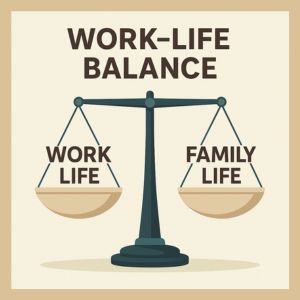
What May Happen If Life Balance Is Ignored
1. Neglecting Inner vs. Outer World
You may lose connection with your values, leading to identity confusion and emotional emptiness.
2. Imbalance in Work and Family Life
Chronic guilt, strained relationships, and emotional burnout become frequent companions.
3. Poor Income vs. Expenditure Discipline
Financial stress builds up, often resulting in anxiety, debt, or a scarcity mindset.
4. Unrealistic Desires vs. Outcomes
Perpetual dissatisfaction takes root. You feel like you’re always chasing something yet reaching nowhere.
5. Excessive Input vs. Little Output
Mental clutter builds. You consume but rarely contribute—causing self-doubt and wasted potential.
6. Overaction vs. Lack of Rest
Leads to fatigue, irritability, and even health breakdowns. The joy of doing fades.
7. Digital Overuse vs. Real-Life Engagement
Emotional detachment and shallow relationships arise. You feel connected yet lonely.
8. Helping Others vs. Neglecting Self-Care
Burnout sneaks in. You give from depletion, not abundance, and slowly disconnect from joy.
9. Excessive Control vs. No Surrender
Life feels like a battle. Frustration brews when things don’t go “as planned.”
10. Craving Growth Without Stability
You risk inconsistency, restlessness, and lack of fulfillment—always moving, never arriving.
More Reflection Questions to Assess Life Balance
1. Inner World vs. Outer World
Do I spend enough time nurturing my inner self, or am I overly consumed by external demands and appearances?
Do I take time to listen to my thoughts, feelings, and inner signals before acting?
Have I created space in my daily life to reflect, meditate, or simply be with myself?
2. Family Life vs. Work Life
Am I truly present with my loved ones, or does work constantly intrude into my personal space?
Do I give the best version of myself to my family or only what’s left after work?
Have I communicated my work and personal boundaries clearly to those around me?
3. Income vs. Expenditure
Am I spending money in alignment with my values, or just reacting to wants and impulses?
Do I budget intentionally or spend reactively based on emotions or trends?
Am I saving and investing for long-term security while enjoying my present?
4. Desires vs. Outcomes
Am I placing my happiness only in desired results, or finding joy in the process of striving?
Do I often feel disappointed when things don’t go exactly as I wanted?
Can I still find meaning even when my desired outcome isn’t achieved?
5. Input vs. Output
Do I regularly apply what I learn, or am I stuck in passive consumption without real expression?
Am I sharing my knowledge, skills, or creativity with the world?
What’s stopping me from producing more than I consume?
6. Action vs. Rest
Am I allowing myself to rest and recover, or do I feel guilty when I’m not doing something?
Do I allow guilt-free rest, or do I feel I must always be “doing” to be valuable?
Is my productivity enhanced or diminished when I don’t give myself proper breaks?
7. Digital Life vs. Real Life
Is my screen time enriching my life, or is it robbing me of real connection and focus?
How often do I disconnect from screens to connect with people or nature?
Are my digital interactions adding depth to my life—or just draining time?
8. Helping Others vs. Helping Yourself
Am I saying “yes” to others so often that I forget to say “yes” to my own well-being?
Do I set boundaries that honor both compassion and self-respect?
Am I overextending myself in the name of service or responsibility?
9. Control vs. Surrender
Do I trust life to unfold, or do I exhaust myself trying to control what I cannot?
Am I holding on too tightly to plans that aren’t working?
Can I let go and trust that some things unfold better without my control?
10. Stability vs. Growth
Am I holding onto comfort zones out of fear, or am I stretching just enough to evolve?
Am I clinging to familiarity because change feels uncomfortable?
Have I recently taken any steps outside my comfort zone to evolve?
“Where in my life am I overextending, and what is being left behind?”
Write down one imbalance you can gently correct today.
What to Do for Proper Balancing – 10 Suggestions
1. Prioritize What Truly Matters 🕰️
Start each day by identifying your top 3 priorities—family, health, purpose.
“What matters most should never be at the mercy of what matters least.” – Goethe
2. Set Clear Boundaries
Separate work from personal life. Avoid letting screens, emails, or tasks bleed into family time or rest.
3. Design a Balanced Routine
Ensure every day includes time for self-care, relationships, work, learning, and rest.
A good day = progress + connection + peace.
4. Communicate Needs and Limits
Tell people when you’re available—and when you’re not. Be kind, but firm in protecting your balance.
5. Make Time for Reflection
Even 10 minutes of silence, journaling, or gratitude practice can help reset and realign your inner compass.
6. Move Your Body Regularly
Physical movement refreshes the mind, reduces stress, and brings clarity. Choose walking, yoga, or stretches.
7. Spend Mindfully
Align spending with values, not impulses. Budget with awareness of both needs and goals.
8. Say No Without Guilt
Decline requests that don’t serve your well-being or growth. Saying no to others can be saying yes to yourself.
9. Evaluate & Adjust Weekly
Check in weekly: What’s working? What’s draining you? Make micro-adjustments before imbalance builds up.
10. Embrace Flexibility, Not Rigidity
Balance isn’t perfection—it’s constant recalibration. Allow space for surprises, rest, and change.
“We think, mistakenly, that success is the result of the amount of time we put in at work, instead of the quality of time we put in.”
Arianna Huffington – Founder of Thrive Global