The Secret Ingredient for Mastering Complex Decisions

Encourage the idea that overthinking is an essential part of thoroughly analyzing complex situations, leading to more informed and calculated decisions.
Embrace Overthinking for Creativity and Positive Growth
In the present circumstances where the pace of life is ever-increasing, feelings of being overwhelmed have become more common. While most of us view being overwhelmed as something negative, it’s important to recognize that it can be an opportunity for growth. Similarly, overthinking, often associated with stress and anxiety, doesn’t always have to be harmful. In fact, overthinking on constructive activities and positive thoughts can serve as a fertile ground for creativity and personal development. Let’s explore why both being overwhelmed and overthinking, when focused in the right direction, can be beneficial.

Overwhelm as a Catalyst for Innovation
Feeling overwhelmed is typically seen as a sign of stress or a lack of control. However, it can also indicate that you’re at the edge of something new or exciting. Psychologist Sian Beilock points out that “overwhelm can happen when we’re pushing ourselves beyond our comfort zones,” a place where growth and creativity thrive. When your mind is filled with numerous thoughts and tasks, it often forces you to think in ways that are outside the box. Overwhelm can spur innovation, as it demands creative problem-solving to handle everything at once.
The key is to balance overwhelm with mindful awareness. If you’re overwhelmed but also actively channeling your focus toward positive, productive pursuits, you’re more likely to emerge with new ideas and solutions. Instead of trying to avoid overwhelm, embrace it as an indicator that you’re stepping into new territory.
Overthinking: The Fuel for Creativity
Overthinking often gets a bad reputation, as it’s frequently associated with anxiety and negative spirals. However, overthinking on constructive and positive activities can lead to brilliant insights. When you focus on solving a problem or developing an idea, the process of overthinking forces you to explore all angles, fine-tune details, and consider possibilities that might otherwise go unnoticed.
In creative fields, overthinking can be an essential tool. Albert Einstein once said, “Imagination is more important than knowledge,” and overthinking allows the mind to push boundaries and envision new realities. Writers, artists, and innovators often experience moments of overthinking that lead to breakthrough concepts. In fact, many successful entrepreneurs and creatives have acknowledged that their greatest ideas came not from a single moment of inspiration, but from hours of deep, thoughtful deliberation.
Psychologist Dr. Melanie Greenberg supports this notion, noting that “overthinking can often be a sign that your mind is trying to solve complex problems.” The trick lies in directing this mental energy toward constructive outcomes. When you focus your overthinking on possibilities, improvements, and positive reflection, it nurtures your growth rather than leading you into stress.

The Power of Positive Overthinking (POPO)
Not all overthinking is the same. It’s important to distinguish between overthinking that leads to negativity and overthinking that fosters creativity and problem-solving. Negative overthinking often focuses on worst-case scenarios and self-doubt, which can indeed be harmful. On the other hand, when you direct your thoughts toward solutions, personal growth, and self-improvement, overthinking can propel you forward.
For example, overthinking on a project could involve looking at every aspect of the idea, weighing the pros and cons, and considering how it could be improved. By doing this in a positive, intentional way, overthinking becomes an asset rather than a liability. In this context, overthinking becomes a tool for meticulous planning and design.

Balancing Constructive Overthinking with Action
While overthinking can stimulate creativity, it’s essential to balance it with action. Simply dwelling on ideas or scenarios without taking steps to implement them can lead to burnout. Tony Robbins, a well-known motivational speaker, advocates for taking action in the face of uncertainty. He asserts that “massive action is the antidote to fear and overthinking.” Once you’ve thoroughly analyzed a situation or concept, the next step is to translate your thoughts into tangible actions.
This approach helps to prevent overthinking from becoming paralyzing. By breaking down your thoughts into actionable steps, you can channel your energy into meaningful progress. Small, deliberate actions inspired by overthinking will eventually lead to significant creative breakthroughs.
Harnessing Overwhelm and Overthinking for Positive Growth
Being overwhelmed and overthinking are natural aspects of human experience. Instead of viewing them as negative forces, we can choose to see them as opportunities for growth and creativity. By embracing overwhelm as a sign of new challenges and using overthinking as a tool for constructive reflection, you can unlock your potential for innovation and personal development.
The key lies in focusing your mental energy on positive, productive pursuits, and using these states of mind to fuel your journey toward creativity, growth, and success. With the right mindset, being overwhelmed and overthinking can transform from obstacles into powerful drivers of your future accomplishments.
This approach builds on the idea that being overwhelmed and overthinking doesn’t always have to lead to stress. Instead, with conscious direction, they can be utilized as tools for creativity and success.

Why overthinking can actually be beneficial, especially when channeled in positive and constructive directions?
1. Enhances Problem-Solving Skills
Overthinking forces you to consider all possible angles and potential outcomes. This deeper level of analysis can lead to more effective and thoughtful solutions. According to psychologist Dr. Melanie Greenberg, overthinking can be an indication that your mind is trying to solve a complex problem by processing all the details Stimulates
2. Helps in Decision-Making
While excessive overthinking can lead to indecisiveness, thinking deeply about decisions can also improve them by making sure every factor is considered. Studies show that individuals who reflect on their choices often make more informed decisions, as they weigh all risks and rewards .
4. Assists in Better Planning
When you overthink about future goals and aspirations, it helps you envision potential challenges, allowing you to plan more effectively. Overthinking about potential outcomes enables you to prepare for setbacks and create contingency plans .
5. Increases Self-Awareness
Reflecting deeply on personal actions, habits, and emotions leads to better self-awareness. By overthinking personal situations, you can identify behavioral patterns, both good and bad, and work toward self-improvement. Psychologist Daniel Goleman advocates for emotional intelligence, which often arises from such deep reflection .
6. Helps in Learning and Development
When you overthink about past experiences, it helps with learning from mistakes. Reflecting on how you could have handled a situation differently can lead to growth and greater resilience. Carol Dweck’s research on mindset suggests that people who reflect deeply on their experiences tend to have a “growth mindset,” learning from failures rather than being discouraged by them .
7. Fosters Mindfulness and Clarity
Overthinking can be stressful if it spirals into negative territory, focused overthinking can be used as a form of mindfulness. By deeply considering your actions or thoughts, you can clear mental clutter, identify important priorities, and reduce mental distractions .
While overthinking can be a double-edged sword, but when focused on constructive and positive topics, it can significantly contribute to personal development, creativity, and success.
8. Promotes Better Emotional Regulation
Overthinking allows individuals to carefully process and regulate their emotions. By reflecting on past emotional experiences and outcomes, overthinkers can gain better control over their reactions in future situations. Emotional regulation, as described by Daniel Goleman in his work on emotional intelligence, can improve both personal and professional relationships.
9. Encourages Accountability
When overthinking situations and outcomes, individuals often hold themselves accountable for their actions. This deep reflection fosters a sense of responsibility for one’s decisions and behaviors, ultimately improving personal growth and discipline.
10. Improves Communication Skills
Overthinking encourages individuals to analyze conversations, behaviors, and social dynamics in detail. This can result in better communication skills as overthinkers refine their approach to conveying thoughts, understanding others, and navigating complex interactions. John C. Maxwell emphasizes that effective leaders often engage in deep thought about their communication, ensuring clarity and empathy.
11. Fosters Mindful Decision-Making
Overthinking helps with the practice of mindfulness in decision-making, as it allows individuals to consciously analyze their options with a focus on the present moment. Rather than rushing into decisions, overthinkers often take time to evaluate the best course of action.
12. Increases Awareness of External Factors
Overthinking helps individuals consider how external factors (such as market conditions, relationships, and global events) impact their decisions and life. This increased awareness allows overthinkers to better prepare for potential changes and act proactively.
By approaching overthinking with a positive mindset, it becomes a valuable tool for growth, insight, and productivity. Rather than being a source of stress, it can serve as a platform for developing deeper understanding, better planning, and more meaningful outcomes in both personal and professional life.
To learn more to be creative, read my book “Awaken the Creative Giant Within” Click to read https://relinks.me/B0B69J3RQD
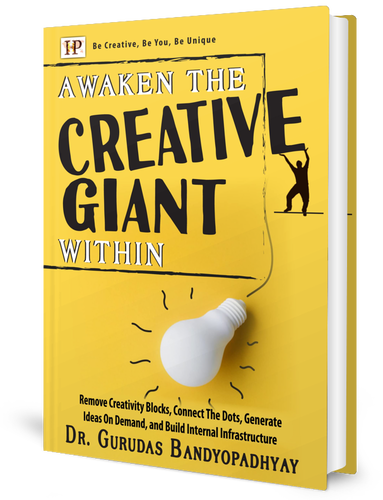
You may go through ‘Creativity on Demand” https://relinks.me/B0DF4V1N2R
Utilize the season’s offer, think Big, cultivate better mental habits that help you navigate complex situations with more clarity and confidence.
Cheers!