
Mastering Your Thoughts: The Key to Personal and Professional Success
Thoughts shape our reality. They influence our emotions, decisions, and actions, and ultimately determine the trajectory of our lives. Effective thought management is crucial for personal and professional growth, enabling us to navigate challenges, seize opportunities, and achieve our goals. This article explores the importance of thought management and offers strategies to cultivate a positive and productive mindset, supported by inspiring quotes and recent research.
Understand how thoughts arise and why. We think differently in a particular time. There are many internal and external forces which affect the thought process. One study from 2005 suggested that the average person has about 70,000 thoughts per day. This estimate assumed that people think at a rate of one word per second during their waking hours. However, this figure has been debated. In another school of thoughts, it is said over 6000 thoughts are generated everyday per person. Thought generation differs from person to person and even within one person at different times based on circumstances. Each thought affect our emotions and actions if it persists.
“You can’t control the length of your life, but you can control its width and depth.” — Evan Esar
It highlights the influence of thoughts on the quality and richness of life, underscoring the need to manage them effectively.

The Power of Thoughts
Thoughts are more than fleeting mental events; they are the architects of our experiences. They impact our self-perception, interactions with others, and the quality of our lives. As Mahatma Gandhi said, “Your beliefs become your thoughts, your thoughts become your words, your words become your actions, your actions become your habits, your habits become your values, and your values become your destiny.” This profound insight underscores the importance of managing our thoughts to align with our aspirations.
The Importance of Thought Management
Emotional Well-Being
Thoughts have a direct impact on our emotional state. Negative or distorted thinking can lead to stress, anxiety, and depression, while positive and constructive thoughts can enhance our mood and resilience. Research published in Frontiers in Psychology highlights the connection between cognitive patterns and emotional health, emphasizing the need for effective thought management strategies.
Decision-Making and Problem-Solving
Thought processes guide decision-making and problem-solving. According to recent studies in Cognitive Psychology, clear and rational thinking improves decision-making accuracy and problem-solving efficiency. Managing thoughts effectively allows us to approach challenges with clarity and confidence.
Personal Growth and Achievement
Success and personal growth are rooted in our thinking patterns. Carol Dweck’s research on growth mindset, as outlined in her book Mindset: The New Psychology of Success, shows that individuals with a growth mindset, who embrace challenges and view failures as learning opportunities, achieve greater success than those with a fixed mindset.
“The mind is everything. What you think you become.” — Buddha
This quote emphasizes the transformative power of thoughts and the importance of nurturing a positive mindset.
Strategies for Effective Thought Management
Cultivate Self-Awareness
Mindfulness Practices: Engage in mindfulness meditation to become aware of your thought patterns. Mindfulness helps you observe thoughts without judgment and gain insight into their impact on your emotions and behavior.
Reflective Journaling: Keep a journal to explore and reflect on your thoughts and feelings. This practice enhances self-awareness and helps in identifying recurring thought patterns.

Challenge and Reframe Negative Thoughts
Identify Cognitive Distortions: Recognize thinking errors such as catastrophizing or overgeneralization. By challenging these distortions, you can reframe your thoughts in a more balanced and realistic manner.
Reframe Perspectives: Replace negative thoughts with positive alternatives. For instance, instead of thinking, “I can’t handle this,” try, “I will do my best and learn from the experience.”
Develop Emotional Resilience
Emotional Regulation: Practice techniques such as deep breathing, relaxation exercises, and emotional awareness to manage and regulate your emotions effectively.
Positive Self-Talk: Use affirmations and encouraging self-talk to build confidence and resilience. As the author and motivational speaker, Zig Ziglar, stated, “You don’t have to be great to start, but you have to start to be great.”
Seek External Input and Support
Consult Others: Discuss your thoughts with trusted friends, family, or mentors. External perspectives can provide valuable insights and help challenge unhelpful thought patterns.
Professional Guidance: If persistent negative thoughts or mental health issues arise, consider seeking support from a mental health professional.
Practice Gratitude and Optimism
Gratitude Journaling: Regularly write down things you are grateful for. This practice shifts focus from negatives to positives and enhances overall well-being.
Visualize Positive Outcomes: Imagine successful scenarios and positive outcomes. Visualization can improve motivation and increase the likelihood of achieving desired results.
“Change your thoughts and you change your world.” — Norman Vincent Peale
It underscores the profound impact that altering thought patterns can have on the broader aspects of life.

Recent Research Insights
Neuroplasticity and Thought Management: Recent research on neuroplasticity, published in Nature Reviews Neuroscience, demonstrates that the brain’s ability to reorganize itself through thought patterns and experiences supports the idea that intentional thought management can lead to positive changes in cognitive and emotional functioning.
Cognitive Behavioral Therapy (CBT): Studies on CBT, a well-established therapeutic approach, highlight its effectiveness in altering negative thought patterns and improving mental health. The principles of CBT, discussed in The Journal of Cognitive Psychotherapy, emphasize the importance of challenging and reframing unhelpful thoughts.
“The best way to predict the future is to create it.” — Peter Drucker, the Austrian American Management Consultant.
This quote encourages proactive thinking and the shaping of one’s destiny through deliberate thought and action.
Effective thought management is a vital skill for enhancing emotional well-being, making sound decisions, and achieving personal and professional goals. By cultivating self-awareness, challenging negative thoughts, and practicing gratitude, you can harness the power of your thoughts to lead a more fulfilling and meaningful life. As you navigate the complexities of life, remember the words of Victor Hugo: “Nothing is more powerful than an idea whose time has come.” Embrace the power of positive thinking and shape your destiny with purpose and clarity.
“Every one of us is the sum total of his own thoughts”
― Earl Nightingale, The Strangest Secret
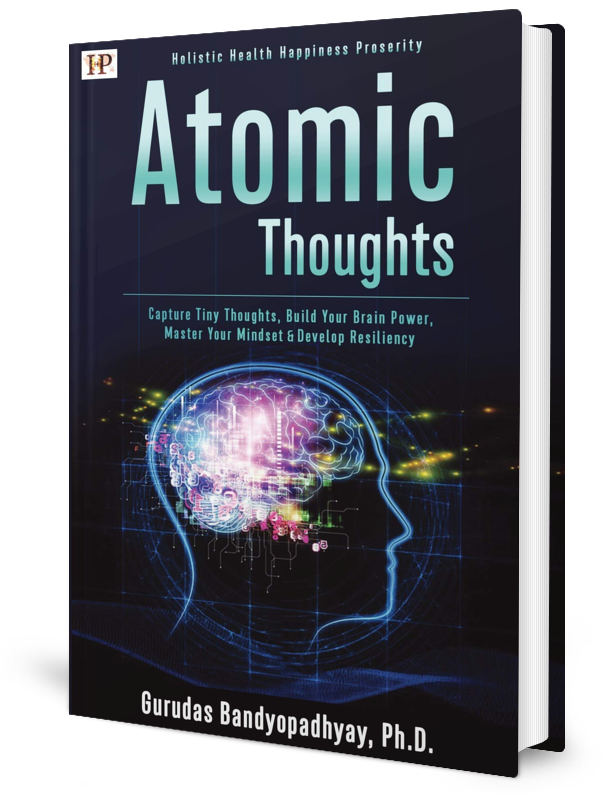
To know more, stay connected with me. Read my book “Atomic Thoughts” http://drgurudas.com/my-book-table/
Read my Articles in medium.com https://medium.com/@drgurudas
Click and get one of my Book FREE. It will be delivered to your email inbox.
https://winning-thinker-8854.ck.page/92cd3161e1
Over 130 pages book in pdf comprising 11 chapters.
Understand psychology behind incremental growth, need for celebrating small victories, understand power of mindset, and foster letting go through small wins.
Think smart, think well!